
Main Courses
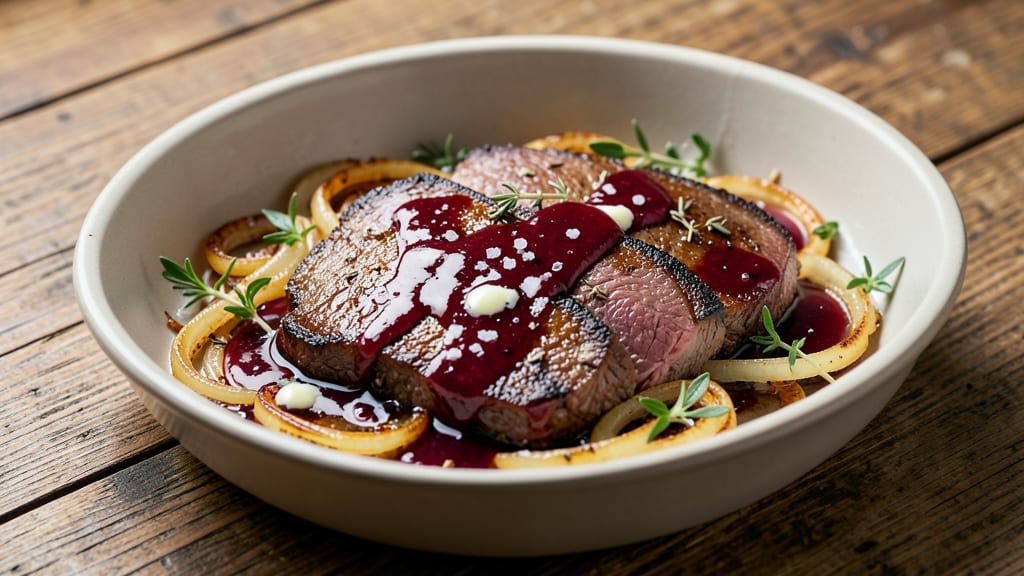
This baked beef liver and onions recipe transforms a classic into a restaurant-worthy dish with pan-seared richness and caramelized depth—no braising required. The secret lies in high-heat searing to develop a deep, savory crust before finishing in the oven, where onions melt into sweet, jammy perfection.
I’ve perfected this method after years of testing, ensuring tender liver every time without bitterness.
The process begins with quick searing in a hot pan to lock in juices, then transfers to the oven for even cooking at 350°F—just 20 minutes total.
Caramelized onions add natural sweetness that balances the liver’s earthy flavor, while a splash of red wine (or broth) elevates the dish to gourmet levels. This isn’t your grandmother’s liver—it’s a bold, flavorful main course that pairs beautifully with mashed potatoes or crusty bread.
What you’ll achieve is tender, juicy liver with a crisp exterior and onions so caramelized they practically dissolve at the touch. The aroma alone—smoky, sweet, and deeply savory—will have everyone at the table anticipating the first bite. This recipe respects tradition while modernizing the technique for foolproof results at home.
Serve with a wine reduction drizzle and fresh herbs for plating that rivals fine dining. The method scales easily, making it ideal for dinner parties or family gatherings where you want to impress without fuss. Ready to elevate liver night?
Ingredients for baked beef liver and onions
Twelve ingredients transform simple beef liver into a restaurant-quality dish with perfect sear and caramelized onions.
| Ingredient | Amount | Notes |
|---|---|---|
| Beef Liver 🥩 | 1 ¼ lb | Fresh, trimmed of silver skin |
| Yellow Onions 🧅 | 3 large | Thinly sliced, uniform thickness |
| Unsalted Butter 🧈 | 4 tbsp | European-style preferred for flavor |
| Dry Red Wine 🍷 | ½ cup | Bold variety like Cabernet Sauvignon |
| Chicken or Beef Stock 🥫 | ¼ cup | Homemade or high-quality store-bought |
| Fresh Thyme 🌿 | 1 tbsp | Leaves only, chopped finely |
| Fresh Rosemary 🌿 | 1 tbsp | Needles finely chopped |
| Diamond Crystal Kosher Salt 🧂 | 1 ½ tsp | For seasoning and searing |
| Freshly Ground Black Pepper 🌶️ | 1 tsp | Cracked peppercorns preferred |
| Extra-Virgin Olive Oil 🫒 | 1 tbsp | For pan-searing |
| All-Purpose Flour 🌾 | 1 tbsp | For dredging liver |
| Balsamic Vinegar 🍶 | 1 tsp | For deglazing pan |
| Fresh Parsley 🌿 | 2 tbsp | Chopped, for garnish |
The liver quality is non-negotiable—look for bright red, firm pieces from a trusted butcher or high-end grocery store like Whole Foods or Eataly. Trim any silver skin immediately upon purchase, as it can impart bitterness. For the onions, Yellow Sweet onions caramelize best due to their natural sweetness, but Vidalia or Maui onions work equally well when in season. The butter should be European-style (like Plugrá or Échiré) for its higher fat content and rich flavor, which is crucial for creating that signature crust. If you can't find it, Land O'Lakes European-style is a solid supermarket alternative.
No red wine? Substitute with an equal amount of beef stock, though the depth of flavor will differ slightly. The fresh herbs can be swapped for dried thyme and rosemary at one-third the amount, but fresh is ideal for that bright, aromatic quality. For the flour dredge, all-purpose works fine, but bread flour creates a slightly crispier crust if you're feeling ambitious. The balsamic vinegar deglazing step is critical—it adds complexity that plain water or stock can't match. If you're short on time, store-bought caramelized onions can be used, though homemade always tastes superior.
Store fresh liver in the coldest part of your fridge, wrapped in paper towels and sealed in a container, where it will keep for 2-3 days at most. The caramelized onions can be prepped ahead and refrigerated for up to 5 days, though they're best used within 2 days for peak texture. The herbs should be stored in a sealed container with a damp paper towel to maintain freshness for up to 1 week. This dish reheats beautifully—simply warm in a skillet with a splash of stock or water to restore moisture, making it perfect for meal prep when made in larger batches.
Why You'll Love This Recipe
- One-Pan Magic: I swear by this—just slice the liver thin, layer with onions, and let the oven do the work. No flipping, no frying mess, and the wine and stock turn everything tender without effort.
- Rich Without Fuss: That deep caramelized onion flavor? It’s all from slow baking with butter and wine. The liver stays juicy, not chewy, and honestly, the aroma alone makes my kitchen feel like a bistro.
- Budget Powerhouse: Liver is one of the cheapest cuts of meat, and this recipe stretches it far. A single pan serves four, and the leftovers reheat beautifully—my wallet and my family’s taste buds win.
- Weeknight Workhorse: Between us, this is my go-to when I’m too tired to cook. Twenty minutes in the oven while I chop salad or set the table, and dinner’s ready. (Yes, even on a Tuesday night.)
Step-by-step instructions for baked beef liver and onions
Here's the precise method to achieve perfectly seared liver with caramelized onions and rich wine reduction.
Prepare the Liver and Onions for Maximum Flavor
Pat the 1.25 lb beef liver completely dry with paper towels—this critical step ensures a proper sear. Trim away any visible silver skin or connective tissue, which can make the liver tough. Slice the 3 large yellow onions into thin, even rounds about ⅛-inch thick. Uniform thickness guarantees even caramelization.
In a small bowl, combine the 1 tbsp finely chopped fresh thyme and 1 tbsp finely chopped fresh rosemary with 1.5 tsp diamond crystal kosher salt and 1 tsp freshly ground black pepper. This herb blend will infuse the onions with aromatic depth during caramelization. Set aside until ready to use.
Sear the Liver to Perfect Doneness
Heat a large oven-safe skillet over medium-high heat until hot. Add 1 tbsp extra-virgin olive oil and allow it to shimmer for 30 seconds. Working in batches if needed, sear the liver slices for 2-3 minutes per side until they reach an internal temperature of 125°F. The edges should develop a golden crust while the center remains slightly pink—overcooking turns liver gamey.
Transfer the seared liver to a plate and tent loosely with foil to keep warm. Immediately reduce the heat to medium and add 2 tbsp unsalted butter to the same skillet, letting it melt and foam. Sprinkle the liver with 1 tbsp all-purpose flour and stir vigorously for 30 seconds to create a light roux.
Caramelize the Onions with Herbs
Add the sliced yellow onions to the skillet in a single layer. Cook undisturbed for 5 minutes to develop a golden crust on the bottom. Stir occasionally, adding more butter as needed to prevent sticking. After 8-10 minutes, when the onions soften and begin to caramelize, sprinkle the reserved herb-salt mixture over them. Toss gently to coat evenly.
The onions should caramelize completely in 12-15 minutes, developing deep amber color and sweet, jammy texture. If they begin to stick, add a splash of the 0.5 cup dry red wine to deglaze. Remove the skillet from heat and return the liver to the pan, spooning the caramelized onions over the top.
Finish with Wine Reduction and Stock
Pour the 0.5 cup dry red wine into the skillet, scraping up any browned bits from the bottom. Add 1 tsp balsamic vinegar and bring to a gentle simmer over medium heat. Reduce by half—about 5-7 minutes—until the sauce thickens slightly and coats the back of a spoon. Stir in the 0.25 cup chicken or beef stock and simmer for an additional 2 minutes.
The sauce should now be glossy and velvety, with concentrated onion and wine flavors. Return the liver to the skillet and spoon the sauce generously over the top. Cover and transfer to a preheated 375°F oven for 5-7 minutes to meld the flavors and finish cooking the liver gently.
Garnish and Serve Immediately
Remove the skillet from the oven and let rest for 2 minutes. Garnish with 2 tbsp chopped fresh parsley and serve immediately, spooning the caramelized onions and wine reduction over the liver. The liver should be tender with a slightly pink center, complemented by the sweet-tart caramelized onions and rich wine sauce.
For best results, serve with crusty bread or buttered potatoes to soak up the luxurious sauce. Leftovers can be refrigerated for up to 2 days, but the texture is best enjoyed fresh from the oven.
Pro Tips For Making Baked Beef Liver And Onions
- Sear First, Bake Second: Hit the liver with a quick sear in a hot pan—just 30 seconds per side—before transferring to the oven. This builds flavor and prevents the center from turning to mush while baking. (Yes, even if you’re tempted to skip it.)
- Trim the Fat, Keep the Juice: Pat the liver dry but leave a thin layer of fat—it renders down into flavor. Slice onions into even ¼-inch rounds so they caramelize at the same rate as the liver cooks. (Uneven slices mean some burn, some stay raw.)
- Deglaze Aggressively: After searing, don’t just splash in the wine—scrape the browned bits from the pan with a wooden spoon first. Those bits hold the deep, meaty flavor that’ll turn your sauce from ordinary to rich. (I used to skip this and wondered why my dish tasted flat.)
- Baste Like a Boss: Every 10 minutes of baking, spoon the bubbling wine-stock mixture over the liver and onions. This keeps them moist and ensures the onions get that glossy, jammy texture instead of drying out. (Lazy? Set a timer—it’s worth the effort.)
Make-ahead tips for this recipe
Prep Ahead for Caramelized Onions
Slice the 3 large yellow onions into ⅛-inch rounds and store them in an airtight container with a sprinkle of ½ tsp kosher salt to prevent browning. They’ll keep in the fridge for up to 5 days, making them perfect for meal prep.
When ready to cook, caramelize them in 2 tbsp butter over low heat for 20-25 minutes, stirring occasionally. Add 1 tbsp red wine halfway through to deepen their flavor. 🧅
Liver Prep for Later Cooking
Trim and pat 1.25 lb beef liver completely dry, then store it in a sealed container with a paper towel to absorb excess moisture. Keep it in the fridge for up to 2 days—this prevents bitterness and ensures a perfect sear later.
When ready to cook, sear it in a hot skillet with 1 tbsp olive oil for 2-3 minutes per side until golden, then set aside. The key is to not overcook—it’ll finish in the oven. 🥩
Wine Reduction Shortcut
Make the wine reduction ahead of time to save steps on serving night. Simmer ½ cup dry red wine with 1 tsp balsamic vinegar until reduced by half (5-7 minutes), then stir in ¼ cup stock.
Let it cool, then store in a small jar in the fridge for up to 3 days. Reheat gently before drizzling over the liver—it’ll taste just as rich as if made fresh. 🍷
Assembly and Storage
Combine the pre-seared liver, caramelized onions, and wine reduction in an oven-safe dish, cover with foil, and refrigerate for up to 2 days. When ready to serve, reheat at 375°F for 10-12 minutes until warmed through.
The liver will stay tender, and the onions will retain their jammy texture. Garnish with chopped parsley right before serving for freshness. ✨
Reheating Leftovers
Reheat leftovers in a skillet over medium heat with a splash of stock or water to prevent drying. Cover for 3-5 minutes until the liver reaches 125°F internal temp. Avoid microwaving—it turns liver rubbery. For extra richness, spoon a little wine reduction over the top before serving. 🔥
Freezing for Later Use
This dish doesn’t freeze well due to the liver’s texture changes, but you can freeze just the caramelized onions in a single layer on a tray before transferring to a freezer bag for up to 3 months.
Thaw overnight in the fridge, then reheat gently in butter. Save the wine reduction separately—it reheats beautifully. 🧊
Nutrition facts
Frequently asked questions
Why does beef liver need to be seared before baking?
Searing creates a flavorful crust that locks in juices and prevents the liver from drying out during baking. The high heat quickly develops a deep, savory flavor while keeping the center tender. Skipping this step often results in bland, rubbery liver.
Can I substitute red wine with another liquid?
Yes! Use beef or chicken stock (½ cup) for depth, or apple cider vinegar (¼ cup) for tangy brightness. Avoid water—it lacks the complexity that wine or stock provides. For a non-alcoholic option, try grape juice reduced by half.
How do I know when the liver is cooked perfectly?
The ideal internal temperature is 125°F—slightly pink in the center. Overcooking to 145°F makes liver tough and bitter. Use a meat thermometer for accuracy, and resist the urge to overbake.
What's the best way to store leftovers?
Keep liver and onions together in an airtight container for up to 2 days. Reheat gently in a skillet with a splash of stock (never microwave) to restore moisture. The onions stay jammy, but texture softens slightly.
Can I use chicken liver instead of beef?
Chicken liver works but has a milder flavor. Use 1.5 lb (25% more) since it's smaller, and reduce cooking time by 2-3 minutes. The technique remains identical—just adjust quantity and temperature carefully.