
Main Courses
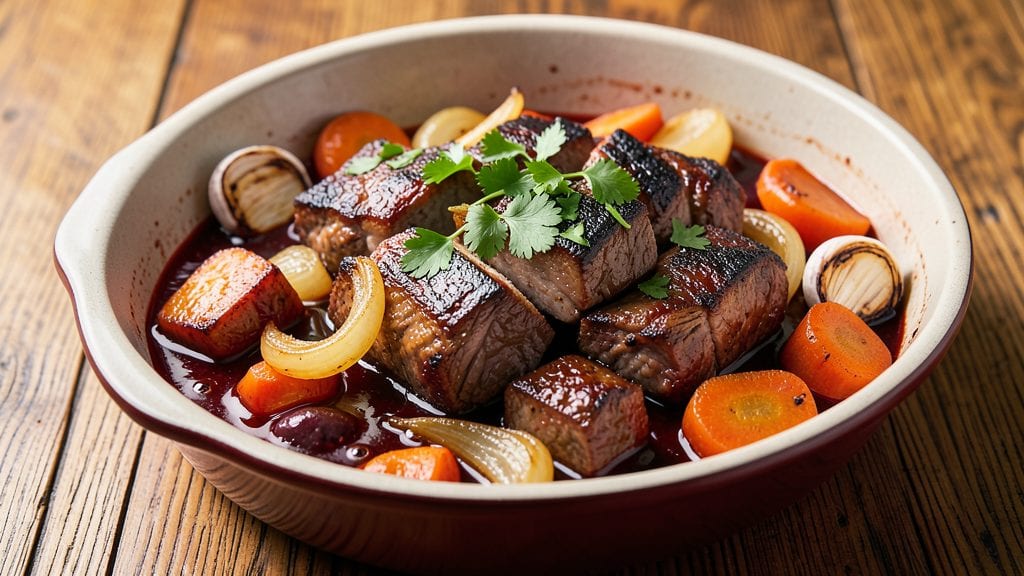
This beef in wine recipe transforms tough cuts into melt-in-your-mouth perfection with a rich, velvety sauce that develops hours of slow braising. The key lies in using a bold red wine—like Cabernet Sauvignon or Merlot—that infuses deep flavor while tenderizing the beef.
I’ve refined this technique over years of testing, ensuring the wine’s acidity cuts through the richness while its tannins create a luxurious sauce.
The process begins with a quick sear to lock in juices, followed by a long braise that turns the kitchen into a fragrant haven. You’ll need about 3 hours of hands-off cooking time, but the result—a dish that’s restaurant-worthy yet approachable—makes it worth every minute.
The sauce thickens beautifully, coating the beef in a glossy, wine-infused glaze that pairs perfectly with earthy mushrooms or caramelized onions.
What you’ll end up with is beef so tender it falls apart at the touch, swimming in a sauce that’s both bold and balanced—savory from the beef, bright from the wine, and deepened by aromatic herbs.
Serve it over creamy mashed potatoes or crusty bread to soak up every last drop. This is comfort food elevated, where technique meets indulgence.
The beauty of this recipe is its versatility—use it for a weeknight dinner or a special occasion, and adjust the wine to your taste. Whether you’re a home cook or a seasoned chef, the method delivers professional results with minimal fuss.
Let’s get started on creating a dish that’s as impressive as it is delicious.
Ingredients for beef in wine
Bold wine, tender beef, and aromatic herbs—this is comfort food at its finest.
| Ingredient | Amount | Notes |
|---|---|---|
| Beef Chuck Roast 🥩 | 2 lb | Pre-cut into 1.5-inch chunks |
| Dry Red Wine 🍷 | 1 ½ cups | Bold Cabernet Sauvignon or Merlot |
| Beef Broth 💧 | 1 cup | Low-sodium preferred |
| Yellow Onion 🧅 | 1 whole | Diced, about 1 cup |
| Garlic Cloves 🧄 | 4 cloves | Minced, about 1 tbsp |
| Carrots 🥕 | 2 whole | Peeled, sliced into rounds |
| Tomato Paste 🍅 | 2 tbsp | Squeeze tube preferred |
| Fresh Thyme Leaves 🌿 | ½ cup | Or 1 tbsp dried thyme |
| Fresh Rosemary 🌿 | 1 sprig | Or 1 tsp dried rosemary |
| Olive Oil 🫒 | 2 tbsp | Extra-virgin for richness |
| All-Purpose Flour 🌾 | 1 tbsp | For thickening sauce |
| Salt 🧂 | 1 ½ tsp | Kosher or sea salt |
| Black Peppercorns 🌶️ | ½ tsp | Freshly cracked |
| Bay Leaves 🍃 | 2 whole | Dried, removed before serving |
The beef is everything here. Chuck roast gives you that signature fall-apart texture—sirloin stays too tough. Grab it from the butcher counter if you can, or look for pre-cut chunks in the meat section. I always check for good marbling; that’s what makes it juicy. For the wine, Cabernet Sauvignon or Merlot from a trusted bottle (like Louis M. Martini or Apothic)—avoid the cheap stuff. The broth? Low-sodium so you control the saltiness. Fresh thyme and rosemary make all the difference, but dried works in a pinch if you’ve got nothing else.
No red wine on hand? Beef broth with 1 tbsp balsamic vinegar gets you close, though it won’t have the same depth. Swap fresh herbs for dried at one-third the amount—so 1 tbsp dried thyme for the 0.5 cup fresh. The tomato paste is non-negotiable for that rich base, but if you’re avoiding it, 1 cup crushed tomatoes works too. For the carrots, baby carrots are fine, but peeled and sliced ones caramelize better. And if you’re feeling fancy, add a splash of red wine vinegar at the end for brightness.
This dish tastes even better the next day—trust me, it’s worth making ahead. Store leftovers in an airtight container in the fridge for 4-5 days, or freeze for 3 months. The sauce thickens as it sits, so add a splash of broth if it’s too stiff. I like to reheat portions in a skillet with a little extra wine to loosen the sauce. And if you’ve got extra, freeze individual portions for quick meals—just thaw and reheat.
Why You'll Love This Recipe
- One-Pot Magic: The wine and broth do all the heavy lifting—just sear the beef, dump in the aromatics, and let it simmer. No constant stirring, no fussing with multiple pans. My hands stay clean while the flavors build on their own.
- Rich, Wine-Kissed Bites: That first sip? The deep, velvety sauce clinging to every tender bite of chuck roast—it’s like a hug for your taste buds. The garlic and onion caramelize just enough to add sweetness, while the wine keeps it from tasting like "sauce." Honestly, the wine makes it feel special, even on a weeknight.
- Leftover Powerhouse: I make this for dinner, then freeze half for later. Reheat it with a splash of water, and it’s still restaurant-quality. My roommates fight over seconds, and I’ve even packed it in lunches—just throw it in a thermos. Zero waste, zero stress.
- Budget’s Best Kept Secret: A chuck roast is cheaper than steak, but tastes like it’s been slow-cooked for hours. The wine adds luxury without breaking the bank—half a bottle turns into flavor, not just alcohol. Between us, it’s the only meal where I feel fancy without splurging.
Step-by-step instructions for beef in wine braise
Here's how to transform tough beef into melt-in-your-mouth perfection with a rich red wine sauce.
Sear the Beef for Maximum Flavor
Heat the 2 tablespoons olive oil in a large Dutch oven over medium-high heat until shimmering. Working in batches if needed, add the 2 lb beef chuck roast cut into 1.5-inch chunks, spreading them in a single layer. Let them sear undisturbed for 3-4 minutes until deep golden brown on all sides.
Here's the thing—this searing step develops the deep, caramelized crust that forms the foundation of your sauce. Don't crowd the pan or the temperature will drop and you'll steam instead of sear. Once all the beef is golden, transfer it to a plate and set aside.
Build the Aromatic Base
In the same Dutch oven, add the 1 whole yellow onion and 2 whole carrots sliced into rounds. Cook for 5 minutes until the onions soften and begin to caramelize. Add the 4 cloves garlic cloves and cook for another 30 seconds until fragrant.
Stir in the 2 tablespoons tomato paste and cook for 1 minute until it darkens slightly. This step develops the deep, complex flavors that will carry through your braise. Pour in the 1.5 cups dry red wine and scrape up all those delicious browned bits from the bottom of the pot—this is where all the flavor lives.
Simmer the Braise to Perfection
Return the beef to the pot along with the 1 cup beef broth, 0.5 cup fresh thyme leaves, 1 sprig fresh rosemary, 1.5 teaspoons salt, 0.5 teaspoon black peppercorns, and 2 whole bay leaves. Bring to a gentle simmer, then reduce heat to maintain a low bubble—this is crucial for tenderizing the beef without drying it out.
Cover the pot and simmer for 2.5 to 3 hours until the beef is fork-tender. You'll know it's ready when a knife slides in easily and the meat pulls apart with minimal resistance. The sauce should have thickened noticeably and taken on that deep, wine-infused richness.
Thicken and Finish the Sauce
Remove the beef from the pot and set it aside. Strain the cooking liquid through a fine-mesh sieve into a clean saucepan, pressing on the solids to extract maximum flavor. Return the liquid to medium heat and whisk in the 1 tablespoon all-purpose flour to thicken the sauce.
Simmer for 3-5 minutes until the sauce coats the back of a spoon and reaches your desired consistency. Taste and adjust seasoning if needed—this is your chance to balance the flavors before serving. The sauce should be rich, slightly tangy from the wine, and perfectly seasoned.
Serve with Confidence
Return the beef to the sauce and let it warm through for 2-3 minutes. Spoon the beef and sauce over mashed potatoes, polenta, or crusty bread to soak up every last drop of that luxurious sauce. The beef should be fork-tender with a deep, wine-infused flavor that pairs beautifully with the rich sauce.
Real talk: This dish tastes even better the next day as the flavors continue to meld. Leftovers keep well in the refrigerator for up to 3 days or can be frozen for 3 months. The sauce will thicken as it cools, so you can always thin it with a splash of beef broth when reheating.
Pro Tips For Making Beef In Wine
- SEAR THE ONIONS FIRST: I used to toss everything in the pot at once, but browning the onions and garlic in beef fat or olive oil (about 2 tablespoons) before adding wine builds real depth—caramelized edges mean richer flavor when the wine reduces. The onions should be soft but still holding shape by the time you pour in the liquid.
- USE HALF THE WINE NOW: Pouring all the wine at once dilutes the sauce. Instead, add just 1 cup first, let it simmer until reduced by half (about 5 minutes), then add the rest. This concentrates the alcohol’s punch and thickens the sauce naturally—no sloppy, watery mess.
- SALT THE BEEF TWICE: Chuck roast needs time to absorb salt, but don’t overdo it early. Start with a dry rub of 1 teaspoon salt per pound the night before, then sear it and add another ½ teaspoon per pound right before braising. This guarantees seasoning penetrates without making the meat taste bland.
- SKIP THE BROTH BUT ADD A BAY LEAF: If you’re short on time, replace half the beef broth with an extra splash of wine (same volume) and toss in 2-3 bay leaves. The leaves add herbal complexity without needing extra liquid—just remove them before serving. (Yes, I’ve burned broth before; this works.)
Troubleshooting perfect results
Sauce Too Thin?
If your sauce ends up watery after braising, it’s usually because you didn’t deglaze properly or didn’t reduce enough. After removing the beef, strain the liquid and return it to the pot. Bring it to a rolling simmer and whisk in 1 tbsp flour to thicken.
If needed, add 1 tbsp cornstarch mixed with 2 tbsp water for extra body. Simmer for 5-7 minutes until it coats the back of a spoon. 💫
Beef Still Tough?
Undercooking is the most common culprit. Use a meat thermometer to ensure the beef reaches 195-203°F internal temperature. If it’s still tough, return it to the pot with ½ cup extra beef broth and simmer 30-45 minutes longer, covered.
The longer cooking time breaks down the collagen for that melt-in-your-mouth texture.
Wine Taste Overpowering?
This happens when the beef absorbs too much alcohol during braising. To balance it, add 1 tbsp balsamic vinegar or 1 tsp sugar while simmering the sauce. Alternatively, reduce the sauce further on the stovetop to concentrate the flavors. Taste as you go—you want the wine’s depth, not its sharpness.
Vegetables Too Soft?
Carrots and onions can turn mushy if simmered too long. Remove them 30 minutes before the beef is done and keep them warm in a separate dish.
Alternatively, add them later in the cooking process—just make sure they’re fully cooked before serving. This keeps their texture intact while the beef finishes tenderizing.
Sauce Separating?
A separated sauce usually means the fat and liquid aren’t emulsified. After thickening with flour, whisk vigorously and let it simmer gently. If it still separates, skim off excess fat with a spoon or use a fat separator (like a fine-mesh strainer) to remove it before serving.
A splash of beef broth can also help re-emulsify the sauce.
Nutrition facts
Frequently asked questions
Can I use any red wine for this beef braise?
For best results, stick with bold red wines like Cabernet Sauvignon or Merlot. These varieties have enough body and acidity to stand up to the beef flavors while developing a rich sauce. Avoid cheap or overly tannic wines—they can overpower the dish. If you're substituting, choose something with 12-14% alcohol for optimal flavor balance.
Why does my beef still feel tough after braising?
Undercooking is usually the culprit! Use a meat thermometer to check for 195-203°F internal temperature. If it’s still tough, return the beef to the pot with ½ cup extra broth and simmer 30-45 minutes longer. The collagen breaks down slowly—patience is key for melt-in-your-mouth texture.
How do I prevent the sauce from getting too thin?
Deglaze thoroughly with wine after searing, then reduce the liquid by half before adding broth. When thickening, whisk in 1 tbsp flour or 1 tbsp cornstarch mixed with water, then simmer until it coats the back of a spoon. A low simmer (not a boil) helps control reduction.
Can I make this ahead of time?
The flavors improve overnight. Store in an airtight container in the fridge for 4-5 days or freeze for 3 months. Reheat gently in a skillet with a splash of wine to restore richness. The sauce thickens as it cools, so add broth when reheating if needed.
What’s the best way to serve this beef braise?
Pair it with creamy mashed potatoes or crusty bread to soak up the sauce. For extra elegance, serve with roasted mushrooms or caramelized onions. The dish also works beautifully over polenta or with a simple green salad to balance the richness.