
Main Courses
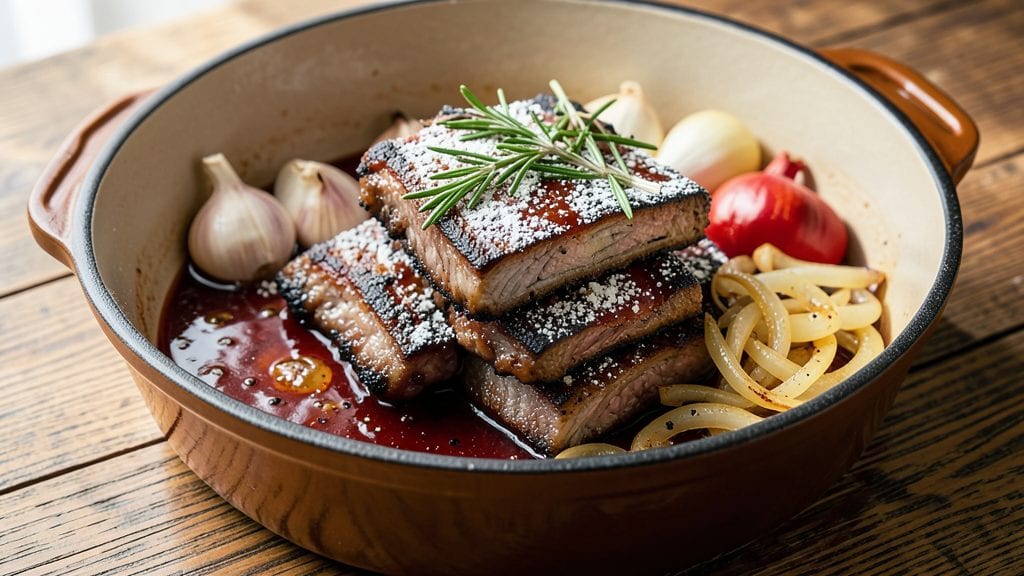
Transforming tough chuck roast short ribs into melt-in-your-mouth tenderness requires patience, but the results are worth every minute of slow braising. This recipe delivers restaurant-quality short ribs with a deep, caramelized crust and rich, flavorful meat that practically falls off the bone.
I’ve perfected the technique over years of testing—starting with a high-heat sear to lock in juices, then slow-braising until the meat becomes irresistibly tender.
The key to success lies in the balance of time and temperature: a hot sear develops flavor, while low-and-slow braising breaks down collagen for that signature tenderness.
You’ll need a Dutch oven for even cooking, and the process takes about 4 hours, but the hands-off method makes it ideal for a weekend project. The result? Short ribs so flavorful they’ll disappear faster than you can say "second helping."
Pair these short ribs with creamy mashed potatoes or roasted root vegetables to soak up every last bit of the caramelized juices. The sauce—rich from the braising liquid—adds another layer of depth, turning this into a complete meal that feels like a home-cooked masterpiece.
Once you try this method, you’ll never buy pre-cooked ribs again.
This recipe works equally well for holiday feasts or a cozy weeknight dinner, proving that slow-cooked dishes can be both impressive and effortless. The secret is in the technique, not the time spent—just let the oven do the work while you enjoy the anticipation of that first bite.
Let’s get started on creating short ribs that will have everyone asking for seconds.
Ingredients for chuck roast short ribs
Four pounds of chuck roast short ribs transform into melt-in-your-mouth perfection with these 15 ingredients.
| Ingredient | Amount | Notes |
|---|---|---|
| Chuck Roast Short Ribs 🥩 | 4 lb | Bone-in, 1.5-inch thick cuts |
| All-Purpose Flour 🌾 | ½ cup | For dredging, light coating |
| Kosher Salt 🧂 | 2 tbsp | Diamond Crystal preferred |
| Freshly Ground Black Pepper 🌶️ | 1 tbsp | Coarse grind for texture |
| Garlic Cloves 🧄 | 6 cloves | Smashed, skin-on for flavor |
| Yellow Onion 🧅 | 1 whole | Cut into 1-inch chunks |
| Carrots 🥕 | 4 whole | Cut into 2-inch chunks |
| Celery Stalks 🥬 | 3 whole | Cut into 1-inch pieces |
| Dry Red Wine 🍷 | 1 cup | Bold Cabernet Sauvignon |
| Beef Broth 💧 | 2 cups | Low-sodium preferred |
| Tomato Paste 🍅 | 2 tbsp | Squeeze tube preferred |
| Fresh Thyme 🌿 | 2 sprigs | Stems removed for braising |
| Fresh Rosemary 🌿 | 1 sprig | Woody stems removed |
| Extra-Virgin Olive Oil 🫒 | 2 tbsp | For searing ribs |
| Balsamic Vinegar 🍶 | 1 tbsp | For deglazing |
The chuck roast short ribs are the star, so look for bone-in cuts with good marbling—this is what gives them that signature tenderness. Costco and Whole Foods usually carry the best quality, but your local butcher shop will have the freshest cuts. If you're buying a whole chuck roast, ask for it to be cut into 1.5-inch thick short ribs. The thicker cuts stay juicier during the long braise. For the best flavor, use the ribs within 3 days of purchase—they'll keep in the fridge until then, wrapped tightly in plastic.
No red wine? Substitute with beef broth plus 1 tbsp balsamic vinegar—it adds depth without overpowering. Fresh thyme and rosemary are ideal, but dried works at half the amount. The tomato paste adds richness, so don't skip it—those squeeze tubes from Trader Joe's are perfect for this. For the vegetables, carrots and celery can be swapped for turnips or parsnips if you prefer. The onion? Yellow or red both work, but yellow has slightly more sweetness. If you're short on time, baby carrots and chopped celery from the salad bar will save you minutes of prep.
This braise gets better the next day, so make extra—it reheats beautifully. Store the ribs and sauce separately in airtight containers for up to 5 days in the fridge. For longer storage, freeze the ribs (without sauce) for up to 3 months. The sauce can be frozen separately for 2 months. I like to portion the ribs into individual containers for easy reheating—just add a splash of water or broth and warm through. The caramelized crust will soften slightly, but the flavor stays rich and deep.
Why You'll Love This Recipe
- No-Fuss Prep: The ribs just need a quick flour dredge, salt, and pepper—no fancy marinades or hours of prep. Honestly, I keep a bag of flour in my pantry just for this, because it’s that easy.
- Rich, Garlicky Magic: That simple flour crust turns tender, while the garlic-infused pan sauce clings to every bite like it’s been simmering all day. Between us, the first time I tried it, I forgot to set the timer.
- Weeknight to Dinner Party: Same recipe works for a lazy Tuesday or a crowd of hungry guests—just double the ribs. My son’s soccer team’s moms now ask for the recipe every year at the holiday potluck.
- Budget-Friendly Leftovers: Chuck roast short ribs stretch across three meals without losing flavor. I’ll be real: the second night, I reheat them in the oven with a splash of broth and call it “fancy” for my picky eater.
Step-by-step instructions for chuck roast short ribs
Here's how to transform tough chuck roast short ribs into melt-in-your-mouth perfection with a deep, caramelized crust.
Sear the Ribs for Maximum Flavor
Pat the 4 lb chuck roast short ribs completely dry with paper towels—this is critical for that caramelized crust. Heat 2 tbsp extra-virgin olive oil in a large Dutch oven over medium-high heat until shimmering. Working in batches if needed, sear the ribs on all sides for 3-4 minutes per side until deep brown and crispy.
Don't crowd the pan—this ensures proper browning. As they sear, you'll smell the rich beefy aromas developing. Once all ribs are seared, transfer them to a plate and set aside. The residual heat will keep them warm while you build the braising liquid.
Build the Braising Liquid
In the same Dutch oven, reduce heat to medium and add 6 smashed garlic cloves (skin-on for extra flavor). Sauté for 1 minute until fragrant. Add 1 whole yellow onion, 4 whole carrots, and 3 whole celery stalks, all cut as specified. Cook for 5 minutes, stirring occasionally, until the vegetables begin to soften.
Sprinkle in 2 tbsp kosher salt and 1 tbsp freshly ground black pepper, then stir in 2 tbsp tomato paste. Cook for another 2 minutes until the paste darkens slightly. Here's where the magic begins—pour in 1 cup dry red wine and scrape up all those browned bits from the bottom of the pan. Let it simmer for 3 minutes until reduced by half.
Deglaze and Prepare for Braising
Add 2 cups beef broth, 2 sprigs fresh thyme, and 1 sprig fresh rosemary. Stir well to combine, then return the seared ribs to the pot. The liquid should come about halfway up the ribs—if it's too shallow, add a splash of water. Bring to a gentle simmer, then cover tightly with a lid.
This is the moment that matters: transfer the pot to a 325°F oven. The ribs need to braise slowly for 3 hours, allowing the connective tissue to break down into rich, velvety sauce. I know it's tempting to peek, but resist—every time you lift that lid, you're letting heat escape and adding time to your cook.
Finish with Balsamic Vinegar
After 3 hours, carefully remove the lid and increase oven temperature to 375°F. Add 1 tbsp balsamic vinegar and stir gently to distribute it evenly. Return to the oven uncovered for 15-20 minutes until the sauce thickens and the ribs develop a glossy, caramelized crust.
Watch for the sauce to reduce and the ribs to develop those beautiful dark spots—this is your signal they're ready. The balsamic adds a subtle tang that cuts through the richness of the beef. Let the ribs rest in the pot for 10 minutes before serving, allowing the juices to redistribute throughout the meat.
Serve with Crispy Vegetables
Use two forks to gently pull the ribs apart at the bones, then arrange them on a platter with the braising liquid and vegetables. The vegetables should be tender but still holding their shape—if they're too soft, reduce the braising time slightly next time. Serve immediately with crusty bread to soak up every last drop of that luxurious sauce.
Each bite should deliver tender, fork-tender meat that falls apart with minimal effort, surrounded by a rich, caramelized crust. The sauce should coat the back of a spoon with a perfect balance of sweetness from the caramelization and acidity from the balsamic. This is comfort food at its finest—worth every minute of the slow cook.
Pro Tips For Making Chuck Roast Short Ribs
- Sear Until Dark: Chuck roast short ribs need a crust that clings like armor—get your pan screaming hot (medium-high to high) and sear them 3-4 minutes per side until the flour forms a deep golden-brown crust. I used to rush this, and the ribs ended up tasting more like stew than seared perfection. High heat. Seriously, crank it up.
- Trim the Fat, Not the Flavor: Leave the fat cap on those short ribs—it renders down into pure flavor. But if yours looks like a greasy mess, trim just the loose bits of fat, not the marbled layers. My grandmother swore by this, and she was right: the fat keeps the meat juicy while the collagen turns to gelatin during slow cooking.
- Salt the Garlic: Crush those garlic cloves with a pinch of kosher salt before adding them to the pan—it mellows the sharpness and boosts their flavor. I was skeptical until I tried it: the garlic doesn’t overpower, and the ribs absorb the aroma better. (Yes, even if you’re impatient like me.)
- Deglaze with Patience: After searing, don’t pour in liquid right away—let the browned bits sit for 30 seconds. Then, add just enough liquid (like broth or wine) to scrape up every last bit of crust. I learned this the hard way: skipping this step means losing half the flavor. That crust is the thing that matters most.
Perfect pairings for this chuck roast short ribs
Creamy Mashed Potatoes
This rich, velvety side is the ultimate companion to your short ribs. Use 4 large Yukon Gold potatoes boiled until tender, then mash with ½ cup unsalted butter, ½ cup warm whole milk, and 1 tsp kosher salt.
For extra indulgence, fold in ¼ cup sour cream and a sprinkle of freshly cracked black pepper. The creamy texture soaks up the caramelized juices beautifully. 🥔
Roasted Root Vegetables
Toss 2 cups diced carrots, 2 cups parsnips, and 1 large sweet potato in 2 tbsp olive oil, 1 tsp smoked paprika, and ½ tsp garlic powder.
Roast at 400°F for 30-35 minutes until caramelized and tender. The natural sweetness contrasts perfectly with the savory ribs. I love adding a pinch of cayenne pepper for subtle heat.
Crusty Bread with Garlic Butter
A warm, crusty baguette slathered with garlic butter is essential for soaking up every last drop of sauce. Mix ½ cup softened butter with 2 minced garlic cloves, 1 tsp fresh parsley, and a pinch of salt.
Spread generously on sliced bread and toast briefly in the oven. The crispy crust adds texture that balances the tender ribs. 🥖
Red Wine Reduction Sauce
Use the leftover braising liquid to create a silky red wine reduction. Simmer the liquid in a saucepan over medium heat for 15-20 minutes until reduced by half. Finish with 1 tbsp cold butter for a glossy finish.
This sauce adds depth to each bite and pairs beautifully with the caramelized crust. I often drizzle it directly over the ribs before serving.
Simple Green Salad
A bright, peppery salad cuts through the richness of the ribs. Toss 4 cups mixed greens with 1 tbsp balsamic vinaigrette (mix 2 tbsp balsamic vinegar, 1 tbsp olive oil, and 1 tsp Dijon mustard).
Add ½ cup toasted walnuts and ¼ cup crumbled goat cheese for texture. The acidity refreshes your palate between bites. 🥗
Beverage Pairings
A bold Cabernet Sauvignon complements the rich flavors of the ribs, while a crisp Chardonnay balances the dish's depth. For beer lovers, a dark amber ale with malty notes enhances the caramelization.
I find that a glass of red wine also helps cleanse the palate between bites, making the meal even more enjoyable. 🍷
Nutrition facts
Frequently asked questions
Can I use bone-in or boneless chuck roast short ribs?
Bone-in short ribs are ideal—they stay juicier and add incredible flavor to the braising liquid. If you can only find boneless cuts, they’ll still work but may dry out slightly faster. Look for cuts with good marbling (fat streaks) for maximum tenderness.
How do I know when the ribs are fully tender?
Use a fork or meat thermometer—the ribs are done when they reach 203°F internally and fork-tender. If they resist slightly, they’ll finish cooking during the final 15-20 minutes at 375°F. Overcooking can make them mushy, so aim for just until they pull apart easily.
Can I make this recipe in a slow cooker?
Yes! Sear the ribs first, then transfer them to a slow cooker with all braising ingredients. Cook on low for 8-10 hours or high for 5-6 hours. The texture will be slightly less caramelized but just as tender. Add a splash of water if the liquid gets too low during cooking.
What if I don’t have red wine?
No problem! Substitute with 1 cup beef broth + 1 tbsp balsamic vinegar for depth. For extra richness, add 1 tbsp soy sauce (works well with beef). The key is balancing acidity—just ensure the liquid is flavorful enough to braise the ribs properly.
How should I store leftovers?
Store ribs and sauce separately in airtight containers for up to 5 days in the fridge. For longer storage, freeze the ribs (without sauce) for 3 months). Reheat gently in a skillet with a splash of broth to restore moisture—never microwave directly.