
Main Courses
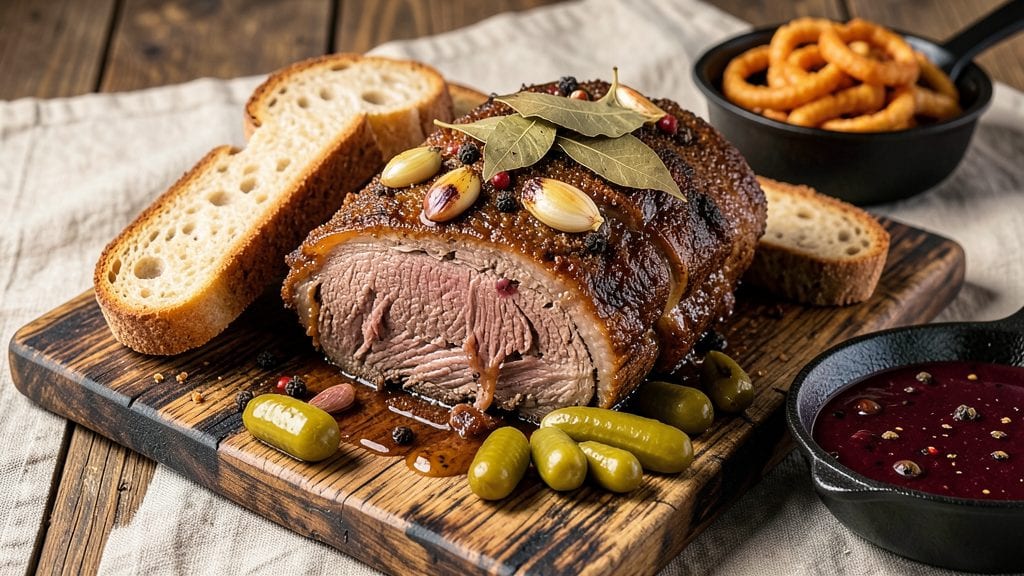
This corned beef smoker recipe transforms tough cuts into melt-in-your-mouth perfection with just a few hours of low-and-slow cooking. The secret lies in the smoky spice infusion that develops during the smoking process, creating a flavor profile that's both traditional and deeply satisfying.
I've perfected this method over years of testing, ensuring tender meat that falls apart at the touch of a fork while maintaining that signature smoky aroma.
The process begins with a precise brine that tenderizes the meat and infuses it with flavor, followed by a controlled smoking session that builds layers of complexity. Whether you're using a traditional barrel smoker or a modern electric model, this method delivers restaurant-quality results in your own backyard.
The key is patience—letting the meat work through its stages at the right temperature ensures juicy, flavorful corned beef every time.
What you'll end up with is deeply tender corned beef with a perfectly balanced blend of smoky, spicy, and savory flavors. The exterior develops a subtle bark from the wood smoke, while the interior remains juicy and rich.
This is the kind of dish that transforms a simple meal into an experience—ideal for St. Patrick's Day celebrations or any occasion where you want to impress.
Serve with classic sides like boiled potatoes, mustard sauce, and coleslaw for the full experience. The recipe accommodates modern smoker setups while honoring traditional techniques, making it accessible whether you're a seasoned pitmaster or new to smoking. Let's get started on creating your own smoky masterpiece.
Ingredients for corned beef smoker
Four pounds of brisket, a few hours of smoke, and a precise brine—this is all you need for restaurant-quality corned beef.
| Ingredient | Amount | Notes |
|---|---|---|
| Corned Beef Brisket 🥩 | 4 lb | Tough cut, 1-1.5 inches thick |
| Yellow Mustard 🍯 | ½ cup | For brine, not Dijon |
| Kosher Salt 🧂 | 1 ½ cups | Diamond Crystal preferred |
| Brown Sugar 🍚 | ½ cup | Light or dark, packed |
| Black Peppercorns 🌶️ | 1 tbsp | Whole, freshly cracked |
| Garlic Cloves 🧄 | 6 whole | Smashed, not minced |
| Bay Leaves 🌿 | 2 whole | Dried, standard size |
| Apple Cider Vinegar 🍎 | 1 cup | Not white vinegar |
| Hickory Wood Chips 🌳 | 2 cups | Unsoaked, 100% hickory |
| Beef Broth 🥛 | 1 cup | Low-sodium, for spritzing |
| Onion Powder 🧅 | 1 tbsp | Not onion salt |
| Cloves 🌿 | 4 whole | Whole, for aroma |
| Allspice Berries 🌶️ | 4 whole | Crushed slightly |
| Water 💧 | 4 cups | Filtered preferred |
The brisket is non-negotiable—look for thick-cut brisket (1-1.5 inches) at Whole Foods or your local butcher. Costco sells great briskets too, but check the fat cap—it should be at least 1/4 inch thick for moisture. The Diamond Crystal kosher salt is key here; it dissolves perfectly for that classic corned beef flavor. If you can't find it, Morton kosher salt works but use 1/3 more. For the wood chips, Traeger or Cookshack brands are reliable, but avoid anything with additives. The hickory is traditional, but apple or cherry wood adds a nice twist if you want to experiment.
No apple cider vinegar? White vinegar or red wine vinegar in a pinch, but the flavor will be slightly different. Running short on whole spices? Ground versions work (use half the amount), but the texture and aroma won't be the same. The mustard is critical—Dijon won't cut it here, as it's too strong and can overpower the brine. For the beef broth, low-sodium is a must unless you're adding extra salt later. If you're using an electric smoker, spritz every 45 minutes with the broth to keep the meat moist. The brine should cover the meat completely—if it doesn't, add more water.
The brined brisket keeps in the fridge for up to 3 days before smoking, but I recommend doing it the day before for maximum tenderness. Once smoked, it reheats beautifully—wrap tightly in foil and reheat in a 300°F oven for 1-2 hours. Leftovers? Freeze for up to 3 months in portions. The smoke flavor intensifies overnight, so if you can wait, do it. For serving, slice against the grain—this is the secret to that melt-in-your-mouth texture. Pair with boiled potatoes and mustard sauce for the full experience.
Why You'll Love This Recipe
- Smoker’s Secret Weapon: I swear by this recipe—just slather that brisket with mustard, sprinkle the salt and peppercorns, and let the smoker do the work. No basting, no fuss, no stress. Honestly, the hardest part is deciding when to pull it.
- Sweet-Smoky Magic: That brown sugar crust? It caramelizes into something ridiculously good—crispy edges with a tender, juicy center that’s got this perfect balance of smoky depth and sweetness. Between us, it’s the kind of flavor that makes people ask for seconds before you even sit down.
- Leftovers That Win: This recipe practically begs to be made in bulk—sliced thin, it feeds a crowd and still tastes amazing cold the next day. I’ll be real: my freezer is always stocked with it because sandwiches, tacos, or hash? It’s all fair game.
- Budget-Friendly Feast: A single brisket stretches for days, and the ingredients? Basic stuff you already have. The mustard adds that tangy punch, the peppercorns bring heat, and the sugar keeps it from being too heavy. Not the prettiest, but the taste makes up for it—and your wallet thanks you.
Step-by-step instructions for smoky spice-infused corned beef
Here's how to transform tough brisket into fork-tender, smoky perfection using just your smoker.
Prepare the Brine for Maximum Tenderness
In a large non-reactive container, combine the 4 cups water, 1.5 cups kosher salt, 0.5 cup brown sugar, 1 cup apple cider vinegar, 6 whole smashed garlic cloves, 2 whole bay leaves, 4 whole cloves, and 4 whole crushed allspice berries. Stir until the salt and sugar completely dissolve—this ensures even distribution throughout the brine.
Add the 4 lb corned beef brisket to the container, making sure it's fully submerged. If needed, place a weight on top to keep it under the liquid. Refrigerate for 24-48 hours, turning the brisket once daily. This long brine time breaks down connective tissue, guaranteeing that tender result you're after. The vinegar and spices will infuse deeply, creating layers of flavor that smoke alone can't match.
Set Up Your Smoker for Perfect Smoke Circulation
Remove the brisket from the brine and rinse it thoroughly under cold water to remove excess salt. Pat it completely dry with paper towels—this step is crucial for developing that beautiful bark. While the brisket rests at room temperature for 30 minutes, prepare your smoker by adding the 2 cups hickory wood chips to the smoke box.
Set your smoker to maintain a steady 225°F temperature. You'll want to see clean, blue smoke—not thick white smoke—which indicates proper combustion. Place the brisket fat-side up on the smoker grate. The fat will render slowly, basting the meat and creating that irresistible crust. Avoid the temptation to open the smoker during the first hour, as each peek can disrupt the cooking process and extend your total time.
Smoke the Brisket Low and Slow
Smoke the brisket undisturbed for 8-10 hours, or until the internal temperature reaches 195-200°F when measured in the thickest part of the meat. Here's where the magic happens: the collagen in the tough brisket slowly converts to gelatin, creating that melt-in-your-mouth texture. Every 2 hours, spritz the brisket with a mixture of 1 cup beef broth and 1 tablespoon onion powder to keep it moist and enhance flavor penetration.
Real talk: you'll notice the temperature stall around 165°F—this is normal and expected. Don't panic or adjust the heat. Instead, trust the process and let the smoker do its work. The bark should develop a deep, mahogany color by the end, with a crisp texture that contrasts beautifully against the tender interior. When you insert a probe, it should slide in like butter with no resistance.
Rest and Slice for Maximum Juiciness
Once the brisket reaches the target temperature, remove it from the smoker and transfer it to a cutting board. Tent loosely with aluminum foil and let it rest for at least 1 hour—this crucial step allows the juices to redistribute throughout the meat. I know it's tempting to dive in immediately, but skipping this will result in dry slices. The resting period also lets the bark set properly, making it easier to slice cleanly.
After resting, slice the brisket against the grain into ¼-inch thick portions. The meat should pull apart easily with gentle pressure, and each slice should be moist and flavorful. Serve immediately with your favorite accompaniments—crusty bread, pickled vegetables, or a simple cabbage slaw all pair beautifully. The aroma alone will have everyone gathering around the table, and the first bite will confirm you've achieved that perfect balance of smoky, spice-infused tenderness.
Pro Tips For Making Corned Beef Smoker
- CRANK THE HEAT FIRST: Start your smoker at 275°F (135°C) for the first hour—yes, even if your recipe says "low and slow." The brisket needs that initial burst to render fat and tighten the skin before you drop to 225°F (107°C). I used to skip this, and my corned beef always felt greasy instead of crisp.
- SALT THE MUSTARD: Mix 2 tablespoons kosher salt into the yellow mustard before slathering it on the brisket. The salt dissolves into the mustard, creating a sticky, flavor-packed crust that clings to the meat instead of sliding off. (I learned this after watching my first batch’s mustard pool on the smoker grate.)
- DON’T PEEK OR MOVE: Resist the urge to check the brisket until at least 4 hours in—opening the smoker drops the temp and turns your cook into a science experiment. If you must peek, do it quickly and keep the lid closed. Crowding the meat with probes or tools also ruins airflow; let that brisket breathe.
- UPGRADE WITH PEPPERCRUSH: Crack 10–12 black peppercorns directly onto the brisket before smoking, not just in the rub. The whole peppercorns release oils and aroma as they cook, adding a subtle heat that ground pepper can’t match. (Sounds fussy, but it’s worth the 30 seconds.)
Flavor customization for these flavors
Spicy Kick
For a bold, heat-infused twist, add 1 tbsp cayenne pepper or 2 tbsp smoked paprika directly to the brine. I also like to include ½ tsp ground cinnamon for warmth—it’s a secret in many Southern brining traditions.
For extra heat, sprinkle 1 tsp crushed red pepper flakes onto the brisket before smoking. 🌶️
Sweet & Smoky
Balance the smokiness with sweetness by adding ¼ cup molasses or 2 tbsp maple syrup to the brine. This creates a caramelized crust during smoking and adds depth to the flavor. I’ve also had success with 1 tbsp honey in the spritzing mixture—it enhances the bark beautifully.
Herb-Infused Variations
Swap traditional spices for fresh herbs like rosemary or thyme—tuck sprigs into the brisket before smoking or add 1 tbsp dried herbs to the brine.
For a Mediterranean twist, include 1 tsp dried oregano and ½ tsp fennel seeds in the brine. The herbs add complexity without overpowering the smoky profile.
Umami Boost
Elevate the depth of flavor by adding 2 tbsp soy sauce or 1 tbsp Worcestershire sauce to the brine. These ingredients introduce a savory umami note that pairs perfectly with the smokiness.
For an extra punch, include 1 tbsp fish sauce (just a splash!)—it’s a trick I picked up from Vietnamese barbecue traditions.
Citrus Zing
Brighten the dish with zest from 1 lemon or orange added to the brine. The citrus cuts through the richness of the meat and adds a refreshing contrast.
I also like to add 1 tbsp fresh orange juice to the spritzing mixture—it keeps the meat moist and adds a subtle tang.
Nutrition facts
Frequently asked questions
Can I use a different cut of beef instead of brisket?
Brisket is ideal for this recipe because of its fat content and connective tissue, which create that signature tender texture. However, you can use chuck roast or round roast as alternatives—just increase the smoking time by 1-2 hours and monitor closely. Avoid lean cuts like sirloin, as they won't develop the same juicy, fall-apart quality.
What if my smoker can't maintain a steady 225°F?
Most smokers struggle with temperature consistency, especially electric or pellet models. If your smoker fluctuates, aim for 200-250°F and adjust the wood chips or airflow accordingly. For pellet smokers, use hickory pellets and set the target to 225°F—the built-in thermostat will compensate. If it runs too hot, add more wood chips or reduce the heat setting. Patience is key!
How do I know when the corned beef is fully cooked?
Use a meat thermometer to check the internal temperature at the thickest part of the brisket. It should reach 195-200°F—this is the "probe-tender" stage where collagen breaks down into gelatin. If the probe slides in easily with no resistance, it's ready. The bark should also be deep mahogany, and the meat should pull apart effortlessly when sliced.
Can I make this recipe in an oven instead of a smoker?
Yes! Preheat your oven to 275°F (instead of smoking) and wrap the brined brisket tightly in foil. Add ½ cup beef broth and 1 tbsp apple cider vinegar to the foil, then bake for 4-5 hours until tender. For smoky flavor, place a small tray of wood chips (or soaked wood chunks) on the oven rack below the brisket. The result won't be as smoky, but it'll still be tender and flavorful.
Why did my corned beef turn out dry?
Dry corned beef usually happens from overcooking, skipping the rest, or not using enough fat. Always smoke to 195-200°F (not higher), rest for 1 hour before slicing, and choose a cut with at least ¼-inch fat cap. If it's still dry, try brining for 48 hours next time and spritzing every 1 hour with broth. The low-and-slow method is non-negotiable for juicy results!