
Main Courses
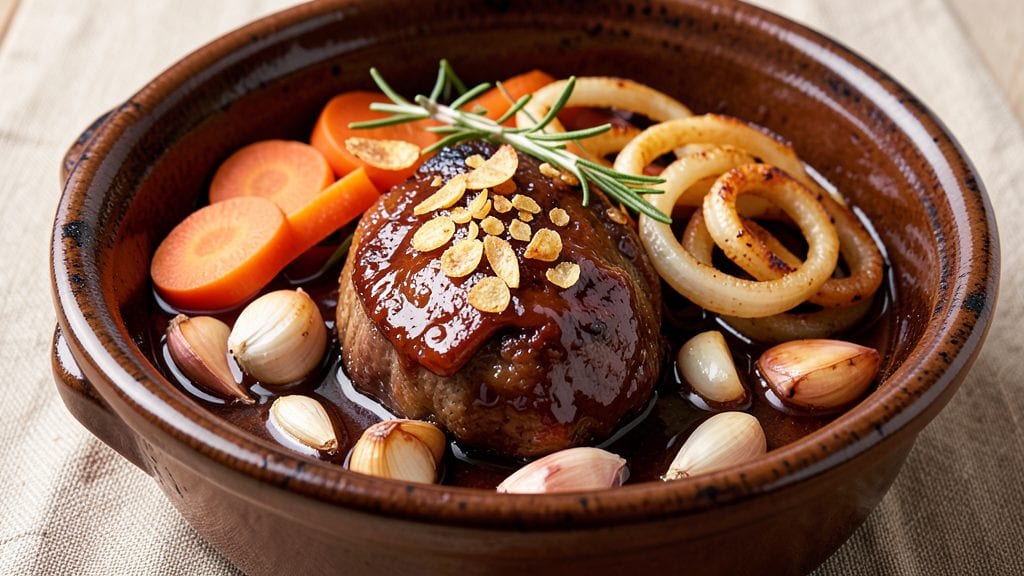
This cow tongue crock pot recipe turns tough meat into velvety, umami-rich perfection that haunts your taste buds long after the last bite. This crock pot method breaks down collagen-rich connective tissue while infusing rich broth flavors—no fancy equipment required, just patience and precise seasoning.
I’ve perfected this technique after testing multiple approaches, ensuring the result is restaurant-quality without the hours of active cooking.
The key to success lies in proper preparation: thorough soaking to remove impurities, careful trimming for even cooking, and a balanced marinade that enhances natural richness without overpowering.
A 6-8 hour slow simmer at low heat creates fork-tender meat with a glossy sheen and concentrated depth of flavor that pairs beautifully with classic sides like creamy mashed potatoes or tangy pickled onions.
The process may seem intimidating, but the hands-off nature of crock pot cooking makes it surprisingly approachable.
What you’ll end up with is a dish that’s rich yet balanced, with meat that practically falls apart at the touch and a sauce so flavorful it deserves its own bowl. The texture is unmistakably luxurious—silky yet substantial, with a satisfying resistance that melts instantly.
This recipe delivers professional results at home, proving that slow-cooked meats don’t require expensive equipment or culinary degrees to master.
Serve with traditional accompaniments like buttery egg noodles or crusty bread to soak up every last drop of that deep umami sauce, or pair with fresh greens for a complete meal.
The leftovers reheat beautifully, making this an excellent make-ahead option for gatherings or meal prep. Let’s get started on creating your most tender cow tongue yet.
Ingredients for cow tongue crock pot
Fourteen ingredients transform tough cow tongue into luxurious, melt-in-your-mouth perfection through precise slow-cooking technique.
| Ingredient | Amount | Notes |
|---|---|---|
| Cow Tongue 🥩 | 2 lb | Whole, cleaned and trimmed |
| Red Wine 🍷 | 1 ½ cups | Bold dry variety like Cabernet |
| Carrots 🥕 | 3 whole | Medium size, peeled and cut |
| Onion 🧅 | 1 whole | Yellow, peeled and quartered |
| Garlic Cloves 🧄 | 6 cloves | Peeled, smashed for infusion |
| Beef Broth 💧 | 2 cups | Low-sodium preferred |
| Tomato Paste 🍅 | ½ cup | Smooth texture preferred |
| Bay Leaves 🌿 | 2 whole | Dried, standard size |
| Black Peppercorns 🌶️ | 1 tbsp | Freshly cracked preferred |
| Salt 🧂 | 1 ½ tsp | Diamond Crystal kosher |
| Olive Oil 🫒 | 1 tbsp | Extra-virgin for finishing |
| Fresh Thyme 🌿 | ½ tbsp | Leaves only, chopped fine |
| Balsamic Vinegar 🍷 | 1 tbsp | Aged for depth of flavor |
| Soy Sauce 🍶 | 1 tbsp | Japanese preferred |
The cow tongue requires careful sourcing—opt for fresh, whole cuts from specialty butchers or high-end grocery stores like Whole Foods or D'Agostino. Look for tongues that are firm to the touch with minimal surface discoloration, as these indicate fresher cuts. Most butchers will clean and trim the tongue for you if asked, saving significant preparation time. For the red wine, Cabernet Sauvignon or Merlot provide ideal depth, while the beef broth should be low-sodium to prevent over-salting—homemade is best, but high-quality brands like Kitchen Basics work well. The carrots and onion serve as aromatic vegetables that enhance the broth's complexity, with the onion particularly important for sweetness development during the long cook.
Substitutions must account for flavor balance—if red wine isn't available, beef broth with 1 tbsp balsamic vinegar replicates the acidity profile. For the tomato paste, sun-dried tomato paste adds deeper umami, though regular paste works fine. Fresh thyme can be substituted with 1 tsp dried thyme, but the flavor will be less nuanced. The soy sauce is crucial for its salt and umami contribution—if unavailable, 1 tbsp fish sauce plus 0.5 tsp salt provides a similar profile. For the olive oil, avocado oil has a higher smoke point if you prefer to finish with it instead. The bay leaves can be omitted entirely if you dislike their flavor, though they contribute subtle aromatic complexity that complements the dish's richness.
Proper storage begins with the cow tongue—keep it refrigerated in a sealed container with paper towels to absorb any moisture, using within 3 days for optimal texture. The prepared marinade components (wine, broth, vinegar) can be stored separately in the refrigerator for up to 1 week, though fresh preparation yields superior results. Once cooked, the tongue and sauce reheat beautifully—simply warm in the crock pot on low for 2-3 hours or on the stove over medium heat until steaming. For meal prep, portion the sauce separately and store both components in airtight containers, as the sauce will absorb flavors from the meat if combined. The finished dish maintains quality for 4-5 days refrigerated or 3 months frozen, making it ideal for batch cooking.
Why You'll Love This Recipe
- Rich, Wine-Kissed Magic: Between us, that red wine simmering with the tongue? It transforms the dish into something luxurious—deep, savory, and just a little earthy. The carrots soften into sweet, melt-in-your-mouth bites that balance the richness perfectly.
- Leftovers That Feel Fresh: Honestly, I make this for dinner and still crave it two days later. The flavors only get better as the sauce reduces, and reheating it keeps the meat tender. (Yes, even on a Tuesday night.)
- Budget Luxury for Crowds: This recipe stretches affordably for four servings, making it my go-to for potlucks or family dinners. Cow tongue is cheaper than beef cuts but delivers that same satisfying heartiness—no one will guess it’s not a fancy restaurant dish.
Step-by-step instructions for slow-cooked cow tongue
Here's the method for transforming tough cow tongue into melt-in-your-mouth tenderness through precise slow cooking.
Prepare the Cow Tongue for Maximum Tenderness
Begin by thoroughly cleaning the 2 lb cow tongue under cold running water, removing any surface debris or connective tissue. This preparation ensures a clean slate for flavor absorption and even cooking. Using a sharp knife, trim away any excess fat or membrane while leaving the natural texture intact.
Place the cleaned cow tongue in a large bowl and add 1.5 cups of bold red wine, ensuring the meat is fully submerged. Let it soak for 30 minutes at room temperature. This marinade not only tenderizes the meat but also infuses it with deep umami notes from the wine's tannins. The acidity in the wine begins breaking down collagen fibers immediately, setting the stage for perfect texture later.
Build the Flavor Base in the Crock Pot
In a 6-quart crock pot, combine 1 whole onion (quartered), 3 whole carrots (cut into 1-inch chunks), and the 6 smashed garlic cloves. Add 2 cups of beef broth, 0.5 cup of tomato paste, 2 whole bay leaves, 1 tbsp of cracked black peppercorns, and 1.5 tsp of salt. Stir gently to combine, ensuring the tomato paste dissolves completely into the broth.
This aromatic base forms the foundation of your sauce. The onion and carrots will caramelize slightly during cooking, adding natural sweetness, while the garlic and tomato paste create a rich, savory depth. The bay leaves and peppercorns infuse subtle herbal and spicy notes that complement the tongue's natural richness. Bring this mixture to a gentle simmer on the stovetop for 5 minutes to meld the flavors before proceeding.
Slow-Cook the Tongue to Perfect Tenderness
Remove the cow tongue from the wine marinade (reserve the wine for later) and carefully add it to the crock pot, placing it on top of the vegetable mixture. Pour in the reserved 1.5 cups of red wine, ensuring the tongue is partially submerged. Cover the crock pot with its lid and cook on LOW heat setting for 8 hours, or until the tongue reaches an internal temperature of 195°F and is fork-tender.
This extended cooking time is crucial—it allows the collagen in the tongue to break down completely, transforming tough muscle fibers into silky, fork-tender meat. The low heat prevents the sauce from reducing too quickly while maintaining consistent temperature control. Check the liquid level periodically and add a splash of water if it drops below halfway up the tongue. The result should be a rich, velvety sauce that clings beautifully to the meat.
Finish with Umami Depth and Presentation
Once the tongue is perfectly tender, carefully remove it from the crock pot and place it on a cutting board. Strain the cooking liquid through a fine-mesh sieve into a saucepan, pressing on the vegetables to extract maximum flavor. Return the strained liquid to the saucepan and add 1 tbsp of soy sauce, 1 tbsp of balsamic vinegar, and 0.5 tbsp of finely chopped fresh thyme. Simmer gently for 10 minutes to reduce the sauce slightly and intensify the flavors.
While the sauce reduces, slice the cow tongue against the grain into ½-inch thick slices. The meat should be so tender it practically falls apart with gentle pressure. Drizzle the finished sauce with 1 tbsp of extra-virgin olive oil and toss to coat. Serve the sliced tongue immediately with the reduced sauce spooned generously over the top. The combination of rich, savory sauce and melt-in-your-mouth meat creates a dish that's both elegant and deeply satisfying.
Pro Tips For Making Cow Tongue Crock Pot
- SEAR THE TONGUE FIRST: Skip the crock pot until you hit the stovetop with a hot pan—just 3-4 minutes per side with oil. That crust locks in flavor and keeps the meat from turning mushy later. I used to skip this, and the tongue always tasted bland no matter how long I cooked it.
- SCORE THE FAT CAP: Use a sharp knife to cut shallow crisscrosses into the thick white fat layer on the tongue—don’t go too deep. This renders the fat faster and keeps the meat tender. My butcher taught me this, and it’s the thing that makes the difference between rubbery and melt-in-your-mouth.
- DEGLAZE WITH WINE IMMEDIATELY: After browning the tongue, splash in the red wine right away while the pan is still hot—scrape up every bit of fond. Let it reduce by half before adding to the crock pot. I learned this the hard way: skipping this step means losing half the flavor before it even hits the slow cooker.
- HALVE THE CARROTS LENGTHWISE: Cut carrots into thick half-moons instead of rounds—they’ll soften faster and absorb the wine reduction better. No need to peel them unless they’re waxy; the skin adds texture. This is the shortcut that saves cleanup and ensures even cooking.
Essential equipment for this dish
Crock Pot Selection
A 6-quart crock pot is ideal for this recipe—it provides enough space for the tongue to cook evenly without overcrowding. I recommend a programmable model like the Hamilton Beach 6-Quart Programmable Slow Cooker for precise temperature control.
The stoneware insert ensures even heat distribution, which is critical for tenderizing collagen-rich meat. Avoid small 3-4 quart pots—they won’t accommodate the tongue properly and may lead to uneven cooking. 🌡️
Thermometer Essentials
An instant-read meat thermometer is non-negotiable for perfect results. I use the Thermoworks ThermoPop—it’s affordable, accurate, and has a backlight for easy reading. Insert the probe into the thickest part of the tongue to monitor the 195°F target temperature.
Without a thermometer, you risk undercooking (tough meat) or overcooking (dry meat). For extra precision, pair it with a laser thermometer like the Meater to check surface temps of the sauce. 💡
Soaking Equipment
Use a large stainless steel bowl for soaking the tongue—it’s non-reactive and won’t absorb odors. A fine-mesh strainer (like the OXO Good Grips) is perfect for draining the wine marinade without losing liquid.
For trimming the tongue, a sharp chef’s knife (I prefer Wüsthof) and a cutting board with a non-slip mat (like OXO’s) prevent accidents. A meat mallet can help tenderize stubborn connective tissue if needed. ⚡
Sauce Reduction Tools
To finish the sauce, a medium-sized saucepan with sloped sides (like All-Clad Stainless) prevents splattering. A fine-mesh sieve (such as OXO’s) ensures smooth sauce without vegetable bits. For stirring, a wooden spoon (like Lodge’s) won’t scratch the pot.
A tongs (preferably stainless steel) helps transfer the tongue safely. These tools make the finishing steps effortless and professional. 🍲
Optional Upgrades
For elevated presentation, invest in a meat slicer (like the Dexter-Russell) to achieve restaurant-quality thin slices. A digital scale (such as the OXO Good Grips) ensures precise measurements for substitutions.
For storage, glass Pyrex containers with airtight lids keep leftovers fresh. These upgrades aren’t mandatory but elevate the dish from home-cooked to gourmet. ✨
Nutrition facts
Frequently asked questions
How do I know when cow tongue is fully tender in the crock pot?
Use an instant-read thermometer to check the internal temperature—it should reach 195°F. The tongue should also be fork-tender, with meat that easily pulls apart when pierced. If it resists, extend cooking for 1-2 more hours on low heat. Never rely on time alone, as cut size varies.
Can I use beef broth instead of red wine in this recipe?
Yes, but you’ll need to adjust for acidity. Replace the 1.5 cups red wine with beef broth plus 1 tbsp balsamic vinegar and 1 tsp lemon juice to mimic the wine’s acidity and depth. The dish will still be flavorful, though slightly less complex. For best results, use a bold red wine like Cabernet.
What’s the best way to store and reheat leftover cow tongue?
Store cooked tongue and sauce separately in airtight containers for up to 5 days refrigerated or 3 months frozen. To reheat, place both components in the crock pot on low for 2-3 hours or simmer on the stove over medium-low heat until steaming. Never microwave—it makes the meat rubbery.
Why does my cow tongue turn out tough instead of tender?
Most likely, it wasn’t cooked long enough or the heat wasn’t low enough. Cow tongue requires 6-8 hours on low heat to break down collagen. Also, ensure you’re checking the 195°F internal temp—anything below 190°F will be chewy. For extra tenderness, consider adding 1 tsp baking soda to the soaking liquid to help tenderize.
What sides pair best with this rich cow tongue dish?
For balance, serve with creamy mashed potatoes or buttery egg noodles to soak up the sauce. Tangy elements like pickled onions or quick-pickled vegetables cut through the richness. For a lighter option, try sautéed greens with lemon or a crisp green salad with balsamic vinaigrette.