
Sauces & Condiments
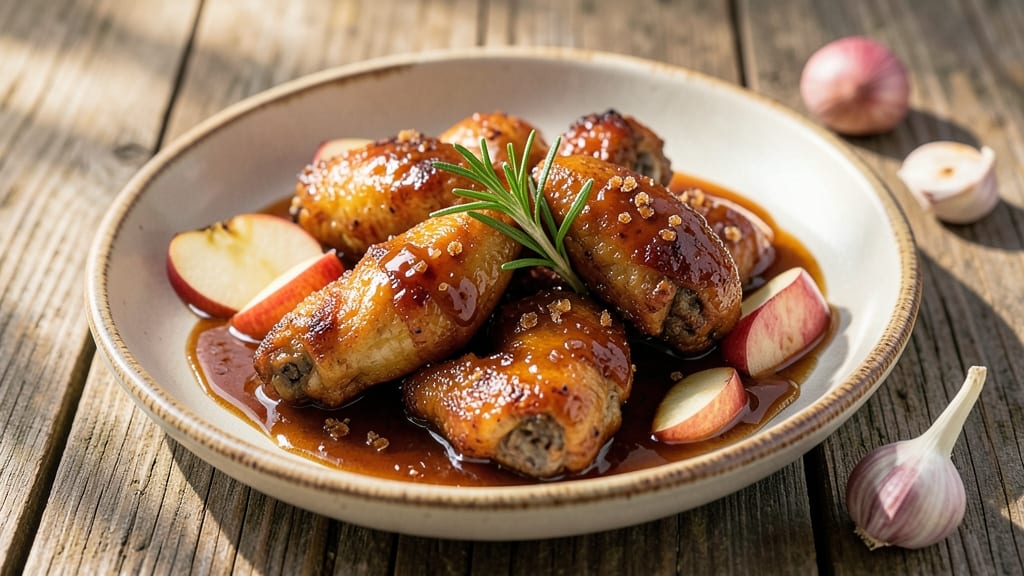
It’s just wings—this apple BBQ sauce recipe transforms them into finger-licking masterpieces with its perfect sweet-tart balance, no sticky syrup in sight. The secret lies in simmering apple cider with vinegar and spices until it thickens into a glossy glaze that clings to every crispy bite.
I developed this version after testing countless recipes that either drowned wings in sugar or left them dry.
What sets this sauce apart is the 30-minute simmering process, where apple cider reduces into a concentrated flavor bomb while brown sugar caramelizes for depth.
The vinegar adds tangy brightness that cuts through the sweetness, creating a sauce that's complex enough for professional results but simple enough for weeknight cooking. No special equipment needed—just a pot and patience.
By the time you're done, you'll have a versatile glaze that elevates wings, grilled chicken, or even as a dipping sauce for fries. The texture is perfect—thick enough to coat without dripping, with just the right balance of stickiness to hold onto crispy edges.
This isn't just another BBQ sauce; it's the one that makes people ask for seconds.
The best part? This sauce keeps well in the fridge for up to two weeks, so you can make a big batch and use it all season long.
Whether you're hosting game day or craving takeout-quality wings at home, this recipe delivers professional-level flavor with minimal effort. Let's get simmering!
Ingredients for it's just wings apple bbq sauce
Ten simple ingredients transform wings into restaurant-quality masterpieces with this sweet-tart glaze.
| Ingredient | Amount | Notes |
|---|---|---|
| Apple Cider 🍎 | 2 cups | Unfiltered for best flavor |
| Brown Sugar 🍚 | ½ cup | Light or dark, packed |
| Apple Cider Vinegar 🍶 | ¼ cup | Raw, unfiltered preferred |
| Ketchup 🍅 | ¼ cup | Heinz preferred for consistency |
| Mustard 🥬 | 1 tbsp | Yellow or Dijon, your choice |
| Garlic Cloves 🧄 | 2 cloves | Freshly minced, not jarred |
| Ground Black Pepper 🌶️ | ½ tsp | Freshly cracked for heat |
| Ground Cinnamon 🌿 | ¼ tsp | Ceylon preferred for subtle warmth |
| Ground Ginger 🌶️ | ¼ tsp | Freshly grated for zing |
| Salt 🧂 | ½ tsp | Kosher or sea salt |
The apple cider is non-negotiable—unfiltered brands like Woodchuck or Mott's have the most flavor. Brown sugar? Light or dark, packed tightly—no aerated measuring cups here. For vinegar, raw, unfiltered apple cider vinegar adds complexity (think Bragg or Texas Cave). The ketchup matters too—Heinz is consistent, but organic brands work if you prefer. Fresh garlic and ginger are worth the extra minute to mince—jarred spices just can't compete. If you're short on time, pre-minced jarred garlic works in a pinch, but it lacks that fresh punch.
No apple cider? White grape juice works in a bind, but it'll taste different. Skip the brown sugar? Maple syrup at half the amount adds depth, though the caramelization is key here. Mustard hating? Swap for 1 tsp Dijon—it's subtler but still adds tang. The spices are flexible: cinnamon can be omitted if you prefer, but ginger is essential for that warm kick. For heat lovers, add a pinch of cayenne. Pro tip: Toast the spices in a dry pan for 30 seconds before adding to the sauce—it deepens the flavor instantly.
This sauce is a game-changer for leftovers—reheats beautifully and tastes even better the next day. Store in an airtight container in the fridge for up to two weeks, or freeze in ice cube trays for six months. The texture thickens as it cools, so stir in 1 tsp water if it seems too stiff before using. Double the batch—trust me, you'll want it on everything from baked beans to grilled ribs.
Why You'll Love This Recipe
- Pantry Magic: I swear by this sauce because it uses stuff I already have—no special trips to the store. Brown sugar and apple cider vinegar alone give it that caramelized depth, while the mustard cuts through the sweetness just enough to make it actually balanced.
- Sweet-Savory Balance: That first tangy-sweet bite? It’s the apple cider vinegar playing off the brown sugar like a well-choreographed dance. The ketchup ties it all together without overpowering—it’s the kind of flavor that makes you reach for seconds without thinking.
- Game for Any Gathering: Slather it on wings for game day, toss it in a slow cooker with pork chops for a weeknight dinner, or even drizzle it over baked beans. It’s my go-to when I need something that feels special but doesn’t require a Pinterest-perfect presentation.
- Leftovers That Don’t Suck: Honestly, I make this sauce in big batches because it’s way better the next day—if there’s any left. The flavors meld even more, and it keeps well in the fridge for up to two weeks. Plus, it’s cheap enough that I’m not stressing about wasting it.
Step-by-step instructions for apple BBQ sauce
Here's how to create a sticky, sweet-tart glaze that transforms ordinary wings into something extraordinary.
Combine Wet Ingredients and Simmer
In a medium saucepan, pour in the 2 cups apple cider and bring it to a gentle boil over medium-high heat. Once boiling, reduce heat to medium-low and let it simmer for 5 minutes to reduce slightly and concentrate the flavor. This step removes some of the water content, intensifying the apple taste that will shine through your sauce.
While the cider simmers, add the 0.5 cup brown sugar and stir until completely dissolved. The sugar will start to caramelize slightly, deepening the sauce's rich, molasses-like quality. Watch carefully—you want it to dissolve smoothly without burning. If you notice any sugar grains clinging to the sides, give the pan a quick swirl to help them incorporate.
Add Vinegar, Ketchup, and Mustard
After the sugar has fully dissolved, pour in the 0.25 cup apple cider vinegar and 0.25 cup ketchup. Stir well to combine these tangy, umami-packed ingredients. The vinegar will cut through the sweetness while the ketchup adds depth and a subtle smokiness. Let the mixture simmer for another 3-4 minutes until it begins to thicken slightly—you'll notice the sauce clinging together more instead of spreading thinly across the pan.
Next, add the 1 tablespoon mustard and stir vigorously. This is where the sauce starts to take on its signature tangy kick. The mustard also helps emulsify the sauce, ensuring it clings beautifully to wings rather than pooling at the bottom of the platter. Let the mixture simmer for an additional 2 minutes to allow the flavors to meld together. You'll smell that perfect balance of sweet, tart, and savory building in the air.
Incorporate Aromatics and Seasonings
While the sauce simmers, mince the 2 cloves garlic into a fine paste using the flat side of your knife. This ensures even distribution and prevents any large clumps from lingering in your sauce. Add the minced garlic to the saucepan along with the 0.5 teaspoon ground black pepper, 0.25 teaspoon ground cinnamon, 0.25 teaspoon ground ginger, and 0.5 teaspoon salt. Stir everything together and let it simmer for 5-7 minutes until the sauce thickens to a glossy, syrupy consistency.
Here's the thing—you want the sauce to coat the back of a spoon without being overly thick. If it starts to look too stiff, add 1-2 tablespoons of water to loosen it up. The sauce should be thick enough to cling to wings but still flow smoothly when drizzled. Taste as you go, adjusting seasoning if needed. If it needs more sweetness, add a pinch of brown sugar. If it needs more tang, add a splash of apple cider vinegar.
Reduce and Test for Perfection
Continue simmering the sauce uncovered for 8-10 minutes, stirring occasionally, until it reduces to a thick, glossy glaze. You're looking for a consistency where the sauce coats the back of a spoon and leaves a slight trail as it drips back into the pan. This reduction process concentrates the flavors and creates that signature sticky quality that makes this sauce so irresistible.
To test for doneness, take a small spoonful of sauce and let it cool slightly. Drizzle it over a plate—if it forms a glossy, even coating without pooling, it's ready. If it's still too thin, return it to the heat and simmer for another 2-3 minutes. If it's too thick, thin it out with a splash of apple cider or water. The sauce should be vibrant, aromatic, and ready to transform your wings into a masterpiece.
Pro Tips For Making It'S Just Wings Apple Bbq Sauce
- Simmer Low and Slow: I learned this the hard way—rushing the sauce on high heat makes it taste thin and raw. Keep the heat at a gentle simmer (around medium-low) for 20-25 minutes. This lets the apple cider vinegar mellow out and the brown sugar caramelize properly, giving you that deep, sticky sweetness without burning.
- Strain the Vinegar: Apple cider vinegar often comes with sediment, and that gritty texture ruins the smoothness of your sauce. Pour it through a fine-mesh strainer or cheesecloth into your pot before adding the rest of the ingredients. Yes, it’s an extra step, but your sauce will thank you—no one wants to bite into a chunk of apple bits while eating wings.
- Balance the Mustard: Skip the pre-mixed mustard and use a 50/50 split of yellow and Dijon for complexity. The yellow adds tangy punch, while the Dijon brings earthy depth. If you’re using whole-grain mustard, grind it lightly in a food processor first—this keeps it smooth without overpowering the sauce. (And no, the "just use whatever’s in your fridge" approach doesn’t work here.)
- Reduce Early, Add Sugar Late: Let the ketchup and vinegar reduce by half before tossing in the brown sugar. Adding sugar too soon turns your sauce into a sticky mess that won’t thicken properly. Wait until the liquid is syrupy, then stir in the sugar and simmer another 5 minutes—this guarantees a glossy, coatable sauce instead of a gloppy one.
Essential equipment for perfect results
Saucepan Essentials
You don't need anything fancy for this sauce—just a medium saucepan with a lid (I use All-Clad stainless steel for even heating). A wooden spoon prevents scratching, and a fine-mesh strainer helps remove any unwanted bits if you prefer ultra-smooth sauce.
For simmering, a medium-low heat setting is crucial to avoid burning the sugar. 🌡️
Measuring Tools
Precision matters here! Use a liquid measuring cup for the apple cider and vinegar (they're essential for accurate volume) and a dry measuring cup for the brown sugar (pack it firmly).
A small whisk helps dissolve ingredients smoothly, while a spoon or spatula keeps everything stirring evenly. I keep a microplane handy for freshly grating ginger if I skip the pre-ground version.
Heat Control
A kitchen thermometer (like Thermoworks Thermapen) ensures you maintain the perfect medium-low heat—around 170-180°F—to prevent scorching. If you don't have one, watch for gentle bubbling and occasional stirring.
A heat diffuser (like Ozeri Heat Diffuser) helps prevent hot spots if you're using a gas stove. For electric stoves, just keep the heat steady and avoid high flames.
Flavor Enhancers
While not mandatory, a mortar and pestle deepens the garlic's flavor if you're feeling fancy. A small bowl for pre-mixing spices saves cleanup time. For extra stickiness, I sometimes add 1 tsp cornstarch (mixed with 1 tsp water) if the sauce isn't thick enough after simmering.
A fine-mesh sieve helps strain out any unwanted bits for a silky texture.
Storage Solutions
Once cooled, transfer the sauce to airtight glass jars (like Ball Mason jars) for fridge storage or freezer-safe silicone molds for portioning. I label everything with dates—this sauce lasts 2 weeks refrigerated or 6 months frozen.
A small funnel makes transferring thick sauce easier, and parchment paper keeps jars from sticking if you stack them.
Optional Pro Upgrades
For restaurant-quality results, a blender or immersion blender lets you refine the texture if you prefer ultra-smooth sauce. A digital scale ensures precise measurements for spices, and a silicone spatula helps scrape every last drop from the pan.
If you love experimenting, a small slow cooker can keep the sauce warm for hours without burning—just set it to warm mode. 💡
Nutrition facts
Frequently asked questions
Can I make this apple BBQ sauce without apple cider?
Yes, but the flavor will change. For a substitute, use white grape juice (same amount) or apple juice, though the tartness won't be identical. If you're avoiding sugar, try unsweetened cranberry juice mixed with a splash of vinegar for tang. The sauce will still work, but the signature sweet-tart balance will shift slightly.
How do I adjust the thickness of the sauce?
If your sauce is too thick, thin it with 1-2 tablespoons of apple cider or water while simmering. For extra stickiness, simmer uncovered for 5-10 more minutes to reduce further. The perfect consistency coats the back of a spoon without dripping. If it's too thin, simmer longer or add 1 teaspoon cornstarch mixed with 1 teaspoon water to thicken.
Can I use this sauce on foods other than wings?
This versatile glaze works perfectly on grilled chicken, pork ribs, baked beans, or even as a dip for fries or mozzarella sticks. The sweet-tart balance pairs especially well with smoky meats. Just reduce the sauce slightly longer if using it as a marinade to prevent over-saucing.
Why did my sauce turn out too sweet?
This happens if the vinegar didn't fully balance the sugar. Next time, add 1 extra tablespoon of apple cider vinegar during simmering or a pinch of cayenne pepper to cut the sweetness. Taste as you go—adjust gradually. For a quicker fix, stir in 1 teaspoon lemon juice while warm. The key is patience: simmer longer to let flavors meld.
How do I store leftovers for best flavor?
Let the sauce cool completely, then transfer to an airtight glass jar. It keeps in the fridge for 2 weeks and freezes for 6 months. For reheating, warm gently on the stove or microwave until just hot. If it thickens too much after refrigeration, stir in 1 teaspoon water to restore smoothness. The flavor actually improves overnight!