
Main Courses
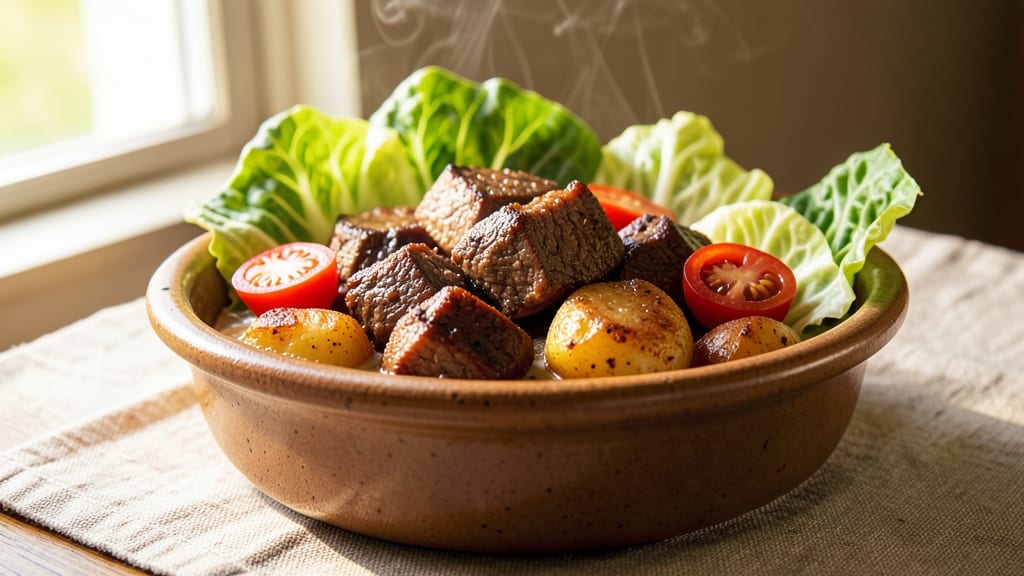
This kalderetang baka recipe delivers the rich, comforting flavors of Indonesia’s most beloved beef stew—a slow-simmered masterpiece where tender beef and cabbage meld with aromatic spices and coconut milk.
The secret lies in patient cooking, where meat becomes fork-tender and the sauce develops layers of depth that transform a simple meal into something truly special. I’ve perfected this version to balance traditional techniques with modern convenience, ensuring you get restaurant-quality results at home.
The foundation of great kalderetang baka begins with properly searing the beef to lock in juices before slow-braising it in a blend of warm spices—cinnamon, cloves, and cardamom—that infuse every bite.
Coconut milk adds a velvety richness, while cabbage and potatoes absorb the savory broth, creating a hearty, satisfying dish that pairs perfectly with steamed rice. This recipe respects tradition while making it accessible for home cooks.
What you’ll end up with is a pot of deeply flavorful stew where the beef falls apart with just a fork, the cabbage stays crisp-tender, and the sauce is thick enough to coat each spoonful. The aroma alone—warm spices mingling with coconut and caramelizing meat—will fill your kitchen with comfort.
It’s the kind of meal that feels like a hug in a bowl, perfect for family dinners or cozy weeknight suppers.
Serve it with a side of ketan rice or fluffy steamed rice to soak up every last drop of that aromatic sauce. The slow-cooking process means flavors only get better as it sits, making it ideal for meal prep or feeding a crowd.
Here’s how to make it—step by step—for a dish that tastes like home.
Ingredients for kalderetang baka
Pantry staples meet Indonesian spices for this rich, comforting beef stew.
| Ingredient | Amount | Notes |
|---|---|---|
| Beef Chuck Roast 🥩 | 2 lb | Cut into 1.5-inch cubes |
| Green Cabbage 🥬 | 1 whole | Cut into wedges, core removed |
| Russet Potatoes 🥔 | 4 medium | Cut into 1-inch chunks |
| Coconut Milk 🥥 | 1 can (13.5 oz) | Full-fat for creaminess |
| Tomatoes 🍅 | 3 medium | Diced, or 1 cup canned crushed |
| Onion 🧅 | 1 whole | Chopped, yellow or red |
| Garlic Cloves 🧄 | 6 cloves | Minced, fresh preferred |
| Ground Cinnamon 🌿 | 1 tsp | Freshly ground for warmth |
| Ground Cloves 🌶️ | ½ tsp | Whole cloves work too |
| Cardamom Pods 🌿 | 4 whole | Lightly crushed |
| Salt 🧂 | 1 ½ tsp | Kosher or sea salt |
| Black Pepper 🌶️ | ½ tsp | Freshly ground preferred |
| Vegetable Oil 🫒 | 2 tbsp | For searing beef |
| Bay Leaves 🍃 | 2 whole | Removed before serving |
The beef is everything here—chuck roast gives that melt-in-your-mouth texture. Grab it pre-cubed from the grocery store's meat counter to save time, or ask them to cut it for you. Costco or Trader Joe's usually have great prices. Look for good marbling—those little white fat streaks mean juicier meat. If you can't find chuck, chuck shoulder or short ribs work too, but adjust cooking time. The cabbage should be firm, not wilted, and the potatoes should be starchy russets for best texture.
No cardamom pods? Ground cardamom at half the amount works, but whole pods add that special aroma. Running low on cloves? Allspice berries are a close substitute. The coconut milk can be full-fat canned or cartons, but avoid the light versions—they won't give that creamy richness. Fresh tomatoes are ideal, but canned crushed tomatoes in a pinch save time. For the spices, Penzeys or bulk bins are great if you want to stock up, but the regular grocery store spices work fine if they're fresh.
This stew tastes even better the next day—make extra for leftovers. Keeps 4-5 days in the fridge, freezes for 3 months. I like to portion it into containers with rice so lunches are ready to grab. The sauce thickens as it cools, so add a splash of water if it seems too thick when reheating. Serve with steamed rice or ketan rice to soak up all that flavor.
Why You'll Love This Recipe
- One-Pot Magic: I swear by this recipe—just brown the beef, toss in the potatoes and cabbage whole, then pour on that coconut milk. No extra pans, no fuss, and the flavors meld together like they’ve been simmering for hours.
- Rich & Tangy: That beefy, caramelized base with tomatoes and a splash of coconut milk? It’s the kind of depth that makes you pause mid-bite. The potatoes soak up all the goodness, and the cabbage stays just crisp enough to cut through the richness.
- Leftovers on Lock: Between us, this dish begs to be made extra. The flavors only get better the next day—perfect for lunches or reheating with a sprinkle of fried shallots. My freezer’s always got a few containers of this stashed.
- Budget-Friendly Feast: Beef chuck roast is cheaper than steak, and the veggies stretch it into a hearty meal for four (or five, if someone’s hungry). Honestly, it’s the kind of dish that makes grocery day feel like a win.
Step-by-step instructions for slow-simmered beef and cabbage comfort
Here's how to build this hearty stew that warms up any home.
Sear the Beef for Deep Flavor
Heat the 2 tablespoons vegetable oil in a large Dutch oven over medium-high heat. Add the 2 lb beef chuck roast, cut into 1.5-inch cubes, and sear undisturbed for 2-3 minutes per side until deep golden brown. This step creates that rich, caramelized crust that forms the base of the stew's flavor.
As you work in batches to avoid crowding the pan, you'll notice the beef releases its juices—don't drain them. These precious liquids will form the foundation of your sauce. Once all the beef is browned, remove it from the pot and set it aside on a plate.
Build the Aromatic Base
In the same Dutch oven, add the 1 whole onion, chopped, and cook for 5 minutes until softened and just beginning to color. Add the 6 cloves garlic cloves, minced, and cook for 30 seconds until fragrant—don't let it burn. Here's the thing: the garlic should smell incredible but not turn bitter.
Stir in the 1 tsp ground cinnamon, 0.5 tsp ground cloves, and 4 whole cardamom pods (lightly crushed). Cook for 1 minute to toast the spices, releasing their warm, earthy aromas. This spice blend is what gives this dish its distinctive, comforting character.
Add Vegetables and Simmer
Return the seared beef to the pot. Add the 1 whole green cabbage, cut into wedges with the core removed, 4 medium russet potatoes cut into 1-inch chunks, and 3 medium tomatoes diced. Pour in the 1 can (13.5 oz) coconut milk and add 1.5 tsp salt, 0.5 tsp black pepper, and the 2 whole bay leaves. Stir everything together gently.
Bring the mixture to a gentle boil, then reduce heat to low and cover partially. Let it simmer for 1.5 hours, stirring occasionally. You'll know it's ready when the potatoes are tender and the beef is fork-tender. The cabbage should be soft but still hold its shape—this ensures it contributes texture rather than turning to mush.
Finish and Serve with Warmth
Remove the 2 whole bay leaves before serving. Taste and adjust seasoning if needed—sometimes the spices need a little more salt to balance their warmth. The stew should be rich, aromatic, and deeply comforting, with each bite offering tender beef, soft vegetables, and a creamy coconut finish.
Serve this hearty stew with crusty bread to soak up every last bit of that flavorful sauce. The combination of spices, tender beef, and creamy coconut milk makes this dish a true comfort food—perfect for chilly evenings or when you need a meal that feels like a hug.
Pro Tips For Making Kalderetang Baka
- Sear the Chuck Hard: That beef won’t caramelize properly if you’re gentle—high heat for 5-6 minutes until deep brown crust forms. I used to rush this, and the stew always tasted flat. Trust me, the Maillard reaction is your flavor foundation here.
- Parboil Potatoes First: Cut the potatoes into even chunks, boil them for 8-10 minutes until just tender, then add them to the stew. This keeps them from turning to mush in the long simmer—no one wants gluey potatoes in their kalderetang.
- Don’t Overcrowd the Pot: Layer the cabbage and tomatoes in the pot after the beef has browned and the initial sear is done. Packing everything in at once steams the veggies instead of letting them caramelize with the meat.
- Use Two Cans of Coconut Milk: One can won’t be enough—trust me, I’ve learned this the hard way. The first can thickens the stew early; the second adds richness later. Stir in the second can only after the stew has simmered for at least 45 minutes.
Essential equipment for great kalderetang baka
Dutch Oven Essentials
The heart of this recipe beats in a heavy-bottomed Dutch oven—I swear by my Le Creuset Signature 6-quart for even heat distribution. The deep sides prevent spills when stirring, and the tight lid keeps moisture locked in during slow simmering.
If you don’t own one, a 5-6 quart stainless steel pot with a tight-fitting lid works too—just monitor the water level more closely. 🍲
Spice Grinder Matters
Freshly ground spices make all the difference in kalderetang baka’s aromatic profile. I use a KitchenAid Spice Grinder for cinnamon, cloves, and cardamom because it preserves their volatile oils better than pre-ground store versions.
For whole spices like cardamom pods, a mortar and pestle lets you crush them just enough to release aroma without turning to dust. If you’re short on time, Penzeys Spice Shop pre-ground blends work in a pinch.
Meat Thermometer Precision
Beef should reach 195°F internal temperature for fork-tender results. A Thermoworks Smoke probe thermometer is my go-to because it stays accurate through the long simmer. Insert it into the thickest piece of beef—if it reads 190-195°F, your stew is ready.
No thermometer? Cut into a small piece of beef—if it shreds easily, it’s done. 🌡️
Coconut Milk Quality Check
Never use the light version—full-fat canned coconut milk (like Goya or Thai Kitchen) delivers that creamy, velvety texture. For extra richness, I blend ½ cup fresh coconut cream into the canned milk before adding it to the pot.
Avoid cartons with added stabilizers—they thin out the sauce. Always shake the can well before opening to distribute the thick cream at the bottom.
Wooden Spoon for Stirring
A long-handled wooden spoon (I love OXO Good Grips) is perfect for stirring this stew without scratching your Dutch oven. Wood won’t react with acidic ingredients like metal utensils might, and its gentle scraping helps lift stuck-on bits.
Avoid plastic—it can melt at high heat and leach chemicals into your food. For deep pots, a silicone spatula with a bent edge helps reach corners without splashing.
Slow Cooker Adaptation
Short on time? A 6-quart slow cooker (like Hamilton Beach) works beautifully. Sear the beef in a skillet first, then transfer everything to the slow cooker and cook on LOW for 6-7 hours.
The key difference is the sauce may reduce more—add ¼ cup water if it gets too thick. For best results, use the stovetop method for deeper flavor development, but this is a great shortcut for busy weeknights. ⏰
Nutrition facts
Frequently asked questions
Can I substitute beef chuck roast with another cut?
Yes! For similar tenderness, use chuck shoulder, short ribs, or brisket. If using short ribs, reduce simmering time to 1 hour since they cook faster. Avoid lean cuts like sirloin—they won't become fork-tender. The key is choosing a cut with good marbling for flavor and moisture.
Why does my stew taste too spicy?
This happens when spices aren't toasted properly or overpowered by coconut milk. First, remove the bay leaves and reduce heat to low. Add 1-2 tablespoons of sugar to balance the spices, then simmer for 5 minutes. For future batches, toast spices over low heat for 1 minute before adding liquids to mellow their sharpness.
How do I make this dish vegetarian?
Replace beef with extra-firm tofu or king oyster mushrooms (cut into chunks). Sauté tofu in oil until golden before adding spices. Use 1 cup more coconut milk to compensate for reduced fat. For heartiness, add 1 cup chickpeas or 1 block firm tempeh. The dish will be lighter but still rich from the spices and coconut.
Can I make this in an Instant Pot?
Sear beef first in a skillet, then transfer to the Instant Pot. Add all ingredients except coconut milk, pressure cook for 25 minutes, then quick-release. Stir in coconut milk and simmer on high heat for 10 minutes to thicken. The Instant Pot version cooks 70% faster but may need extra salt since pressure cooking reduces evaporation.
What's the best way to reheat leftovers?
Reheat on the stovetop over medium-low heat with 2 tablespoons water to prevent drying. Stir frequently and simmer for 5-7 minutes until heated through. For microwave reheating, cover with a damp paper towel and heat in 1-minute intervals on 50% power to preserve texture. Never reheat above 165°F for safety.