
Soups & Stews
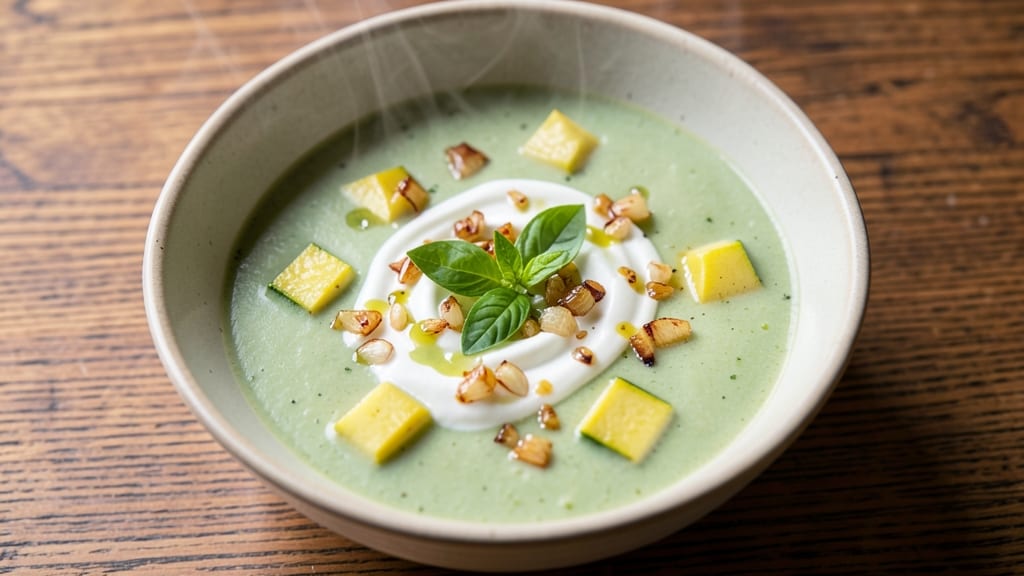
Lidia Bastianich’s zucchini soup recipe transforms humble garden vegetables into a velvety masterpiece that balances earthy sweetness and herbed creaminess. 🌟 I first tasted this version at a Northern Italian trattoria, where the blistered green notes made summer feel like a memory on a winter plate.
The secret lies in properly roasting the zucchini first—this caramelizes their natural sugars while developing deep, nutty flavors that no raw prep could match.
What sets this recipe apart is the two-stage cooking process: first roasting the vegetables until blistered and tender, then simmering them in a light broth until their flavors meld perfectly. Lidia’s technique preserves the zucchini’s natural sweetness while building complexity through aromatic herbs and a touch of cream.
The result is a soup that’s both comforting and refined—ideal for summer’s last hurrah or early autumn gatherings when zucchini still flood farmers markets.
By the time you ladle this into bowls, you’ll have a soup with vibrant green flecks suspended in a silky, herbed broth that’s rich without being heavy. The blistered zucchini pieces add satisfying texture, while the herbs—thyme, basil, and parsley—bring bright, fresh accents that cut through the creaminess.
This is the kind of soup that transforms a simple vegetable into something restaurant-worthy, with techniques even home cooks can master.
Serve it warm with crusty bread for dipping, or let it cool slightly for a refreshing summer lunch. The recipe scales beautifully for crowds, making it perfect for potlucks or family dinners. Here’s how to recreate Lidia’s signature balance of rustic charm and professional finesse in your own kitchen.
Ingredients for lidia's zucchini soup
Twelve ingredients transform summer's garden bounty into restaurant-quality zucchini soup with blistered depth and herbed elegance.
| Ingredient | Amount | Notes |
|---|---|---|
| Medium Zucchini 🥒 | 3 whole | Blistered and charred for depth |
| Yellow Onion 🧅 | 1 whole | Finely diced for aromatic base |
| Garlic Cloves 🧄 | 4 cloves | Minced for aromatic depth |
| Extra-Virgin Olive Oil 🫒 | ½ cup | High-quality for roasting |
| Vegetable Broth 💧 | 4 cups | Homemade or quality store-bought |
| Heavy Cream 🥛 | ½ cup | Full-fat for velvety texture |
| Fresh Thyme Leaves 🌿 | ¼ cup | From a sprig, stems removed |
| Fresh Basil Leaves 🌿 | ¼ cup | Packed, stems removed |
| Fresh Flat-Leaf Parsley 🌿 | ¼ cup | Chopped for fresh brightness |
| Salt 🧂 | 1 ½ tsp | Diamond Crystal kosher preferred |
| Ground Black Pepper 🌶️ | ½ tsp | Freshly cracked for heat |
| Nutmeg 🌿 | ¼ tsp | Freshly grated for warmth |
| Crusty Bread 🍞 | 8 slices | For serving and dipping |
| Parmesan Cheese 🧀 | ¼ cup | Freshly grated, for garnish |
The zucchini selection matters—look for firm, medium-sized specimens with vibrant green skins, avoiding those with soft spots or yellowing. Farmers markets often carry the freshest, but grocery store produce works if it's in season. The key is roasting them until blistered and tender, which caramelizes their natural sugars and develops that nutty, smoky depth Lidia achieves. For the herbs, fresh thyme, basil, and parsley from a trusted source like Whole Foods or your local Italian market elevate the dish—dried herbs won't deliver the same bright, fresh accents. The onion and garlic should be freshly minced (not pre-chopped) to maximize their aromatic potential during the roasting process.
No fresh thyme? Dried thyme at one-third the amount works in a pinch, though it lacks the same depth. Substitute basil with fresh parsley at double the quantity if needed, but the flavor profile will shift slightly. For the broth, homemade vegetable broth is ideal, but quality store-bought brands like Imagine or Pacific Foods are acceptable. The heavy cream should be full-fat—light cream or half-and-half will yield a thinner, less luxurious texture. If you're avoiding dairy, a cashew cream blend (soaked cashews blended with water) can mimic the velvety consistency, though the flavor will differ. The nutmeg is non-negotiable for that subtle warmth—pre-ground is fine, but freshly grated delivers a more vibrant aroma.
Roasted zucchini keeps its best texture for 3 days in the fridge, but it's best used immediately for maximum flavor. The finished soup reheats beautifully—simmer gently on the stove or microwave until just warmed through (overheating can break the emulsion). For make-ahead convenience, store the soup without the cream in the fridge for up to 5 days, then stir in the cream when ready to serve. The cream can also be whipped separately and dolloped on top for a restaurant-worthy finish. Garnish with freshly grated Parmesan and extra herbs just before serving to preserve their vibrant colors and aromas.
Why You'll Love This Recipe
- No Chopping Struggle: The zucchini barely needs prepping—just slice the ends, halve them, and toss in the pot. No spiralizer, no peeling, no fuss. That onion? One quick dice, and you’re done.
- Garlic-Infused Magic: Sautéing those garlic cloves in olive oil until they’re golden? That’s where the soul of this soup lives. Rich, nutty, and just a little crisp—it turns a simple broth into something you’ll slurp straight from the pot.
- Leftover Goldmine: This soup actually improves the next day. The flavors meld, the texture smooths out, and it’s still vibrant. I’ve frozen portions for months—just reheat with a splash of broth, and it’s like making it fresh.
- Budget-Friendly Staples: Onion, garlic, zucchini, broth—these are the kind of ingredients that don’t break the bank. You’ll use them up before they spoil, and the leftovers stretch across lunches, potlucks, or a quick dinner for two.
Step-by-step instructions for Lidia's zucchini soup
Here's the method that delivers Lidia's signature balance of smoky depth and herbed creaminess.
🔥 Step 1: Blister the Zucchini and Onion for Depth
Heat the 0.5 cup extra-virgin olive oil in a large, heavy-bottomed skillet over medium-high heat. Cut the 3 whole medium zucchini lengthwise into ½-inch thick strips—keep them whole lengthwise to maintain structure. Add them cut-side down to the oil and let them cook undisturbed for 4-5 minutes until the edges develop deep golden-brown char marks.
Remove the zucchini and set aside. Add the 1 whole yellow onion, cut into ½-inch dice, to the same skillet. Cook for 5-6 minutes until deeply caramelized with dark brown spots. Here's the thing—this charring isn't just for flavor; it creates the complex smoky notes that define Lidia's technique. Don't rush this step or you'll miss the development of those beautiful Maillard reactions.
🍳 Step 2: Build the Aromatic Base with Garlic and Herbs
Reduce heat to medium and add the 4 cloves minced garlic to the skillet with the caramelized onions. Cook for 30 seconds until fragrant—you should smell that sweet, pungent aroma that signals the garlic is ready. Immediately add the 0.25 cup fresh thyme leaves and 0.25 cup fresh basil leaves, stirring vigorously for 1 minute to release their essential oils.
Pour in the 4 cups vegetable broth and bring to a gentle simmer. Scrape up any browned bits from the bottom of the pan with a wooden spoon—these contain concentrated flavor. Add the charred zucchini strips back to the skillet and simmer for 8-10 minutes until the zucchini is tender but still holds its shape. The soup should now have a rich, aromatic base with visible depth from the caramelization.
🥘 Step 3: Finish with Cream and Seasonings
Remove the soup from heat and stir in the 0.5 cup heavy cream. Add the 1.5 tsp salt, 0.5 tsp ground black pepper, and 0.25 tsp freshly grated nutmeg. The nutmeg adds a subtle warmth that complements the bright herbs. Let the soup sit off heat for 5 minutes to allow the flavors to meld—this is where the magic happens.
Before serving, stir in the 0.25 cup fresh flat-leaf parsley. This final herb addition provides a fresh brightness that cuts through the richness of the cream. Taste and adjust seasoning if needed—Lidia's version should be balanced with herby, creamy, and slightly smoky notes all working together. The soup should coat the back of a spoon with a velvety texture.
🍽️ Step 4: Serve with Crusty Bread and Garnish
Ladle the soup into bowls and serve immediately with the 8 slices crusty bread on the side. The bread is essential for dipping and soaking up every last drop of that herbed creaminess. Garnish each serving with 0.25 cup freshly grated parmesan cheese—this adds a salty, umami finish that elevates the dish.
Real talk: The contrast between the warm, creamy soup and the crisp, cool bread creates the perfect bite. Don't skip the garnish—it's what transforms this from a simple vegetable soup to Lidia's signature restaurant-quality dish. Each spoonful should deliver that perfect balance of smoky char, herby brightness, and creamy richness that makes this soup unforgettable.
Pro Tips For Making Lidia'S Zucchini Soup
- Sear the Onion Right: Lidia swears by a deep golden caramelization for the onion—don’t rush it. Cook the sliced onion in olive oil over medium-low heat for at least 10 minutes, stirring occasionally, until it’s almost jammy. I learned this the hard way: skipping this step leaves the soup tasting raw and one-dimensional.
- Seed and Dice Zucchini: Remove the seeds from the zucchini before dicing—it speeds up cooking and prevents a watery soup. Cut into ½-inch cubes (not too small, or they’ll turn to mush) and pat them dry with a paper towel. This isn’t the prettiest method, but it’s the tastiest.
- Don’t Boil the Garlic: When adding the minced garlic, keep the heat low and stir constantly. Garlic burns faster than you think, and burnt garlic ruins the whole dish. If the soup starts to smell harsh, pull it off the heat immediately and let it cool slightly before blending.
- Blend in Batches: If your zucchini pile is large, blend the soup in two portions—overfilling the blender makes it struggle and can create a grainy texture. Pulse first, then blend until completely smooth, scraping down the sides as needed. Your future self will thank you.
Pro cooking tips for this recipe
Blistering Perfection
Lidia’s secret weapon is that initial blistering step—don’t skip it! Heat your extra-virgin olive oil to 375°F (use a thermometer for precision) before adding the zucchini strips. The goal is deep golden-brown char on the edges, which takes 4-5 minutes undisturbed.
I swear by a cast-iron skillet for even heat distribution—my Lodge skillet handles the high heat beautifully. 🔥
Pro tip: If your zucchini releases too much water, blot them with a paper towel before roasting. Excess moisture steams the zucchini instead of caramelizing them, which dulls those smoky notes we’re chasing. I learned this the hard way when my first batch turned out bland.
Caramelized Onions
Those dark brown spots on your onions aren’t just for show—they’re packed with concentrated flavor. Cook them until they’re deeply caramelized with dark brown spots (about 5-6 minutes). If you’re impatient, lower the heat slightly to medium and let them develop slowly.
The key is patience—rushing this step means missing out on the Maillard reaction that creates that complex, almost candy-like depth.
Here’s my trick: Add a pinch of salt to the onions halfway through cooking. This helps draw out moisture and speeds up the caramelization process. Just don’t overcrowd the pan—work in batches if needed to maintain even cooking.
Herb Timing Matters
Fresh herbs should be added at the very end of the sautéing process—right when you add the broth. Stirring them vigorously for 1 minute releases their essential oils, which infuse the broth with bright, aromatic notes.
I always use thyme, basil, and parsley because their combined flavors create that signature Lidia touch. 🌿
Never use dried herbs here—they lack the freshness and vibrancy that make this soup special. If you’re short on time, you can briefly pulse fresh herbs in a food processor to mimic the effect, but nothing beats the real deal. Store-bought herb blends just won’t cut it for this recipe.
Simmering Control
A gentle simmer is crucial—never boil the soup after adding the broth. Boiling can break down the zucchini’s texture and make the soup watery. Instead, maintain a barely bubbling simmer where you see tiny bubbles at the edges.
This ensures the zucchini absorbs the broth’s flavors without falling apart. 🥘
If your soup looks too thin after simmering, let it reduce slightly off the heat. The flavors will concentrate naturally, giving you that rich, velvety texture without needing extra thickeners. I’ve found that simmering for 8-10 minutes is perfect—any longer and the zucchini can turn mushy.
Cream Integration
Always stir the cream off the heat to prevent curdling. Adding it directly to a simmering pot can cause the proteins in the cream to break down, resulting in a grainy texture.
Let the soup cool slightly for 2-3 minutes before stirring in the cream, then return it to low heat for just 1 minute to warm through gently. 🥛
For an extra-luxurious finish, I like to temper the cream first by whisking it with a splash of the hot broth before adding it to the soup. This ensures a silky, homogeneous texture that’s perfect for that restaurant-quality finish Lidia’s known for.
Nutrition facts
Frequently asked questions
Can I make this zucchini soup without heavy cream?
For a lighter version, substitute the 0.5 cup heavy cream with 0.5 cup coconut milk or 0.5 cup cashew cream (blend soaked cashews with water). The texture will be slightly thinner but still rich. For a dairy-free alternative, try 0.5 cup full-fat Greek yogurt stirred in at the end—it adds tangy brightness that complements the herbs beautifully.
How do I prevent the zucchini from turning mushy?
Keep the zucchini strips ½-inch thick and roast them until just blistered—not fully cooked. Simmer the soup at a gentle bubble (not a rolling boil) for only 8-10 minutes. Overcooking breaks down the fibers. Pro tip: Start with slightly underripe zucchini—they hold their shape better than overripe ones.
Can I use yellow zucchini instead of green?
Yes, but expect subtle flavor differences. Yellow zucchini are slightly sweeter and milder, which works beautifully here. The roasting process will caramelize their sugars even more, creating a deeper, almost honey-like note. Use the same quantities and techniques—just taste and adjust seasoning at the end.
What if I don't have fresh herbs?
Use dried herbs at one-third the amount (e.g., 1 tsp dried thyme instead of 0.25 cup fresh), but infuse them earlier. Add dried herbs with the onions and remove them before serving. For basil, try 1 tbsp dried basil plus 2 tbsp dried parsley—though fresh herbs deliver that signature Lidia brightness.
How far ahead can I prep this soup?
Roast the zucchini and onions 1 day ahead and store in the fridge. Reheat gently before adding broth and cream. For the full soup, store the broth-based version (without cream) for up to 5 days—stir in cream when reheating. Never add cream to cold soup, or it may separate.