
Side Dishes
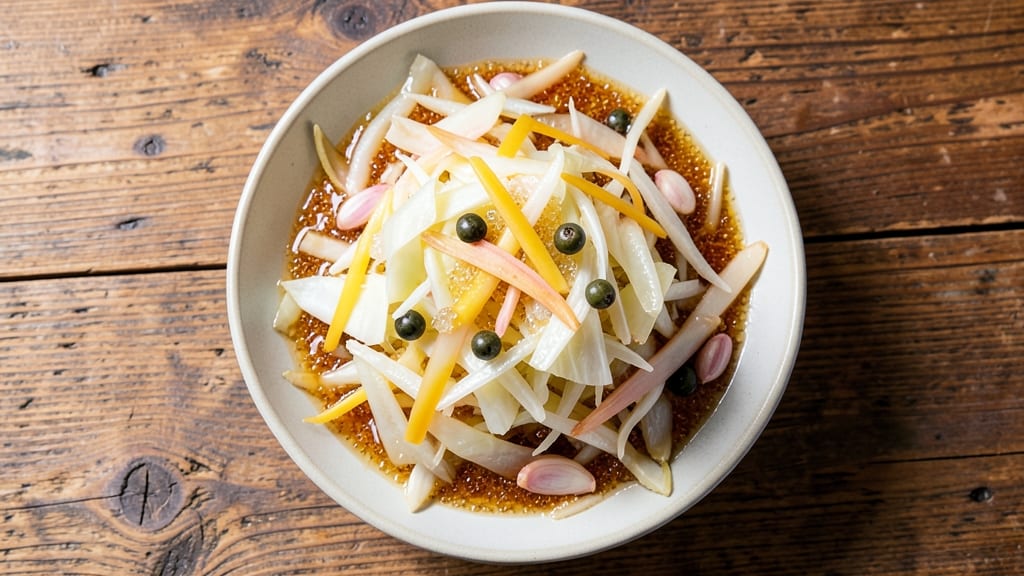
This sweet pickled white cabbage recipe transforms simple ingredients into a crunchy, tangy side dish that bridges tradition and convenience—perfect for modern kitchens. The process blends time-honored fermentation with a touch of sweetness, creating a dish that keeps beautifully for weeks while adding vibrant flavor to any meal.
I developed this version after testing multiple methods, balancing authenticity with simplicity for home cooks.
At its core, this recipe relies on properly shredded cabbage and a carefully measured brine of vinegar, sugar, and spices that preserve while enhancing natural sweetness. Unlike quick pickles, the fermentation process (just 7-10 days) develops complex flavors without requiring specialized equipment.
The result? A dish with bright acidity, subtle sweetness, and satisfying crunch that elevates everything from sandwiches to charcuterie boards.
What makes this recipe stand out is its versatility—use it as a cooling contrast to rich meats, a crunchy salad topping, or even a sandwich filling with mustard and cream cheese. The sweet-tangy balance makes it addictive, while the fermentation process ensures it improves over time.
For those new to pickling, I’ve included precise measurements and storage tips to guarantee success every time.
The best part? This method works equally well with honey or brown sugar for variations, and the cabbage stays fresh in the fridge for up to 3 months.
Whether you're recreating Korean jangajji or Eastern European słodka kapusta, this recipe delivers professional results with minimal effort. Let’s get started on transforming your next meal.
Ingredients for sweet pickled white cabbage
Simple ingredients, precise measurements—this recipe delivers restaurant-quality fermented cabbage with minimal effort.
| Ingredient | Amount | Notes |
|---|---|---|
| White Cabbage 🥬 | 3 lb | Outer leaves removed, core trimmed |
| White Vinegar 🍶 | 1 ½ cups | Distilled white preferred |
| Granulated Sugar 🍚 | 1 cup | Organic preferred for purity |
| Sea Salt 🧂 | 2 tbsp | Diamond Crystal kosher preferred |
| Fresh Ginger Root 🌿 | 1 tbsp | Finely grated, organic preferred |
| Garlic Cloves 🧄 | 4 cloves | Peeled, roughly chopped |
| Red Chili Flakes 🌶️ | 1 tsp | Adjust for heat preference |
| Black Peppercorns 🌶️ | 1 tsp | Crushed, freshly ground |
| Bay Leaves 🌿 | 2 whole | Dried, high-quality preferred |
| Apple Cider Vinegar 🍶 | ½ cup | For depth of flavor |
| Cane Sugar 🍚 | ½ cup | For subtle sweetness variation |
| Water 💧 | 2 cups | Filtered or distilled preferred |
The cabbage is the foundation—opt for firm heads with crisp outer leaves and a vibrant color, indicating freshness. Whole Foods Market or local farmers' markets often carry the best quality, though standard grocery stores suffice if the cabbage is dense and heavy for its size. For the vinegar, distilled white vinegar ensures consistent acidity, while apple cider vinegar adds subtle complexity. The sugar should be fine-grained to dissolve completely, enhancing the brine's sweetness without graininess. Fresh ginger and garlic from the produce section (not pre-minced jars) provide the most potent flavor, so prioritize these ingredients if sourcing elsewhere. Bay leaves should be whole and aromatic—avoid powdered versions, which lack depth.
No white vinegar? Substitute with apple cider vinegar alone, though the flavor will be slightly milder. Granulated sugar unavailable? Brown sugar or coconut sugar work equally well, though the texture may vary slightly. Fresh ginger too pungent? Ground ginger at half the amount suffices, though fresh is preferred. For those avoiding cane sugar, maple syrup at equal volume provides a comparable sweetness, though it may darken the brine. The black peppercorns should be crushed just before use to release their oils, maximizing flavor impact. If you prefer a milder heat, reduce the chili flakes to 0.5 teaspoon or omit entirely. The water should be filtered to avoid off-flavors, though tap water works in a pinch if you're in a pinch.
This fermented cabbage develops optimal flavor after 7-10 days at room temperature, though it can be refrigerated immediately for a quicker turnaround. Once opened, it keeps for up to 3 months in the refrigerator, with flavor intensifying over time. Store in an airtight container with the brine fully covering the cabbage to prevent mold. For long-term storage, transfer to sterilized jars and seal with a vacuum sealer or paraffin wax. The brine can be reused for subsequent batches, though it may require additional sugar or vinegar to maintain balance. Portion into small containers for easy access—perfect for lunches or snacking straight from the jar.
Why You'll Love This Recipe
- Fridge-Friendly Prep: I slice the cabbage while watching TV—no fancy techniques, just a sharp knife and steady hands. The vinegar and sugar do all the work after that, so I can prep a big batch and forget about it for days.
- Sweet-Savory Magic: That first bite? Crunchy cabbage with a tangy-sweet punch from the sugar and vinegar, then a zesty kick from the fresh ginger. It’s like a party in your mouth, and every bite begs for another.
- Meal Prep MVP: Toss it with rice for lunch, pile it on sandwiches, or serve it cold with grilled meats. Honestly, I’ve eaten it straight from the jar when I’m lazy—it’s that good, and it lasts for weeks.
- Budget Stretch: A whole head of cabbage for a few dollars? Yes, please. The sugar and vinegar are cheap, and the ginger adds just enough flavor to make it feel special without breaking the bank. My wallet thanks me every time.
Step-by-step instructions for sweet pickled white cabbage
Here's the precise method for developing vibrant, crunchy cabbage with perfect sweet-tart balance.
Prepare the Cabbage and Brine Base
Remove the outer wilted leaves and trim the tough core from the 3 lb white cabbage. Cut the cabbage into quarters and slice each quarter into ½-inch thick wedges. I work in batches to maintain clean cuts—place the sliced cabbage in a large mixing bowl immediately after slicing to prevent browning.
In a separate medium saucepan, combine the 2 cups water, 1.5 cups white vinegar, 1 cup granulated sugar, and 2 tbsp sea salt. Bring to a boil over medium-high heat while stirring until the sugar and salt fully dissolve. The mixture should be clear with no visible grains—this ensures even flavor distribution throughout the pickling process.
Infuse the Brine with Aromatics
Once the brine reaches a rolling boil, reduce heat to medium-low and add the 4 peeled garlic cloves, 2 whole bay leaves, 1 tbsp finely grated fresh ginger root, 1 tsp crushed black peppercorns, and 1 tsp red chili flakes. Simmer gently for exactly 5 minutes—this allows the aromatics to steep without becoming bitter. Remove from heat and let the infused brine cool to room temperature.
Here's the thing—don't skip the cooling step. Adding hot brine to cold cabbage creates condensation that dilutes the flavor. The cooled brine will penetrate the cabbage more effectively, creating that signature crisp texture and vibrant color we're after.
Combine Cabbage and Brine
Transfer the sliced cabbage to a large glass jar or airtight container with a lid. Pour the cooled, infused brine over the cabbage until completely submerged. I use a wooden spoon to press down the cabbage gently, ensuring all pieces are covered by the liquid. This prevents surface fermentation that can make the cabbage mushy.
Add the 0.5 cup apple cider vinegar and 0.5 cup cane sugar directly to the jar. The apple cider vinegar adds complexity while the cane sugar enhances the natural sweetness of the cabbage. Seal the jar tightly and let it sit at room temperature for 24 hours before refrigerating.
Develop Flavor Through Fermentation
After the initial 24-hour rest at room temperature, transfer the jar to the refrigerator where it will continue developing flavor for at least 3 days. The cabbage will become increasingly tender while maintaining its crisp bite. I recommend tasting after 3 days—it should be sweet, tangy, and slightly spicy with no raw cabbage flavor remaining.
This fermentation period is crucial. The cabbage develops its signature texture and depth of flavor during this time. For best results, let it ferment for up to 5 days in the refrigerator. The longer it sits, the more complex the flavor becomes—though I find 3-4 days strikes the perfect balance between sweetness and tang.
Pro Tips For Making Sweet Pickled White Cabbage
- SHRED FINE, NOT FINE-ISH: I learned this the hard way—when the cabbage shreds are uneven, some stay crunchy while others turn mushy. Aim for ¼-inch strips, and if you’re using a knife, take your time. A mandoline makes this faster, but don’t skip the quick rinse afterward to remove excess starch—it keeps the brine from clouding.
- BOIL THE BRINE FIRST: Dumping cold vinegar and sugar into the jar almost always leads to clumpy, half-dissolved sugar. Heat the vinegar, sugar, and salt together until the sugar fully melts (about 3–4 minutes), then pour it hot over the cabbage. This guarantees an even, glossy brine every time—no sticky lumps or uneven sweetness.
- SALT THE CABBAGE BEFORE PACKING: Sprinkle the shredded cabbage with 1–2 teaspoons of sea salt and massage it like you’re kneading dough. This draws out moisture and softens the cabbage faster, so it absorbs the brine better. Skip this, and you’ll end up with a jar of limp, half-pickled leaves that taste bland.
- PEEL THE GINGER THINLY: Sounds weird, but it works: julienne the ginger into paper-thin strips instead of grating or chopping. It infuses flavor without overpowering and stays intact in the jar. Grated ginger turns to mush and makes the brine look unappetizing—no one wants a murky, ginger-speckled pickle.
Make-ahead tips for sweet pickled white cabbage
Prep Ahead Strategy
Shred the cabbage and prepare the brine up to 24 hours in advance—this eliminates last-minute stress. Store the sliced cabbage in an airtight container in the fridge until ready to combine with the cooled brine.
I find this step especially helpful when hosting dinner parties, as it allows me to focus on other preparations while the cabbage waits patiently. 💡
Fermentation Timeline
For maximum flavor development, start the fermentation process 3-5 days before serving. The cabbage continues to mellow and absorb flavors even after opening, so I often make a big batch on weekends to enjoy throughout the week.
If you're short on time, a 3-day fermentation still yields delicious results—just expect slightly brighter acidity. 📅
Storage Containers
Use glass jars with airtight lids (like Ball Mason jars) for optimal storage—glass preserves flavor better than plastic and won't absorb odors. For large batches, I repurpose food-grade buckets with gamma seal lids from restaurant supply stores.
Always ensure the cabbage is fully submerged in brine to prevent mold growth. ❄️
Portion Control
Divide the fermented cabbage into smaller containers (like 8-ounce mason jars) for easy grab-and-go lunches. This also makes it perfect for meal prep—simply grab a jar and toss it into your lunchbox.
I keep one jar in the fridge for quick snacks and another in the freezer for emergencies. 🥫
Reusing Brine
The brine can be reused 2-3 times for subsequent batches, though you'll need to add fresh vinegar and sugar to maintain balance. I save the leftover brine in a separate jar and store it in the fridge.
For each reuse, add ½ cup vinegar and ½ cup sugar per quart of brine. This extends your ingredients and reduces waste. 🌱
Freezing for Later
For long-term storage, freeze the cabbage in single-serving portions (about ½ cup per bag). Use freezer-safe bags with ziplock-style seals to prevent freezer burn. Thaw overnight in the fridge before using—no need to reheat. I find frozen cabbage works best in cooked dishes like stir-fries or soups. ❄️
Nutrition facts
Frequently asked questions
How long does sweet pickled white cabbage last in the fridge?
When properly stored in an airtight container with brine covering all pieces, this fermented cabbage stays fresh for 3-4 months in the refrigerator. The flavor actually improves over time as the sweet-tangy balance deepens. Just ensure the cabbage remains submerged in liquid to prevent spoilage.
Can I make this recipe without vinegar?
While vinegar is traditional, you can substitute with lemon juice or apple cider vinegar at a 1:1 ratio. For a completely vinegar-free version, increase the sugar to 1.5 cups and add 1 tbsp of citric acid powder (available at baking stores) to mimic the acidity. The texture will be slightly softer but still delicious.
What's the best way to use up leftover brine?
Save the leftover brine in a clean jar and store it in the fridge for up to 1 month. Use it to make quick pickles (like carrots or radishes) or as a marinade for proteins. For each new batch, add ½ cup vinegar and ½ cup sugar per quart of reused brine to maintain proper balance and acidity.
Why did my cabbage turn mushy instead of staying crisp?
This usually happens when the cabbage isn't fully submerged in brine or if the fermentation time is too long. Always press down the cabbage to ensure complete coverage, and refrigerate after 24 hours at room temperature. For extra crispness, add 1 tbsp of tapioca starch to the brine before combining with cabbage.
Can I add other vegetables to this recipe?
Try adding ½-inch thick slices of daikon radish or jicama for extra crunch. Thinly sliced carrots or bell peppers also work well—just ensure they're fully submerged in the brine. For a Korean-inspired version, include 1 cup sliced pear or apple to enhance natural sweetness.