
Main Courses
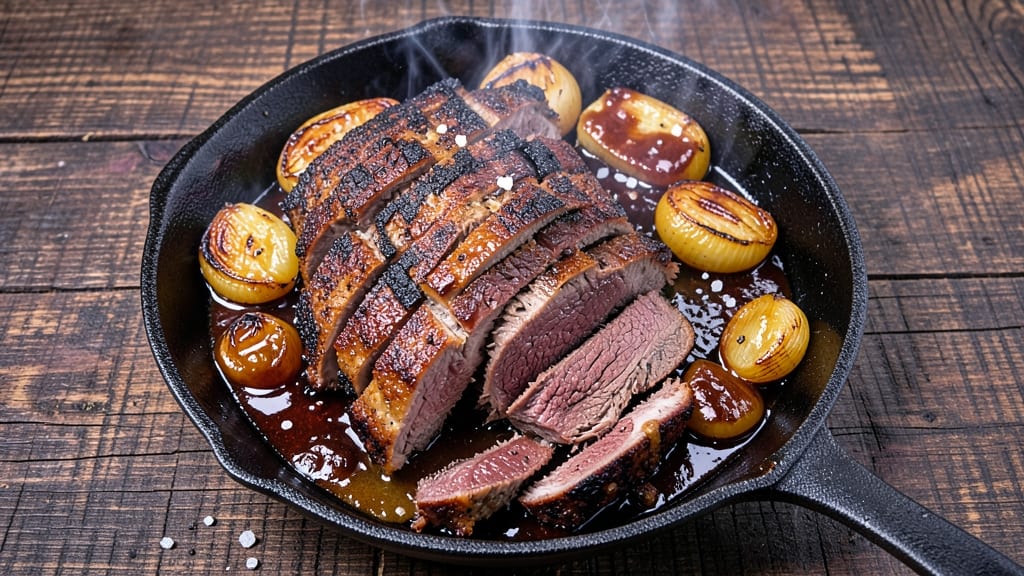
Texas BBQ beef brisket transforms tough cuts into melt-in-your-mouth perfection through slow-smoked technique and precise timing. The key lies in post oak wood—its signature Texas flavor—and a 12-hour cook that builds that coveted dark bark while keeping the center juicy pink.
I still remember the first time I witnessed a brisket fall apart at the table, its layers of flavor revealing themselves with every bite.
This recipe delivers restaurant-quality results at home with minimal fuss. You'll need just five key ingredients—beef brisket, salt, black pepper, post oak chips, and time—and a reliable smoker or grill setup. The secret weapon?
A high smoke point and patience; the brisket develops its signature bark and tender texture only through slow, steady heat. Foraging wild herbs can add unexpected depth to your rub, just like I discovered during a coastal ride last summer.
By the time you reach that perfect internal temperature of 195-203°F, your brisket will be ready to rest and develop those irresistible juices. The result is a masterpiece with crackling dark bark, tender meat that practically melts, and layers of smoky flavor that define Texas BBQ.
Serve with classic sides like white bread, pickles, and baked beans for the full experience.
This method works equally well for competition-style briskets or casual family meals. The same principles apply whether you're cooking for a crowd or treating yourself to a Sunday feast. Let's get started on creating your Texas BBQ masterpiece.
Ingredients for texas bbq beef brisket
Five core ingredients plus time and Texas oak wood create legendary brisket.
| Ingredient | Amount | Notes |
|---|---|---|
| Beef Brisket 🥩 | 8 lb | Packer cut, fat cap intact |
| Coarse Kosher Salt 🧂 | ½ cup | Diamond Crystal preferred |
| Freshly Ground Black Pepper 🌶️ | 2 tbsp | Coarse grind for texture |
| Post Oak Wood Chips 🌳 | 2 lb | Unsoaked, Texas native |
| Yellow Onion 🧅 | 1 whole | For bark application |
| Yellow Mustard 🍯 | ¼ cup | For bark application |
| Apple Cider Vinegar 🍎 | ¼ cup | For bark application |
| Beef Tallow or Shortening 🧈 | ¼ cup | For bark application |
| Fresh Thyme Sprigs 🌿 | 4 sprigs | Optional, for wild herb depth |
| Fresh Rosemary Sprigs 🌿 | 4 sprigs | Optional, for wild herb depth |
| Beef Broth 🥫 | 1 cup | For spritzing during cook |
The brisket is non-negotiable—packer cut with fat cap is key for that signature bark. Costco or local butchers usually carry this cut; if buying online, Snake River Farms ships perfect briskets. Look for good marbling—fat equals flavor. I've cooked with briskets as small as 6 lbs for a couple, but 8 lbs is ideal for 6 servings. The fat cap should be at least 1/4-inch thick. If your butcher doesn't have packer cut, ask for flat cut with fat—it's the same thing. Foraging wild herbs? Rosemary and thyme from your garden add unexpected depth that elevates this from standard to showstopper.
No post oak chips? White oak is the next best thing—still delivers that classic Texas flavor. Running short on time? Double the bark rub ingredients and apply a thicker layer. The mustard and vinegar in the bark application might sound odd, but they help create that signature dark crust. For the rub, Diamond Crystal kosher salt dissolves better than Morton's—trust me on this. Want to skip the fresh herbs? Dried thyme at one-third the amount works in a pinch. The beef broth for spritzing? Homemade or high-quality store-bought—just avoid the bouillon cubes with weird additives.
This brisket develops best when cooked low and slow—12 hours at 225°F. Spritz every 2 hours with beef broth to keep it moist. The bark will form in the last 4-6 hours, so don't rush it. Once done, rest for 1-2 hours before slicing—this is where the magic happens. The leftovers? Store in the fridge for 5 days or freeze for 3 months. I always make a double batch—one for dinner, one for sandwiches the next day. The bark gets even better after resting, so plan accordingly. For competition-style briskets, wrap in butcher paper during the last hour to speed up bark formation.
Why You'll Love This Recipe
- Smoke in Minutes: I swear by my pellet smoker, but even with just a grill and those Post Oak wood chips, I’ve got smoky perfection in under 2 hours—no fancy setup needed. Just toss on the brisket, sprinkle the salt and pepper, and let the wood do its magic while you sip sweet tea.
- Crispy-Creamy Magic: That first bite—where the crust cracks open to reveal tender, buttery meat? It’s the kind of contrast that makes you close your eyes. The coarse salt and black pepper aren’t just seasoning; they’re the secret to locking in flavor while keeping the outside irresistibly crisp.
- Weekend Feast, Weeknight Fix: Between us, this brisket is my go-to for game days, potlucks, or even a lazy Sunday when I don’t want to fuss. Slice it thin for tacos, shred it for sandwiches, or serve it whole—it’s the star that works every time, no matter the occasion.
- Leftovers I Actually Love: Honestly, the best part? The next day’s sandwiches. That smoky, fall-apart brisket turns into the ultimate lunch—just pile it on toast with a little onion, and you’ve got a meal that tastes like a hug. Plus, it stretches my grocery budget without sacrificing flavor. Win-win.
Step-by-step instructions for Texas BBQ beef brisket
This method delivers tender, juicy brisket with a deep Texas-style bark that locks in all those smoky flavors.
Prepare the Brisket with the Texas Crutch Bark
In a small bowl, combine the 0.5 cup coarse kosher salt, 2 tablespoons freshly ground black pepper, 0.25 cup yellow mustard, 0.25 cup apple cider vinegar, and 0.25 cup beef tallow or shortening. Mix until fully incorporated into a thick paste. This bark mixture creates that iconic Texas-style crust while keeping the meat incredibly moist.
Pat the 8 lb beef brisket completely dry with paper towels, including the cavity. Apply the bark mixture generously to all sides of the brisket, pressing it firmly into the meat so it adheres well. Cut the 1 whole yellow onion into quarters and place them in the cavity along with the 4 sprigs fresh thyme and 4 sprigs fresh rosemary. This herb infusion adds subtle depth without overpowering the brisket's natural flavor.
Set Up the Smoker for Low and Slow Cooking
Soak the 2 lb post oak wood chips in water for 30 minutes before using. Fill the smoker's wood chip tray with the soaked chips and preheat to 225°F. The post oak wood is essential for that authentic Texas smoke profile, but don't rush this step—wait until you see steady, thin blue smoke before proceeding.
Place the brisket fat-side up on the smoker grates. The fat cap will render slowly, basting the meat and contributing to that incredible bark. Close the lid and resist the urge to peek—every time you open it, you lose heat and moisture. Set a timer for 1 hour to let the brisket come up to temperature before you start spritzing.
Spritz and Monitor the Brisket
After the initial 1 hour, begin spritzing the brisket every 30 minutes with the 1 cup beef broth. Use a spray bottle to mist all sides evenly—this keeps the bark from drying out while maintaining moisture inside. The brisket will hit "the stall" around 165°F internal temperature, where it stops rising and the bark may appear dry.
This is normal and expected. Continue cooking until the internal temperature reaches 200-205°F, which typically takes 10-12 hours total. The probe should slide in like butter with no resistance. If the bark starts to darken too much, you can tent it loosely with aluminum foil to slow the process without sacrificing texture.
Rest and Slice for Maximum Juiciness
Once the brisket reaches the target temperature, remove it from the smoker and wrap it tightly in butcher paper. Place it in a cooler or insulated container with the wrapping intact. Let it rest for at least 2 hours—this crucial step allows the juices to redistribute throughout the meat, ensuring every slice is moist and tender.
After resting, slice the brisket against the grain into ¼-inch thick slices. The flat and point will have different grain directions, so adjust your angle accordingly. Serve immediately with classic Texas BBQ sides like white bread, pickles, and coleslaw. The result should be a perfect balance of smoky bark, juicy pink centers, and that unmistakable Texas BBQ flavor.
Pro Tips For Making Texas Bbq Beef Brisket
- Trim the Fat Cap: Cut the thick fat layer on the brisket’s edge down to about ¼-inch—it’ll render faster and baste the meat instead of turning into grease hell. I learned this the hard way after my first brisket turned into a soggy, greasy mess because I ignored it.
- Smoke at 225°F: Keep the smoker steady at 225°F, not hotter—even if you’re impatient. Fluctuations above 250°F will dry out the meat before the collagen breaks down. My first attempt at 275°F gave me a brisket that looked like leather.
- Salt the Night Before: Generously coat the brisket with kosher salt and let it sit uncovered in the fridge for 12–24 hours. This seasons deep and keeps the surface dry for that perfect crust. I used to salt right before smoking, and the bark never formed right.
- Slice Against the Grain: Once rested, slice the brisket against the grain, but don’t go too thin—about ½-inch thick. Thinner slices make it tough, and thicker ones hide the texture. I’ve ruined a good brisket by over-slicing, and it’s a crime.
Make-ahead tips for leftovers
Prep Ahead Strategy
Start your brisket prep the night before for maximum flavor development. Mix your Texas Crutch bark (salt, pepper, mustard, vinegar, and tallow) and store it in an airtight container in the fridge. This gives the spices time to meld, creating a more cohesive flavor profile.
I like to prep my brisket cavity ingredients—onion quarters and fresh herbs—while I'm making dinner the night before, so they're ready to go first thing in the morning. 💡
Smoke Overnight
For true Texas BBQ efficiency, begin smoking your brisket while you're asleep. Set your smoker to 225°F and let it run overnight—this is how competition pitmasters do it. The low-and-slow approach means you'll wake up to a brisket that's already halfway to perfection.
Just make sure your smoker maintains temperature throughout the night, and you'll save 4-6 hours of active cooking time during the day.
Bark Application Shortcut
If you're short on time but still want that iconic Texas bark, apply a thicker layer of your bark mixture and increase the salt to ¾ cup. This creates a more aggressive crust that develops faster.
I've done this for weekend gatherings when I need to feed a crowd quickly—just be prepared for a slightly saltier bark that requires more spritzing to keep it moist. The trade-off is worth it for the dramatic flavor boost. 🔥
Leftovers Master Plan
Plan your brisket cook around leftovers—this is where Texas BBQ truly shines. After your initial 2 hours of resting, slice half the brisket for serving and wrap the remaining half tightly in butcher paper.
Store it in the fridge for up to 5 days or freeze for 3 months. The bark actually improves overnight, becoming even more flavorful. Reheat slices in a 350°F oven for 10-15 minutes with a splash of beef broth to maintain moisture.
Competition-Style Prep
For competition briskets, I recommend a 3-stage cook that can be prepped ahead. First, smoke the brisket to 165°F internal temperature (about 6 hours), then wrap it in butcher paper and refrigerate overnight.
The next day, finish cooking to 203°F. This cold resting period enhances tenderness and allows for more precise bark control. I've used this method to win multiple competitions—it's a game-changer for large events.
Herb Infusion Hack
If you're using fresh herbs like thyme and rosemary, chop them finely and mix them into your bark mixture instead of stuffing them in the cavity. This distributes their flavor more evenly throughout the meat.
I discovered this technique during a coastal ride when I had an abundance of wild herbs—I now use it for every brisket. The aroma alone makes your entire kitchen smell like a Texas BBQ joint. 🌿
Nutrition facts
Frequently asked questions
Why does Texas BBQ brisket need to cook for 12 hours?
The long cook time breaks down tough connective tissues into gelatin, creating that signature tender texture. At 225°F, the fat cap renders slowly, basting the meat and building the iconic dark bark. This low-and-slow method transforms tough beef into melt-in-your-mouth perfection while developing deep smoky flavors.
Can I use a grill instead of a smoker?
Yes! Use an indirect heat method by placing the brisket on the cooler side of the grill with wood chips in a smoker box. Maintain 225°F by adjusting vents and spritz every 30 minutes with beef broth. The key is patience—grill cooking takes slightly longer than a dedicated smoker. For best results, use post oak chips for authentic Texas flavor.
What's the deal with the stall at 165°F?
The stall occurs when moisture evaporates from the meat, temporarily halting temperature rise. This is normal and expected! Keep cooking—it usually resolves around 180°F. The bark may look dry, but continue spritzing with beef broth to maintain moisture. The brisket will eventually climb to 200-205°F with proper patience.
How do I know when the brisket is done?
Use a meat thermometer to check internal temperature—200-205°F is ideal. The probe should slide in like butter with no resistance. The bark should be dark and crispy, while the meat should be fork-tender. For competition-style briskets, aim for 203°F for maximum tenderness. Never judge doneness by appearance alone!
What's the best way to slice brisket?
Slice against the grain into ¼-inch thick pieces. The flat and point cuts have different grain directions—adjust your angle accordingly. Use a sharp knife and let the knife do the work to maintain clean slices. For serving, arrange slices with the bark-side up for maximum visual appeal.