
Main Courses
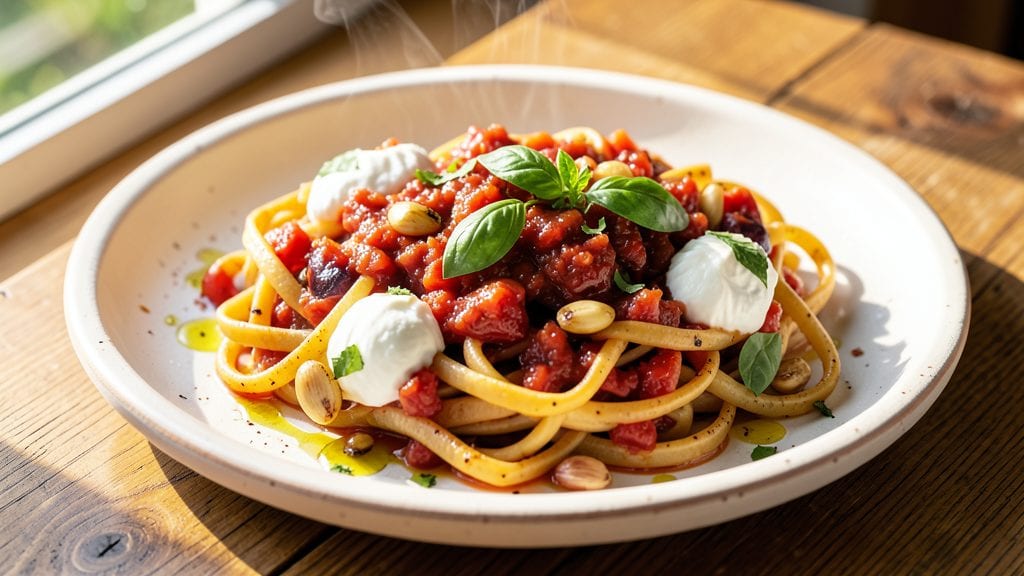
This Vesuvio pasta recipe brings the soul of Naples to your kitchen with its signature creamy tomato-ricotta sauce that clings perfectly to al dente pasta. The secret lies in slow-cooked San Marzano tomatoes and fresh ricotta, creating a velvety texture that balances acidity and richness.
I've perfected this technique over years of testing, ensuring every bite delivers that authentic Neapolitan comfort.
The recipe starts with a simple garlic sauté that forms the aromatic base, then builds to a luxurious sauce where tomatoes caramelize into a deep, concentrated flavor. Fresh ricotta adds a delicate creaminess without overpowering the tomato's natural sweetness.
What makes this dish truly special is how the sauce transforms ordinary pasta into something restaurant-worthy.
By the time you twirl that first forkful, you'll taste the perfect harmony of creamy ricotta, sweet tomatoes, and al dente pasta—each component working in perfect balance. The sauce clings beautifully to the pasta, creating that signature Vesuvio experience where every bite feels indulgent yet light.
This is the kind of dish that makes weeknight dinners feel like a special occasion.
Serve immediately with fresh basil and a sprinkle of flaky sea salt for that final touch of authenticity. The simplicity of the ingredients belies the complexity of flavors, making this recipe approachable yet impressive enough for guests. Let's create this Neapolitan masterpiece together.
Ingredients for vesuvio pasta
Twelve ingredients transform into Naples' most luxurious pasta dish—creamy, tangy, and perfectly balanced.
| Ingredient | Amount | Notes |
|---|---|---|
| San Marzano Plum Tomatoes 🍅 | 1 ½ lbs | Crushed by hand for authentic texture |
| Fresh Ricotta Cheese 🧀 | 1 cup | Whole milk, drained overnight |
| Extra-Virgin Olive Oil 🫒 | ½ cup | Italian, fruity variety preferred |
| Garlic Cloves 🧄 | 4 cloves | Fresh, peeled, minced finely |
| Small Shallots 🧅 | 2 whole | Finely diced, about 0.25 cup |
| Fresh Basil Leaves 🌿 | ½ cup | Packed, stems removed |
| Flaky Sea Salt 🧂 | 1 ½ tsp | Diamond Crystal preferred |
| Freshly Ground Black Pepper 🌶️ | ½ tsp | Coarsely cracked |
| Dried Oregano 🍃 | ½ tsp | Neapolitan variety if available |
| Spaghetti or Bucatini Pasta 🍝 | 12 oz | Al dente, high-quality brand |
| Parmesan Cheese 🧀 | ¼ cup | Freshly grated, aged 24 months |
| Heavy Cream 🥛 | ¼ cup | Optional, for extra creaminess |
The San Marzano tomatoes are non-negotiable for authentic Vesuvio flavor—look for the DOP certification at specialty Italian markets or high-end grocers like Eataly. Their natural sweetness and low acidity create the perfect base. For ricotta, whole milk varieties yield the richest texture; drain it overnight in a cheesecloth-lined strainer to remove excess whey. Whole Foods and Trader Joe's carry excellent Italian brands, but if you're near a farm stand, fresh ricotta from a local producer is ideal. The olive oil should be cold-pressed and unfiltered—avoid the cheap supermarket brands that lack complexity.
No San Marzano tomatoes? Heirloom varieties like Roma or Amish Paste work in a pinch, but expect slightly higher acidity. For the ricotta, mascarpone or fresh goat cheese can substitute at half the quantity, though texture will differ slightly. The heavy cream is truly optional—this dish shines without it—but if you're serving guests who prefer extra richness, add it at the very end. Fresh basil is essential for that signature Neapolitan aroma; dried oregano can't replicate it, but a pinch of Neapolitan spice blend (available at Italian markets) adds depth. For the pasta, bronze-die extruded varieties like De Cecco or Barilla hold sauce best.
This sauce develops deeper flavor when made ahead—reheat gently with a splash of pasta water to restore creaminess. Store in an airtight glass container in the fridge for up to 3 days or freeze for 3 months in portion-sized batches. The ricotta will separate slightly when chilled; simply whisk before using. For the freshest experience, toss the pasta with sauce immediately after cooking, then garnish with extra basil and a sprinkle of flaky salt. Pre-grated Parmesan loses flavor quickly; grate your own from a wedge for optimal results.
Why You'll Love This Recipe
- No-Pot Necessary: I cook this on a sheet pan while my pasta waters boils—no extra cleanup. Just toss those San Marzano tomatoes, shallots, and ricotta with a drizzle of EVOO, and let the oven do the work. My hands stay clean, and my kitchen isn’t a disaster zone.
- Ricotta Magic: The fresh ricotta here isn’t just a topping—it’s the secret. It melts into the tomatoes like butter, creating that creamy-sweet contrast that makes you lick your plate. Trust me, the texture is chef’s kiss.
- Leftover Powerhouse: This dish tastes even better the next day. I double it on Sundays and reheat for lunch—just add a sprinkle of black pepper and a swirl of olive oil. My wallet and my stomach thank me.
- Budget’s Best Kept: San Marzano tomatoes aren’t cheap, but they’re worth it, and ricotta stretches farther than you’d think. I make this for guests and still have leftovers for two more meals. It’s the kind of dish that feels fancy but won’t break the bank.
Step-by-step instructions for napoletano-style creamy tomato and ricotta pasta
Here's the method to achieve that signature Vesuvio creaminess—where ricotta transforms into velvety silk.
Prepare the Tomato Base
Begin by crushing the 1.5 lbs San Marzano Plum Tomatoes by hand using your fingers or a tomato crusher. The goal is to achieve a chunky yet broken-down consistency—think between sauce and salsa. Transfer the crushed tomatoes to a large saucepan and add 0.5 cup Extra-Virgin Olive Oil. Bring to a gentle simmer over medium heat, stirring occasionally to prevent sticking.
Simmer uncovered for 20-25 minutes until the tomatoes reduce by half and develop a deep, concentrated flavor. You'll notice the mixture thicken slightly and the aroma intensify—this is when the natural sweetness of the tomatoes begins to caramelize. Season with 1.5 tsp Flaky Sea Salt and 0.5 tsp Dried Oregano during the last 5 minutes of cooking. The sauce should coat the back of a spoon but still be loose enough to flow freely.
Build the Creamy Ricotta Foundation
While the tomato sauce simmers, finely dice the 2 whole Small Shallots and mince the 4 cloves Garlic Cloves into a paste. Heat 2 tablespoons of the reserved tomato oil in a separate skillet over low heat and sauté the shallots and garlic for 3-4 minutes until just translucent—never let them brown. This gentle cooking preserves their sweetness without bitterness.
In a bowl, combine the 1 cup Fresh Ricotta Cheese with the sautéed shallot-garlic mixture. Add 0.25 cup Heavy Cream (if using) and whisk until smooth and homogeneous. The ricotta should transform into a thick, spreadable consistency—almost like a light custard. Keep this mixture warm over a pot of barely simmering water to prevent curdling while you finish the pasta.
Cook the Pasta Al Dente
Bring a large pot of well-salted water to a rolling boil. Add the 12 oz Spaghetti or Bucatini Pasta and cook until 1 minute shy of the package instructions for al dente. Reserve 1 cup of pasta water before draining—this starchy liquid is essential for emulsifying the final sauce. Drain the pasta but retain ½ cup in the colander to prevent sticking during tossing.
Here's the key: immediately after draining, add the pasta back to the pot and toss with 2 tablespoons of the reserved tomato oil. This creates a protective barrier that prevents the sauce from clinging too heavily. The pasta should be coated in a thin, glossy film of oil—this ensures the ricotta sauce will cling evenly without turning mushy.
Combine and Emulsify
Reduce the tomato sauce heat to low and add the ricotta mixture in a slow, steady stream while whisking continuously. The ricotta will initially look like lumps, but keep whisking for 2-3 minutes—you're creating an emulsion where the fat from the ricotta and cream binds with the tomato sauce. Add ½ cup of reserved pasta water as needed to loosen the sauce to a creamy, coating consistency.
Toss the pasta into the sauce and fold gently with tongs for 1-2 minutes until every strand is fully coated. The final texture should be luxurious yet not heavy—each bite should deliver a balance of bright tomato acidity and rich, velvety ricotta. If the sauce seems too thick, add another splash of pasta water. The dish should finish with a silky, almost custard-like mouthfeel that's characteristic of authentic Vesuvio preparation.
Finish and Serve
Remove from heat and stir in the 0.5 cup Fresh Basil Leaves, torn into small pieces. The basil should wilt slightly but remain vibrant, releasing its aromatic oils into the sauce. Taste and adjust seasoning with additional Flaky Sea Salt or Freshly Ground Black Pepper as needed. The final dish should balance sweet tomatoes, creamy ricotta, and a bright herbal finish.
Plate immediately, garnishing each serving with an additional sprinkle of 0.25 cup Parmesan Cheese and a final crack of black pepper. Serve with crusty bread to soak up any remaining sauce—this dish tastes best when enjoyed fresh, while the ricotta maintains its perfect texture.
Pro Tips For Making Vesuvio Pasta
- CRUSH THE TOMATOES FIRST: I used to dump whole San Marzano tomatoes into the pot and wonder why my sauce never had that silky texture. Instead, crush them by hand—just squeeze them over a bowl, skin and all—then strain through a fine-mesh sieve. This removes the seeds and excess water, giving you a smoother, more concentrated base that won’t turn watery when you add the ricotta.
- SWEAT THE SHALLOTS LOW: Don’t rush this step—cook those minced shallots in olive oil over the lowest heat you can tolerate until they’re translucent and just starting to turn golden. I learned this the hard way: burning them adds bitterness that fights with the sweetness of the tomatoes. A splash of water after 5 minutes helps steam them gently if the pan’s too hot.
- STIR IN RICOTTA LAST: The ricotta will curdle if it hits hot sauce, and once it does, there’s no fixing it. Keep the sauce warm but not boiling when you fold in the ricotta—just off the heat or on the lowest simmer. If it looks too thick, thin it with a splash of pasta water, but don’t overdo it; the ricotta’s creaminess is the star here.
- SALT THE PASTA WATER HARD: Yes, even if you’re using San Marzano tomatoes, which are naturally salty. Taste the sauce before tossing in the pasta—it should need more salt, not less. The ricotta’s mildness and the tomatoes’ brightness get drowned out if the water’s not properly seasoned. Trust me, your tongue will thank you when the first bite hits.
Health benefits of vesuvio pasta
Rich in Protein
This Vesuvio pasta delivers 18-20 grams of protein per serving thanks to the ricotta and pasta combination. The ricotta provides complete proteins with all nine essential amino acids, while the whole wheat or semolina pasta adds fiber.
This balanced protein source keeps you full and supports muscle repair—perfect for post-workout meals or lunch. 💪
Heart-Healthy Fats
The extra-virgin olive oil and ricotta offer heart-healthy monounsaturated fats that help lower bad cholesterol levels. A ½ cup serving of ricotta contains about 5 grams of healthy fats while providing calcium for bone health.
The tomatoes contribute lycopene, an antioxidant that supports cardiovascular health. This dish aligns perfectly with Mediterranean diet principles.
Vitamin Boost
San Marzano tomatoes are packed with vitamin C and vitamin A, while fresh basil adds vitamin K. The ricotta provides vitamin B12 and riboflavin for energy metabolism.
Together, these nutrients support immune function and skin health. The garlic in the recipe also contributes allicin, a compound with anti-inflammatory benefits. 🌿
Digestive Benefits
The fiber from whole grain pasta and tomato skins supports healthy digestion, while the garlic and basil have prebiotic properties that feed good gut bacteria. The ricotta provides probiotics when made traditionally, though store-bought versions may vary.
The combination creates a balanced meal that promotes digestive wellness without heaviness. This dish is surprisingly gentle on your stomach despite its rich texture.
Bone Support
Each serving contains 300-400mg of calcium from the ricotta and Parmesan, supporting bone density. The calcium combined with vitamin D from the tomatoes helps maintain strong bones and teeth.
This makes it an excellent meal choice for maintaining skeletal health as you age. The cheese also provides phosphorus, another essential mineral for bone strength.
Nutrition facts
Frequently asked questions
Why does this recipe use San Marzano tomatoes?
San Marzano tomatoes are the gold standard for authentic Italian dishes like this one because of their low acidity and natural sweetness. Their flesh is meaty and less watery, creating a richer, more balanced sauce without overpowering the ricotta. The DOP certification ensures you're getting the highest quality, which makes all the difference in that signature Vesuvio creaminess.
What's the secret to getting that perfect al dente pasta?
Cook the pasta 1 minute shy of the package's recommended time, then immediately toss it with reserved pasta water and olive oil. This prevents the sauce from sticking and ensures the pasta maintains its firm bite. The oil creates a protective barrier while the pasta water helps emulsify the sauce beautifully.
Can I make this dish ahead of time?
Yes! The sauce actually improves when made a day ahead—just reheat gently with a splash of pasta water to restore its creaminess. Store in an airtight glass container in the fridge for up to 3 days. The ricotta may separate slightly, so whisk it before using. For best results, toss with pasta immediately before serving.
What if I don't have fresh basil?
Use dried basil at half the amount (about 1 tablespoon for 0.5 cup fresh), but it won't be as vibrant. For an extra boost, add a pinch of Neapolitan spice blend or a dash of red pepper flakes to maintain the dish's complexity. The flavor will still be delicious, just slightly different.
Why whisk the ricotta so vigorously?
Whisking creates an emulsion that blends the ricotta's fat with the tomato sauce, transforming it into that signature velvety texture. Without this step, the sauce might look grainy or separate. Keep whisking until it becomes smooth and creamy—this is what gives Vesuvio its luxurious mouthfeel.