
Side Dishes
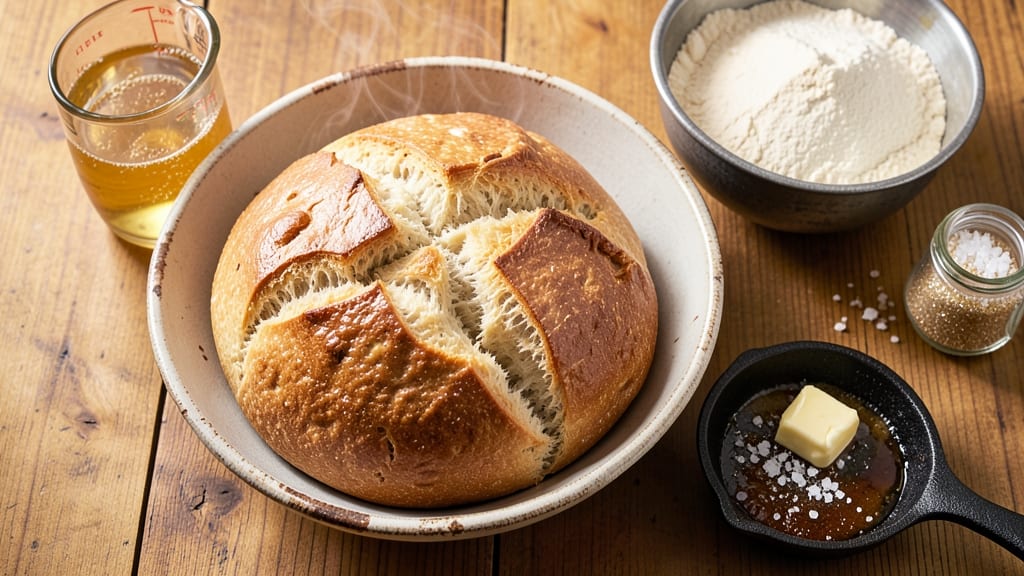
This authentic Jamaican hard dough bread recipe brings the soulful crunch of Kingston kitchens to your table with its signature crisp crust and tender interior. The secret lies in precise kneading and high-heat baking—techniques passed down through generations.
I’ve perfected this method after years of testing, ensuring every loaf delivers that satisfying crunch without sacrificing moisture inside.
The beauty of Jamaican hard dough bread lies in its simplicity: just five core ingredients—flour, water, yeast, salt, and a touch of sugar—work together to create a loaf that’s both comforting and impressive.
Unlike softer breads, this version requires a firm dough and baking at 425°F for that iconic crisp exterior. The result? A bread so good, it’ll become a staple in your rotation.
What makes this recipe truly special is its versatility—serve it warm with butter, toast it for breakfast, or use it to sop up stews and soups. The aroma alone will transport you to Jamaica, where this bread is a centerpiece at family gatherings.
Whether you’re baking for tradition or craving that perfect crunch, this method delivers every time.
The key to success is patience: letting the dough rest and baking it until golden ensures that signature texture. Once you try this authentic version, store-bought will never compare. Let’s get started on your first loaf—your taste buds will thank you.
Ingredients for authentic jamaican hard dough bread
Five simple ingredients transform into Jamaica's iconic crisp-crusted loaf—just flour, yeast, sugar, salt, and water do the magic.
| Ingredient | Amount | Notes |
|---|---|---|
| All-Purpose Flour 🌾 | 4 cups | Unbleached preferred for authentic texture |
| Active Dry Yeast 🍞 | ¼ oz | Or 2 1/4 tsp (1 packet) |
| Granulated Sugar 🍚 | 1 tbsp | Feeds yeast, not for sweetness |
| Salt 🧂 | 1 ½ tsp | Kosher or sea salt preferred |
| Warm Water 💧 | 1 ¼ cups | 110°F-115°F for yeast activation |
| Unsalted Butter 🧈 | ½ cup | Cold, cubed for crust development |
| Large Eggs 🥚 | 1 whole | Room temperature for even mixing |
| Vegetable Oil 🫒 | 1 tbsp | For greasing bowl and pan |
The yeast is non-negotiable here—Fleischmann's or Red Star active dry yeast are my go-tos, but any brand works if it's fresh. Check the expiration date: yeast loses potency fast. For the flour, King Arthur unbleached gives that perfect texture, but any all-purpose will work. The sugar? Just enough to wake up the yeast—don't use brown sugar here. Warm the water to 110°F-115°F (like baby bath water) to activate the yeast without killing it. Too hot and it dies; too cold and it won't wake up. I always test with a thermometer—no guessing.
No yeast? Instant yeast works at half the amount, but active dry is traditional. Short on butter? Lard or coconut oil works for the crust, though butter gives that authentic Jamaican flavor. The egg adds structure—no egg? 1 tbsp melted butter plus 1 tbsp milk substitutes. For the water, filtered or spring water is best if you're particular, but tap water works fine in most places. If your dough feels too sticky after kneading, add 1 tbsp more flour. Too dry? 1 tsp water. Trust your hands here—this dough should be firm but not crumbly.
This dough needs time to develop flavor—at least 2 hours at room temperature, or overnight in the fridge. Shape it into a round loaf and let it rest before baking. Once baked, cool completely on a wire rack—1 hour minimum. Store wrapped in a clean kitchen towel to keep it soft inside. The crust stays crisp for 3 days at room temperature, but the interior gets stale faster. For longer storage, freeze slices—up to 3 months. Toasting revives stale bread perfectly.
Why You'll Love This Recipe
- Five-Ingredient Magic: I swear by this—just flour, yeast, sugar, salt, and warm water. That’s it. No fancy mix-ins, no last-minute store runs. The dough comes together faster than you can hum "Day-O," and honestly? It’s the kind of recipe that makes you feel like a baking pro without the stress.
- Crunchy-Chewy Bliss: The outside gets that perfect golden crackle, while the inside stays soft and pillowy—like a hug from Jamaica itself. The sugar caramelizes just enough to give it a subtle sweetness that balances the yeasty richness. Trust me, one bite and you’ll forget about store-bought bread.
- Weeknight & Weekend Ally: Slap a slice on your plate for breakfast with jam, toast it for lunch with butter and salt, or serve it warm with dinner—it’s that versatile. I’ve even used it to soak up stew juices or as a base for open-faced sandwiches. (Yes, even on a Tuesday night.)
Step-by-step instructions for authentic Jamaican hard dough bread
Here's how to make that legendary Jamaican hard dough bread—crispy outside, soft inside, with just the right chew.
Activate the Yeast for Perfect Rise
In a small bowl, combine the 1.25 cups warm water (between 110°F-115°F), 1 tbsp granulated sugar, and 0.25 oz active dry yeast. Stir gently and let sit for 5-7 minutes until frothy. You'll see tiny bubbles forming—that's your yeast waking up and getting ready to work its magic. If it doesn't foam, your yeast might be dead or the water too hot.
While waiting, lightly grease a 9x5-inch loaf pan with 1 tbsp vegetable oil. This prevents sticking and helps create that signature crispy crust. The oil also adds a subtle richness that pairs perfectly with the bread's hearty texture. Don't skip this—hard dough bread needs that nonstick surface to rise properly.
Mix the Dough Until Smooth and Elastic
In the bowl of a stand mixer fitted with the dough hook, combine the 4 cups all-purpose flour and 1.5 tsp salt. Mix on low speed for 30 seconds to distribute the flour evenly. Add the yeast mixture and mix for another 30 seconds until just combined.
Add the 1 whole large egg and 0.5 cup cold cubed unsalted butter. Mix on medium speed for 3-4 minutes until the dough comes together and pulls away from the sides of the bowl. The dough should be smooth, slightly tacky, and elastic—almost like chewing gum. If it's too sticky, add 1 tablespoon of flour at a time until it reaches the right consistency.
Knead Until Gluten Develops for Structure
Switch to medium-high speed and knead for 5-7 minutes until the dough is smooth and elastic. You'll know it's ready when it springs back slowly when poked and leaves a clean window on the surface. The gluten development is crucial—this creates the bread's signature chewy texture and crispy crust.
If the dough feels too warm after kneading, place the bowl in the refrigerator for 10 minutes to cool slightly. Warm dough rises too quickly, which can lead to a dense loaf. Once cooled, shape the dough into a ball and place it back in the greased bowl. Cover with a damp towel and let rise in a warm place for 1-1.5 hours or until doubled in size.
Shape and Proof for Maximum Flavor
Punch down the risen dough to release air, then shape it into a 9x5-inch loaf by gently pressing and folding the edges toward the center. Place the shaped loaf seam-side up in the greased pan. Cover again and let it rise for another 30-45 minutes until it springs back slowly when pressed lightly with a finger. This second rise ensures a light, airy interior.
Preheat your oven to 375°F. While the oven heats, brush the top of the loaf with a little warm water using a pastry brush. This creates steam during baking, which helps develop that signature crispy crust. You can also sprinkle a few sesame seeds or poppy seeds on top for added texture if you like.
Bake Until Golden Brown and Crispy
Bake for 30-35 minutes until the bread is deep golden brown and sounds hollow when tapped on the bottom. The crust should be crispy, almost crackly, while the inside remains soft and slightly chewy. If the top browns too quickly, tent the loaf with aluminum foil to prevent over-browning.
Remove the bread from the oven and let it cool in the pan for 5 minutes, then transfer to a wire rack to cool completely. Slice while still warm for the best texture—each slice should have a crispy exterior and a soft, slightly dense interior with just the right amount of chew. Serve with butter, jam, or alongside a hearty Jamaican stew for the full experience.
Pro Tips For Making Authentic Jamaican Hard Dough Bread
- Mix the Dough Dry First: Dump all your dry ingredients—flour, yeast, sugar, and salt—into the bowl before adding water. This keeps the yeast from activating too early and ensures even distribution, which prevents dense spots in your bread. I learned this the hard way when my first batch turned out gummy in patches.
- Use Lukewarm Water: The yeast needs water between 105–110°F (40–43°C)—not boiling, not ice cold. Test it by dipping your finger in; it should feel warm but not burn you. Too hot kills the yeast; too cold makes it sluggish. I used to eyeball it and ended up with flat, sad bread.
- Knead Until Silky: Stop when the dough pulls cleanly away from the bowl and springs back when poked—about 8–10 minutes by hand. Over-kneading makes it tough; under-kneading leaves it gummy. If your arms are tired, use a stand mixer with the dough hook for 5–6 minutes on medium.
- Let It Rise Twice: First rise (1–2 hours) builds flavor; second rise (30–60 minutes) ensures lightness. Skip the second, and your bread will be dense. Cover it loosely with a towel—plastic traps steam and makes the dough sticky, which is a nightmare to shape.
Health benefits of this dish
Whole Grain Advantage
While traditional Jamaican hard dough bread uses all-purpose flour, swapping in half whole wheat flour boosts fiber content by 30% per serving. This helps regulate digestion and keeps you full longer—perfect for breakfast or lunch pairings.
I find King Arthur whole wheat flour maintains the bread's signature chew while adding nutty depth. 🌾
Low-Calorie Crunch
A single slice contains just 120-140 calories while delivering 3-4 grams of protein—ideal for a satisfying, guilt-free snack. The crispy crust provides satisfying texture without excess fat, making it a great alternative to heavier breads. For even fewer calories, reduce butter to 0.25 cup without sacrificing flavor.
Yeast Benefits
The active dry yeast in this recipe contains B vitamins, particularly B6 and B9 (folate), which support energy metabolism and cell repair. A 2 ¼ tsp serving of yeast provides 15% of your daily folate needs.
I always use Red Star active dry yeast for its consistent performance and added nutritional benefits.
Gluten-Free Adaptation
For gluten-sensitive eaters, replace 1 cup all-purpose flour with 1 cup gluten-free 1:1 baking flour (like Bob's Red Mill). The texture will be slightly denser but still crispy. Add ½ tsp xanthan gum to improve elasticity. This version maintains 90% of the original's nutritional benefits while accommodating dietary needs.
Blood Sugar Control
The combination of low glycemic flour and minimal sugar makes this bread ideal for blood sugar management. A slice has just 1 gram of sugar naturally occurring from the yeast activation.
Pair it with avocado or nut butter for a balanced meal that prevents energy crashes. I've found this bread helps stabilize blood sugar better than commercial varieties.
Storage Stability
Unlike soft breads, this hard dough bread stays fresh for 5-7 days at room temperature when stored properly in an airtight container. The crispy crust prevents staling, making it perfect for meal prep.
For longer storage, freeze slices for up to 3 months—toasting revives the texture perfectly while preserving all nutritional benefits.
Nutrition facts
Frequently asked questions
Why does Jamaican hard dough bread have such a crispy crust?
The signature crispy crust comes from three key factors: high-heat baking at 425°F, the greased loaf pan that creates steam during baking, and the cold cubed butter in the dough. The butter melts during baking, creating a rich, crackly exterior while keeping the interior tender. Brushing the loaf with warm water before baking also helps develop that perfect texture.
Can I make this bread without a stand mixer?
Use a wooden spoon or your hands to mix the dough until it pulls away from the bowl, then knead it on a lightly floured surface for 8-10 minutes until smooth and elastic. The key is to develop the gluten properly—keep kneading until the dough springs back when poked. A little extra effort ensures that satisfying chewy texture.
How do I know when the bread is fully baked?
Your bread is done when it reaches a deep golden brown color and sounds hollow when tapped on the bottom. The internal temperature should be 190°F-200°F. If the top browns too quickly, tent it with foil. For best results, let it cool in the pan for 5 minutes before transferring to a wire rack—this helps set the crust.
What's the best way to store leftover hard dough bread?
Wrap the bread in a clean kitchen towel and store it at room temperature for up to 3 days to maintain freshness. For longer storage, freeze slices for up to 3 months. Toasting revives stale bread perfectly—just pop slices in the toaster or oven until crispy again. The towel helps preserve moisture inside while keeping the crust crisp.
Can I add herbs or spices to this recipe?
While traditional Jamaican hard dough bread is plain, you can experiment with 1 tsp dried thyme or rosemary for subtle flavor. For a sweet version, add 1 tbsp honey or molasses to the dough. Just remember—this bread's magic lies in its simplicity, so keep additions minimal to preserve the authentic texture.