
Desserts
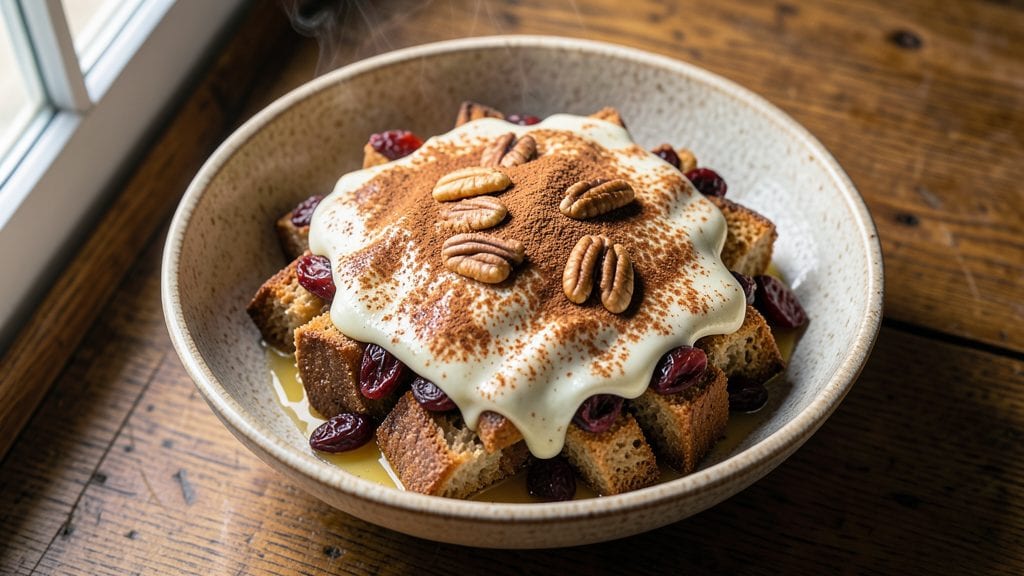
This capirotada bread recipe transforms simple ingredients into a warm, spiced fruit loaf with a cinnamon-kissed crust that tastes like comfort wrapped in tradition. The secret lies in soaking stale bread until tender, then layering it with cheese, raisins, and warm spices before baking until golden.
I first made this during my grandmother's holiday gatherings, where the aroma alone brought everyone to the table.
The beauty of capirotada is its simplicity—just a few pantry staples come together to create something extraordinary. You'll start with cubed bread, soaking it in milk and cinnamon until it absorbs the flavors completely.
Then comes the layering: cheese for richness, raisins for sweetness, and a final dusting of cinnamon sugar that gives the crust its signature warmth.
What you'll end up with is a dessert that's tender yet sturdy, sweet yet balanced by the sharpness of the cheese and warmth of the spices. The crust develops a beautiful golden-brown hue, while the interior stays moist and fragrant.
This is the kind of dessert that feels like a hug—perfect for holidays, family gatherings, or whenever you need a taste of home.
While the classic version is vegetarian, you can easily adapt it with plant-based milk and cheese for a vegan twist. The technique remains the same, proving this recipe's versatility. Let's get started on creating this beloved Latin American tradition in your own kitchen.
Ingredients for capirotada bread
Pantry staples meet Latin tradition—just 12 ingredients for this comforting spiced fruit loaf.
| Ingredient | Amount | Notes |
|---|---|---|
| Stale Bread Cubes 🍞 | 6 cups | Day-old white or brioche bread |
| Whole Milk 🥛 | 2 cups | Warm for soaking bread |
| Ground Cinnamon 🌿 | 2 tbsp | Freshly toasted for warmth |
| Raisins 🍇 | 1 ½ cups | Plump, seedless preferred |
| Pecorino Romano Cheese 🧀 | 1 cup | Freshly grated, sharp flavor |
| Brown Sugar 🍚 | ½ cup | Packed, light brown preferred |
| Unsalted Butter 🧈 | ½ cup | Cold, cubed for topping |
| Granulated Sugar 🍚 | ¼ cup | For final crust coating |
| Vanilla Extract 🌸 | 1 tsp | Pure, high-quality preferred |
| Salt 🧂 | ½ tsp | Fine sea salt for balance |
| Orange Zest 🍊 | 1 tbsp | Brightens the flavor profile |
| Almond Extract 🌰 | ½ tsp | Optional, adds depth |
The bread is the heart of capirotada, so don't skimp on quality. Day-old brioche or crusty white bread works best—it soaks up the milk and spices beautifully. Trader Joe's has great options if you're buying fresh, but stale bread from your pantry works too. Look for cubes that are about 1-inch in size; uniform pieces bake more evenly. The cinnamon? Penzeys or Spicewalla sell the best ground cinnamon—it's worth the splurge for that warm, toasty aroma. If you can't find those, any good-quality ground cinnamon will do, but avoid the pre-packaged grocery store stuff that's been sitting on shelves for months.
No pecorino? Parmesan or sharp cheddar works in a pinch, but the flavor won't be quite the same. Raisins too dry? Soak them in warm water for 10 minutes first. The brown sugar can be swapped for white sugar if that's what you have, but the molasses notes add depth. Substitute plant-based milk if you're making a vegan version—just warm it up first. The orange zest is key for brightness, but if you're out, a splash of orange juice or even a pinch of citric acid will help. And if you don't have almond extract, a tiny bit of vanilla bean paste works too—just use half the amount.
This keeps beautifully for 4-5 days in an airtight container at room temperature, though it's best enjoyed fresh. The crust stays crisp for about 2 days if stored properly, but the interior stays moist. For leftovers, wrap tightly in foil and reheat in a 350°F oven for 10-15 minutes until warmed through. I always make a double batch—it disappears fast during holiday gatherings. Store any extras in the freezer for up to 3 months; just thaw at room temperature before serving.
Why You'll Love This Recipe
- No Waste Magic: Honestly, this is my favorite way to use up stale bread—no sad, dry slices left to discard. Just toss those cubes in, and they turn into something so much better than what they started as.
- Cinnamon-Kissed Comfort: That warm, spiced milk-soaked bread? It’s like a hug for your taste buds. The pecorino Romano melts just enough to make it rich, while the raisins add a chewy, sweet contrast—pure satisfaction in every bite.
- Breakfast to Dessert: I’ve had this for breakfast, a late-night snack, or even a fancy dessert after dinner. It’s that kind of dish—simple but adaptable. Add a sprinkle of cinnamon on top for extra drama, or serve it with coffee for the ultimate cozy moment.
- Budget’s Best Kept Secret: Between stale bread, milk, and spices you probably already have, this costs next to nothing. And it makes enough for leftovers—perfect for meal prep or feeding a crowd without breaking the bank. My secret weapon for busy days.
Step-by-step instructions for capirotada bread
Here's how to transform simple ingredients into a fragrant, spiced fruit loaf with a perfect crust.
Soak the Bread Cubes with Warm Milk Mixture
In a large mixing bowl, combine the 6 cups stale bread cubes with the 2 cups warm whole milk. Let this sit for 5 minutes while you prepare the remaining ingredients. The bread should begin to soften and absorb the milk completely—this creates the perfect base texture without making the loaf soggy.
In a separate small bowl, whisk together the 0.5 cup brown sugar, 2 tablespoons ground cinnamon, 1 teaspoon vanilla extract, 0.5 teaspoon salt, 1 tablespoon orange zest, and 0.5 teaspoon almond extract. This aromatic blend is what gives capirotada its signature warm, spiced character. Pour this mixture evenly over the soaked bread cubes and gently fold until everything is thoroughly coated.
Layer with Raisins and Cheese
Add the 1.5 cups raisins to the bread mixture and fold them in completely. The raisins should be evenly distributed throughout—this ensures every bite has that sweet, chewy contrast. Next, sprinkle the 1 cup freshly grated Pecorino Romano cheese over the mixture and fold it in gently. The cheese will melt during baking, creating a rich, savory element that balances the sweetness.
Transfer the mixture to a well-greased 9x5-inch loaf pan. Press down firmly but evenly to create a compact loaf. This step is crucial—it prevents the bread from crumbling during baking and ensures even cooking. The top should be smooth, with no gaps or uneven spots.
Bake Until Golden and Fragrant
Preheat your oven to 350°F. Bake the loaf for 45 to 50 minutes, or until the top is golden brown and a toothpick inserted in the center comes out clean. The aroma should be intoxicating—warm cinnamon, orange zest, and caramelized sugar filling your kitchen. If the top browns too quickly, tent the loaf with aluminum foil to prevent over-browning while it continues cooking inside.
During the last 5 minutes of baking, sprinkle the 0.25 cup granulated sugar evenly over the top of the loaf. This creates a beautiful caramelized crust that adds texture and extra sweetness. Let the loaf cool in the pan for 10 minutes before transferring it to a wire rack to cool completely.
Add the Final Butter Crust
Once the loaf has cooled completely, melt the 0.5 cup unsalted butter until it's completely liquid but not hot. Brush this melted butter generously over the top and sides of the loaf. The butter will soak into the crust, creating a rich, moist finish that ties all the flavors together.
Slice the loaf into 8 even portions and serve warm. Each bite should offer a perfect balance of sweet raisins, spiced bread, and sharp Pecorino Romano cheese. The crust should be crisp and golden, with a hint of caramelized sugar on top. This loaf is best enjoyed fresh from the oven, but it also makes wonderful toast the next day.
Pro Tips For Making Capirotada Bread
- Toast the bread first: Don’t skip this—even if your bread is already stale. Toast the cubes in a dry pan for 2-3 minutes until lightly golden. It removes the raw bread flavor and adds a subtle crunch that balances the creamy milk and cheese. Trust me, I once forgot and the texture was meh.
- Soak raisins in warm milk: Plop those raisins into the warm milk (not boiling) 10 minutes before assembling. They’ll plump up nicely without turning into mush, and the milk will absorb their sweetness for a more harmonious flavor. I used to toss them in raw, and they ended up like little chewy rocks—don’t repeat my mistake.
- Layer cheese last: Sprinkle the Pecorino Romano on top of each bread layer just before baking, not before. This prevents it from melting into a sad, clumpy mess and lets it brown and crisp slightly. I learned this the hard way after one batch where the cheese just… disappeared into the milk.
- Bake uncovered, then broil: Start baking at 350°F (covered) for 20 minutes, then uncover and broil for 2-3 minutes. The uncovered time lets the top crisp up without burning the bottom. I used to broil too long and ended up with a burnt crust—now I keep an eye on it like a hawk.
Pro cooking tips for great capirotada bread
Soak Like a Pro
The key to perfect capirotada starts with getting that bread just right. Warm the milk to 110°F—not boiling, just cozy—before soaking the bread cubes. This temperature helps the bread absorb the milk evenly without turning mushy.
I like to use a thermometer for precision, but if you're eyeballing it, the milk should feel warm to the touch but not scalding. Let the bread soak for exactly 5 minutes—any longer and it risks becoming soggy in the oven. 🌡️
Layering Secrets
When adding raisins and cheese, work quickly but carefully. The raisins should be evenly distributed, so I use a small kitchen scale to portion them out if I'm feeling precise. For the cheese, freshly grated Pecorino Romano makes all the difference—it melts beautifully and adds that sharp, salty depth.
Press the mixture firmly into the pan to eliminate air pockets, which prevents cracks during baking. I use a spatula to smooth the top before baking.
Oven Temperature Control
Your oven's hot spots can ruin an otherwise perfect loaf. I always rotate my pan halfway through baking—after 25 minutes at 350°F—to ensure even browning. If your oven runs hot, reduce the temperature to 325°F and add 5-10 minutes to the baking time.
The internal temperature should reach 190°F for a perfectly set loaf. A toothpick test is foolproof here—it should come out clean with just a few moist crumbs.
Butter Brush Technique
The final butter brushing is where the magic happens. Melt the butter slowly over low heat until it's completely liquid but not bubbling—you want it to stay cool enough to soak into the crust rather than steam it.
Use a pastry brush to apply it generously, focusing on the edges and top. This step adds richness and helps create that beautiful caramelized crust. I like to brush it twice: once immediately after cooling and again just before serving for extra shine. 🧈
Cinnamon Sugar Timing
Sprinkle the granulated sugar during the last 5 minutes of baking for maximum caramelization. The heat from the oven will melt it slightly, creating those beautiful golden spots. If you add it too early, the sugar will burn before the loaf is fully cooked.
For extra flair, I like to mix the sugar with a pinch of cinnamon before sprinkling—it intensifies the flavor and adds visual appeal. Let the sugar sit undisturbed while baking for even melting.
Cooling Strategy
Resist the urge to slice immediately! Let the loaf cool in the pan for 10 full minutes before transferring it to a wire rack. This allows the internal structure to set properly, preventing crumbling when sliced.
For a restaurant-quality finish, I like to cool it completely before serving—this ensures clean slices with minimal crumbs. If you're short on time, a 5-minute cool in the pan followed by rack cooling works too, but the texture won't be quite as firm. ✨
Nutrition facts
Frequently asked questions
What type of bread works best for capirotada?
Day-old brioche or crusty white bread is ideal because it soaks up the milk mixture perfectly without becoming mushy. Avoid soft sandwich bread—it tends to fall apart during baking. If you only have fresh bread, let it sit out for 1-2 hours to stale slightly before cubing.
Can I make capirotada without cheese?
Yes! While cheese adds depth, you can substitute with 1 cup toasted nuts (pecans or walnuts) or 1/2 cup chopped dried fruit (apricots or figs) for texture. For a vegan version, use plant-based milk and omit cheese entirely—add 1/4 cup coconut milk powder to the soaking liquid for richness. The sweet-spiced profile will still shine.
Why did my capirotada turn out dry?
Over-baking is the most common cause—check with a toothpick at 40 minutes instead of waiting for the full 50 minutes. Another culprit? Using too much bread or not enough milk in the soaking step. For extra moisture, brush the cooled loaf with 2 tablespoons melted butter mixed with 1 teaspoon honey before serving.
How can I make capirotada ahead of time?
Bake the loaf 1 day ahead and store it in an airtight container at room temperature. Reheat slices in a 350°F oven for 5-7 minutes until warmed through. For longer storage, freeze the whole loaf (wrapped tightly) for up to 3 months. Thaw overnight in the fridge before reheating. The flavors actually deepen over time!
What's the best way to serve capirotada?
Warm slices make the perfect dessert alongside vanilla ice cream or whipped cream. For breakfast, toast the loaf and drizzle with honey and cinnamon. In Latin American tradition, it's often served with hot chocolate or café con leche. Pro tip: Dust with powdered sugar right before serving for a restaurant-worthy finish.