
Main Courses
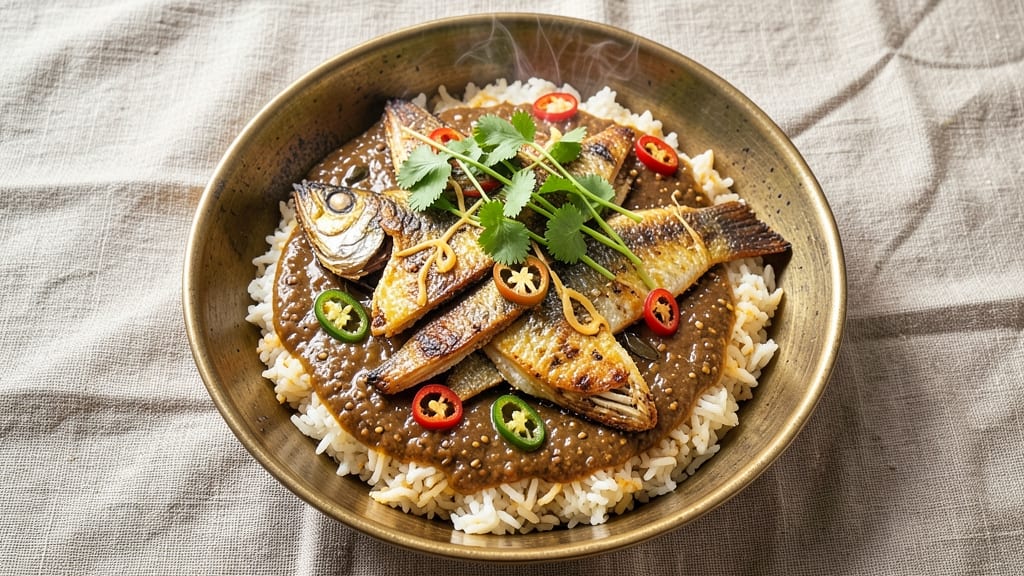
This Bengal-style hilsa curry transforms one of India’s most prized fish into a fragrant, spice-infused masterpiece that balances heat, sweetness, and coconut richness.
The secret lies in marinating the fish in mustard oil and turmeric before gently frying it to preserve its delicate texture, then simmering it in a velvety gravy of coconut milk, tamarind, and whole spices.
I’ve perfected this recipe over years of testing—every element, from the slow-cooked onions to the final touch of roasted cumin, ensures restaurant-quality depth without bitterness.
The beauty of this curry is its harmony: the smoky aroma of mustard seeds and bay leaves, the bright tang of raw mango powder, and the creamy embrace of coconut milk create layers that dance on the palate.
Unlike many hilsa preparations that overpower the fish’s natural sweetness, this method lets its flavor shine while building complexity through slow simmering. The result is a dish that feels both comforting and refined—ideal for special occasions or weeknight dinners when you crave something extraordinary.
By the time you serve this curry, your kitchen will smell like a Bengali household on a festive afternoon, and every bite will deliver tender, flaky hilsa swimming in a sauce that’s perfectly balanced—spicy enough to wake up the palate, sweet enough to satisfy, and rich enough to linger.
The dish pairs effortlessly with steamed basmati rice or fluffy parathas, making it a complete meal that’s both impressive and approachable. Here’s how to bring this classic to your table.
What makes this recipe truly special is its adaptability: reduce the coconut milk for a lighter version or add a splash of lemon juice at the end for brightness.
The technique is precise, but the spirit is flexible—let your instincts guide the spice level while keeping the fish as the star. Trust the process, and you’ll end up with a curry that tastes like home, no matter where you are.
Ingredients for hilsa curry
Fresh fish and aromatic spices create this fragrant Bengal-style hilsa masterpiece.
| Ingredient | Amount | Notes |
|---|---|---|
| Hilsa Fish 🐟 | 1 ½ lb | Fresh, whole fillets preferred |
| Mustard Oil 🫒 | ¼ cup | For authentic aroma |
| Turmeric Powder 🌿 | 1 tbsp | Freshly ground preferred |
| Ginger Root 🧅 | 1 tbsp | Freshly grated, peeled |
| Garlic Cloves 🧄 | 6 cloves | Peeled, roughly chopped |
| Green Chilies 🌶️ | 2 whole | Slit lengthwise, seeds removed |
| Onions 🧅 | 1 whole | Yellow, thinly sliced |
| Coconut Milk 🥥 | 1 can | Full-fat, 13.5 oz can |
| Tamarind Paste 🍋 | 1 tbsp | Or 1 tbsp lemon juice |
| Raw Mango Powder 🍎 | 1 tsp | Or substitute 1 tsp amchur |
| Bay Leaves 🌿 | 2 whole | Fresh or dried |
| Cumin Seeds 🌶️ | 1 tbsp | Toasted for aroma |
| Mustard Seeds 🌶️ | 1 tbsp | Lightly toasted |
| Salt 🧂 | 1 tsp | Adjust to taste |
| Fresh Coriander Leaves 🌿 | ¼ cup | Chopped, for garnish |
The hilsa is the star—look for fresh, firm fillets with clear eyes and a bright sheen. Whole Foods or Indian specialty stores often carry the best quality, but any seafood counter with fresh fish will do. Mustard oil is non-negotiable for that signature aroma, though if you can't find it, vegetable oil works in a pinch. For the spices, Penzeys or local Indian markets offer the freshest ground turmeric and raw mango powder—key for that authentic tang. If you're using dried bay leaves, toast them briefly in a dry pan to deepen their flavor.
No raw mango powder? Amchur (dry mango powder) works perfectly, though it's more tart. The tamarind paste can be replaced with lemon juice, but you'll lose some of that complex depth. For the green chilies, serrano or jalapeño peppers work if you can't find Indian green chilies, but reduce the amount by half to control heat. The ginger and garlic should be fresh—no substitutions here. If you're feeling adventurous, add a pinch of asafoetida (hing) when frying the onions for an extra layer of aroma, but it's optional.
This curry reheats beautifully—just add a splash of water or coconut milk to prevent drying out. Keeps 3-4 days in the fridge, though the fish tastes best within the first two. For longer storage, freeze the sauce separately from the fish—reheat the sauce first, then gently warm the fish in it. The mustard oil aroma intensifies as it sits, so don't be shy about adding a drizzle to the plate before serving. Garnish with fresh coriander just before eating to keep it vibrant.
Why You'll Love This Recipe
- Mustard Oil Magic: That first sizzle of mustard oil with raw hilsa? Instant aroma alert. It’s the kind of smell that makes your kitchen feel like home—no fancy technique needed, just heat and patience.
- One-Pot Wonder: Honestly, this curry is basically foolproof. Toss your fish in turmeric and ginger, let the garlic and oil do the work while you chop a few onions—no stirring every five minutes like some recipes demand.
- Weeknight to Party: Between us, this curry works for lazy Tuesdays and when unexpected guests show up. Serve with rice for a quick meal, or pile it on toast with a squeeze of lemon for a fancy-ish appetizer. (Yes, even on a Tuesday night.)
- Leftovers That Don’t Suck: The flavors only get better after a day in the fridge. Reheat gently, and that mustard oil smell? Even stronger. My freezer’s packed with portions—because who wants to cook twice?
Step-by-step instructions for Bengal-style hilsa curry
This aromatic curry delivers rich coconut-mustard harmony with tender hilsa fish every time.
Prepare the Fish and Whole Spices
Pat the 1.5 lb hilsa fish dry with paper towels and cut into 4 equal portions, keeping the skin intact. In a small bowl, combine the 1 tbsp cumin seeds, 1 tbsp mustard seeds, and 2 whole bay leaves. Toast these whole spices in a dry skillet over medium heat for 1-2 minutes until fragrant and lightly golden—this releases their essential oils that will infuse the entire dish.
While the spices toast, peel and finely grate the 1 tbsp ginger root, then mince the 6 cloves garlic. Slit the 2 whole green chilies lengthwise and remove seeds if you prefer milder heat. Thinly slice the 1 whole onion. Keep all these aromatics separate for now—they'll be added at different stages to build layers of flavor.
Bloom the Spices in Mustard Oil
Heat the 0.25 cup mustard oil in a heavy-bottomed pot over medium-low heat. Add the toasted whole spices and let them sizzle for 30 seconds until they pop and release their aroma. This is where the magic happens—the oil should smell nutty and warm, not burnt.
Immediately add the sliced onions and cook for 5-6 minutes, stirring frequently, until they turn golden brown. The onions should caramelize slightly at the edges but not burn. This step forms the flavor base that will carry through the entire curry. If the onions start browning too quickly, reduce the heat slightly.
Build the Spice Paste and Add Aromatics
Add the grated ginger root, minced garlic cloves, and slit green chilies to the pot. Sauté for 1-2 minutes until the raw garlic smell disappears and the mixture turns fragrant. This indicates the garlic has cooked through and won't be bitter in your final dish.
Lower the heat to medium and stir in the 1 tbsp turmeric powder and 1 tsp raw mango powder. Cook for another minute until the spices are fully integrated and the oil begins to separate slightly from the spices—a sign the flavors are melding beautifully. This is the moment that matters: the spices should smell earthy and warm, not acrid.
Simmer the Curry Base
Pour in the 1 can coconut milk and stir well to combine. Add the 1 tbsp tamarind paste and 1 tsp salt, then bring the mixture to a gentle simmer. Let it cook uncovered for 8-10 minutes, stirring occasionally, until the oil rises to the surface and the mixture thickens slightly. You'll see a thin layer of oil separate—this indicates the spices have released their maximum flavor.
Here's the thing—don't walk away. The tamarind paste will make the curry slightly tangy, and the coconut milk will create a velvety texture. Taste the mixture now and adjust the salt if needed, remembering that the fish will add its own natural saltiness as it cooks.
Cook the Fish to Perfection
Gently add the fish portions, skin-side down, to the simmering curry. Spoon some of the coconut mixture over each piece to help them cook evenly. Cover the pot and simmer for 8-10 minutes on medium-low heat until the fish is just cooked through—it should flake easily with a fork but still hold together.
Real talk: your oven might run hot, so start checking at the 8-minute mark. The fish is done when it reaches an internal temperature of 145°F and the edges begin to lift slightly from the pot. Once cooked, remove the fish to a serving platter and keep it warm. Skim off any excess oil from the surface of the curry if you prefer a lighter sauce.
Finish and Serve
Return the pot to medium heat and let the curry reduce for another 2-3 minutes until it reaches your desired consistency. Stir in the 0.25 cup chopped fresh coriander leaves and cook for just 30 seconds—this adds freshness and brightens the dish without overpowering the other flavors.
Serve the hilsa fish immediately over steamed rice, spooning generous amounts of the coconut-mustard curry over each portion. The fish should be moist and tender, with a delicate texture that contrasts beautifully against the rich, spiced coconut sauce. Each bite should deliver the complex harmony of mustard oil's sharp aroma, ginger's warmth, and coconut's creamy sweetness—all balanced by the fish's natural mildness.
Pro Tips For Making Hilsa Curry
- Bloom the Spices Slow: Mustard oil burns faster than you’d expect—start on low heat and let those spices (cumin, mustard seeds) sizzle for 30 seconds before adding garlic. I learned this the hard way after a smoky kitchen and bitter-tasting curry. Once they’re golden, then crank the heat.
- Skin the Hilsa Right: Don’t just rinse the fish—score the skin in a crosshatch pattern with a knife, then rub with turmeric and salt. This keeps it from curling into a rubbery mess while frying. (Yes, even if you’re impatient like me.)
- Fry Until Crisp: The fish needs to hit 180°F oil for 2–3 minutes per side until the skin blisters and turns opaque. Undercooked skin = soggy curry. Use a thermometer if you’re unsure—your nose won’t cut it.
- Simmer, Don’t Boil: After adding the mashed ginger-garlic paste, reduce heat to a gentle simmer (tiny bubbles, not rolling). Boiling turns the curry watery and dulls the mustard oil’s punch. Cover and let it work for 10 minutes—patience here makes all the difference.
Best sauces and condiments for this dish
Coconut Milk Magic
The 1 can full-fat coconut milk is the heart of this curry, creating a velvety texture that balances the spice. I always use Goya or Thai Kitchen brands for their rich, creamy consistency.
For a lighter version, reduce the coconut milk to ½ can and add ¼ cup water to maintain the sauce's body while cutting calories by about 200 per serving. 🥥
Pro tip: Let the coconut milk sit at room temperature for 10 minutes before using—this prevents curdling when combined with the warm spices. If you notice the sauce separating after simmering, whisk in 1 tsp cornstarch mixed with 2 tbsp water to restore smoothness without altering flavor.
Tamarind Tang
The 1 tbsp tamarind paste adds that signature tangy depth, but it's easy to overdo it. I measure mine using a small spoon and taste as I go—start with ½ tbsp if you're unsure.
For a quicker substitute, use 1 tbsp lemon juice, though it lacks tamarind's complex umami notes. If you can't find tamarind paste, 1 tsp tamarind concentrate (found in Indian grocery stores) works perfectly.
Here's the deal: tamarind's acidity helps cut through the richness of the coconut milk, creating balance. If your curry tastes too sweet after adding the fish, a splash of tamarind paste brightens it up instantly.
For extra tang, add ½ tsp chaat masala at the end—it enhances the tamarind's effect while adding a crunchy, spiced kick.
Mustard Oil Essentials
The 0.25 cup mustard oil is non-negotiable for authentic flavor, but if you're new to it, start with 2 tbsp and add more to taste. Heat it slowly over low heat until it shimmers—never let it smoke, as this creates a bitter taste.
For a milder version, replace half the mustard oil with vegetable oil while keeping the mustard seeds whole for aroma. I've found KTC or Patanjali brands offer the best quality at reasonable prices.
Mustard oil's aroma develops fully only when heated properly. If your kitchen smells sharp and pungent, you're on the right track. For a deeper flavor, let the oil infuse with the spices for 30 seconds longer than the recipe suggests—this releases more of the oil's natural compounds.
Store any leftover mustard oil in a dark glass bottle in a cool place to preserve its potency.
Spice Blends
The combination of turmeric powder and raw mango powder creates the signature color and tang. I always use Penzeys brand turmeric for its vibrant hue and freshness. For raw mango powder, MDH or Everest brands (available at Indian markets) provide the best balance of sweetness and acidity.
If you can't find raw mango powder, ½ tsp amchur (dry mango powder) works in a pinch, though it's more tart.
Toast your cumin and mustard seeds until they sizzle—this step is crucial for developing their flavors. I use a cast-iron skillet for even heat distribution. For extra depth, add ½ tsp black peppercorns to the whole spice mix.
The black pepper enhances the mustard oil's aroma while adding a subtle heat that complements the coconut milk's creaminess.
Finishing Touches
Fresh coriander leaves brighten the dish at the end, but they wilt quickly. I chop them just before adding to the curry and cook for only 30 seconds to preserve their freshness.
For a garnish that lasts longer, use dried fenugreek leaves (kasuri methi)—soak 1 tsp in warm water for 5 minutes before adding to the curry. This adds a unique, earthy aroma that pairs beautifully with hilsa.
For an extra layer of complexity, finish with ½ tsp roasted cumin powder and a pinch of asafoetida (hing). The cumin adds warmth, while the asafoetida dissolves into the sauce, imparting a savory depth that elevates the entire dish.
This combination is a secret weapon in many Bengali curries—it's what makes them taste so authentic. ✨
Nutrition facts
Frequently asked questions
Can I substitute hilsa with another fish?
While hilsa is the star, you can use rohu, pomfret, or even firm white fish like cod in a pinch. The key is choosing a fish with a delicate flavor and firm texture that won't fall apart. Avoid oily fish like salmon or mackerel—they'll overpower the coconut-mustard balance. If substituting, reduce cooking time by 2-3 minutes since hilsa is naturally tender.
Why does my curry taste bitter?
Bitterness usually comes from overcooking spices or mustard oil. Always heat mustard oil on low heat until it shimmers—never let it smoke. For spices, remove the pot from heat as soon as you see oil separate from the spices (about 1-2 minutes after adding turmeric). If bitterness persists, balance it with ½ tsp raw mango powder or a splash of tamarind paste.
How can I make this curry spicier?
Add 1 extra green chili (seeds in for heat) when building the spice paste, or stir in ½ tsp red chili powder with the turmeric. For smoky heat, toast ½ tsp Kashmiri red chili flakes in the mustard oil before adding onions. Pro tip: Let the chili infuse for 30 seconds to release capsaicin without burning.
Can I prepare this curry ahead of time?
The sauce keeps for 3-4 days in the fridge, but cook the fish separately and add it to the warm sauce just before serving. For longer storage, freeze the sauce (without fish) for up to 3 months. Thaw overnight in the fridge, then reheat gently. The fish is best added fresh—it absorbs flavors better when cooked in the sauce.
What sides pair best with this curry?
Steamed jasmine rice or jeera rice (cumin rice) are classic choices, but also try paratha, dal, or a simple cucumber raita to balance richness. For a complete meal, add a crisp onion salad or boiled potatoes—the acidity cuts through the coconut's creaminess. Avoid heavy sides like naan that might overwhelm the delicate fish.