
Side Dishes
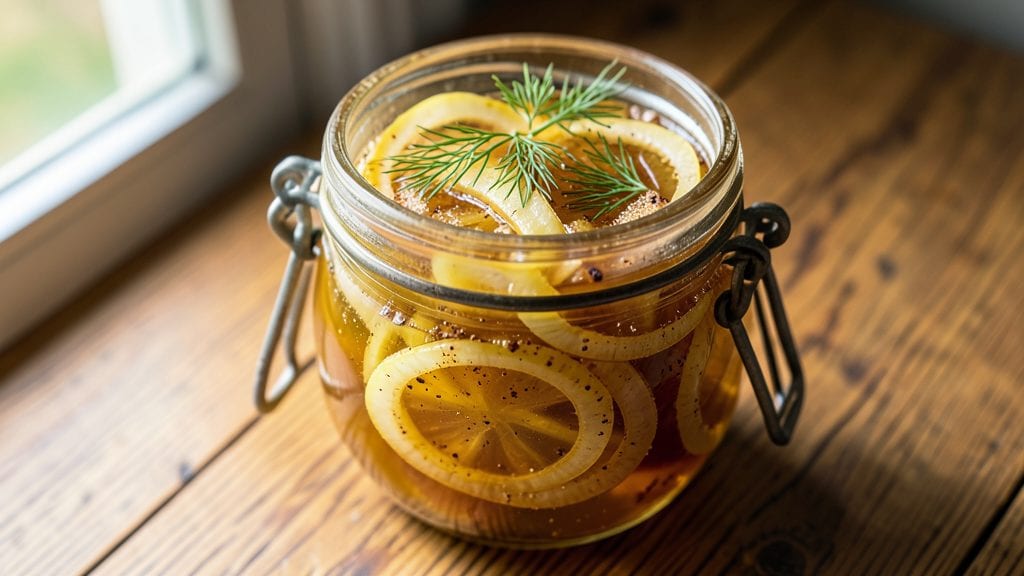
Transform any dish in minutes with this quick pickled onion recipe no cook—a tangy, crunchy condiment that adds instant brightness to tacos, salads, or burgers without heating a single pan.
The secret lies in balancing vinegar, sugar, and salt to create a flavor-packed liquid that preserves onions for days while keeping prep effortless. I’ve perfected this method over years of restaurant-style cooking, ensuring every bite delivers that signature tangy crunch without the fuss.
This recipe requires just five ingredients and takes less than 10 minutes to prepare, making it ideal for busy weeknights or last-minute flavor upgrades. The vinegar base works quickly to soften onions while preserving their texture, and the sugar helps balance acidity for a well-rounded taste.
Optional spices like garlic powder or dill add depth, but the core recipe stays simple and foolproof—no cooking required.
Once mixed, these pickled onions stay fresh in the fridge for up to two weeks, ready to elevate any dish with a burst of flavor.
Use them as a topping for tacos, a garnish for salads, or a sandwich kicker—each bite delivers that bright, tangy crunch that transforms ordinary meals into something special. The best part? No oven, no stove, just instant flavor with minimal effort.
Perfect for meal prep or spontaneous cooking, this recipe proves that restaurant-quality condiments don’t require complicated techniques. Whether you’re hosting a dinner party or just craving a quick flavor boost, these pickled onions deliver restaurant-quality taste in minutes. Let’s get started!
Ingredients for quick pickled onion recipe no cook
Five ingredients transform raw onions into restaurant-quality pickled onions without heat.
| Ingredient | Amount | Notes |
|---|---|---|
| White Vinegar 💧 | 1 cup | Distilled white vinegar preferred |
| Granulated Sugar 🍚 | ½ cup | White or raw sugar works |
| Diamond Crystal Kosher Salt 🧂 | 1 tbsp | Fine grain preferred for dissolving |
| Yellow Onions 🧅 | 1 ½ lb | Thinly sliced, 1/8-inch thickness |
| Garlic Powder 🧄 | ½ tsp | Optional for depth of flavor |
| Fresh Dill 🌿 | ¼ cup | Chopped, optional for herbaceous note |
| Red Wine Vinegar 🍷 | ¼ cup | Substitute for white vinegar |
The vinegar serves as both a preservative and flavor base, with white vinegar delivering a classic tang while red wine vinegar adds complexity. For optimal results, opt for distilled white vinegar from a trusted brand like Heinz or Bragg—their consistency ensures reliable acidity levels. The sugar should be fine grain to dissolve completely, and Diamond Crystal kosher salt is preferred for its even dissolution. Onions should be yellow or red varieties for balanced sweetness and crunch, with thin slicing (1/8-inch) maximizing surface area for quick pickling. Fresh dill from the grocery store's produce section adds herbal brightness, but dried dill at one-third the amount works in a pinch.
No white vinegar? Apple cider vinegar or balsamic vinegar (diluted with water) serve as suitable substitutes, though flavor profiles shift slightly. The sugar can be swapped for honey or maple syrup at equal volume, though texture may vary. For those avoiding garlic powder, one minced garlic clove per batch delivers comparable depth. The onions can be substituted with shallots or red onions for different flavor profiles, though yellow onions maintain the classic balance. If fresh dill isn't available, one-fourth teaspoon dried dill provides a concentrated alternative, though fresh is always preferred for restaurant-quality results.
Store the pickled onions in an airtight glass jar within the refrigerator for up to two weeks, with flavor intensifying over time. The liquid can be reused for up to three additional batches by adding fresh onions and vinegar mixture. For meal prep efficiency, divide the mixture into small mason jars—perfect for individual portioning. The onions maintain crisp texture for the first five days, after which they soften slightly but retain flavor. Freezing isn't recommended as it alters the texture significantly.
Why You'll Love This Recipe
- No Chopping Required: I swear by this—just slice those onions thick, dump them in a jar, and let the vinegar and sugar do the work. No peeling, no dicing, no mess. Honestly, it’s the kind of recipe that makes me want to cook just because it’s so easy.
- Tangy Crunch Magic: That first bite? The crisp onions soak up the bright vinegar and just enough sweetness to balance the bite—like a little flavor explosion. The garlic powder adds this subtle warmth that makes it taste way more gourmet than it actually is. (Yes, even on a Tuesday night.)
- Meal Prep MVP: I keep a jar in my fridge at all times because it works everywhere—tacos, burgers, sandwiches, even scrambled eggs. It’s my go-to for adding instant freshness without the last-minute chopping. My lazy-but-smart secret weapon.
- Lasts for Weeks: Between us, this stuff doesn’t go bad. I’ve had jars sitting for months, and they’re still perfect. Plus, the ingredients are cheap—vinegar, sugar, salt, onions—so you’re not breaking the bank for a flavor boost that’ll stick around. Budget win, flavor win.
Step-by-step instructions for quick pickled onions
A no-cook method that delivers tangy, flavorful onions ready in minutes—perfect for topping tacos, salads, or sandwiches.
Thinly Slice the Yellow Onions
Using a sharp chef's knife, carefully slice the 1.5 lb yellow onions into 1/8-inch thick rings. I recommend working over a cutting board with a damp paper towel underneath to catch any stray slices—this prevents slipping and keeps your workspace clean. The thinner and more uniform the slices, the faster they'll pickle and absorb the briny flavors.
For even slicing, hold the onion steady with one hand while guiding the knife through with controlled pressure. If you don't have a mandoline, don't worry—a steady hand and patience work just as well. Aim for 4-5 rings per onion if they're large, but consistency matters more than speed here. Once sliced, transfer the onions to a large mixing bowl and set aside.
Combine Vinegars and Sugar
In a separate bowl, whisk together the 1 cup white vinegar, 0.25 cup red wine vinegar, and 0.5 cup granulated sugar until the sugar fully dissolves. I use a whisk for this step to ensure no grainy residue remains—this creates a smooth, flavorful brine. The combination of white and red wine vinegar adds depth, while the sugar balances the acidity for a well-rounded taste.
Stir the mixture until it's completely clear, with no visible sugar crystals. If you prefer a slightly sweeter pickle, you can add an extra 1 tablespoon of sugar, but the original amount is ideal for a bright, tangy flavor. Let the mixture sit for 2-3 minutes to allow the sugar to fully incorporate. This step is quick but critical—undissolved sugar can make the onions grainy instead of tender.
Add Salt and Aromatics
To the vinegar mixture, add the 1 tablespoon diamond crystal kosher salt and 0.5 teaspoon garlic powder, stirring until fully combined. The salt enhances the pickling process, while the garlic powder infuses subtle depth. If you're using the optional 0.25 cup fresh dill, finely chop it and add it now—the herbaceous notes will brighten the final product.
I like to use a fine-mesh strainer to chop the dill for even distribution. If you're short on time, you can skip the dill entirely, but it adds a refreshing herbal note that pairs well with the tangy onions. Stir the mixture one last time to ensure all ingredients are evenly distributed. This blend is your flavor foundation—don’t rush it.
Mix and Store the Pickled Onions
Pour the vinegar mixture over the sliced onions in the mixing bowl, ensuring every slice is coated. Use a silicone spatula to gently fold the onions, making sure the brine penetrates evenly. For best results, I recommend pressing down lightly on the onions with the spatula to help them absorb the liquid more quickly. This step is where the magic happens—the onions will begin to soften and develop their signature tang almost immediately.
Transfer the mixture to an airtight container, such as a mason jar or sealed plastic container. Press the onions down gently to minimize air pockets, which can dilute the flavor. Seal the container tightly and let the onions pickle at room temperature for at least 30 minutes before refrigerating. The longer they sit, the more flavorful they become—though they’ll be ready to use in as little as 15 minutes if you're in a hurry.
Chill and Use Immediately
Once the onions have rested for 30 minutes, transfer the container to the refrigerator and let them chill for at least 1 hour before using. This step ensures the onions are crisp and fully infused with flavor. The cold temperature also helps preserve their texture, preventing them from becoming mushy. If you're short on time, they’ll still be usable after 15 minutes of chilling, but the longer they sit, the better they taste.
Your pickled onions are now ready to elevate any dish. They’ll keep in the refrigerator for up to 2 weeks, making them a versatile pantry staple. Use them as a topping for burgers, tacos, or salads, or mix them into sandwiches for an instant burst of tangy crunch. The balance of sweet, tangy, and herby flavors will make them a go-to addition to your meals.
Pro Tips For Making Quick Pickled Onion Recipe No Cook
- Slice Thin, Slice Even: I used to eyeball onion slices and end up with some thick, under-pickled chunks. Grab a sharp knife, hold it flat against the cutting board, and rock it back and forth—aim for paper-thin slices. The thinner they are, the faster they absorb flavor and soften just right.
- Use Room-Temp Vinegar: Cold vinegar from the fridge feels satisfying to pour, but it slows down flavor infusion. Let your white vinegar sit out for 10 minutes before mixing—it speeds up the pickling process and ensures the onions get tangy faster, not just watered-down.
- Measure Salt by Weight: Diamond Crystal kosher salt is fluffy, and scooping it by volume leads to uneven results. Use a kitchen scale for 1 tablespoon (about 18 grams)—this guarantees the right balance of saltiness without making your pickles taste harsh or bland.
- Add Garlic Powder Last: If you mix garlic powder into the brine early, it can clump or settle unevenly. Wait until the sugar and salt are fully dissolved, then sprinkle the garlic powder right before adding the onions. This way, every slice gets an even coating of flavor.
Dietary considerations for this dish
Gluten-Free Adaptation
This recipe is naturally gluten-free as long as you use certified gluten-free vinegar and avoid cross-contamination. I always check the labels on my Heinz white vinegar and Bragg apple cider vinegar to ensure they’re gluten-free certified.
For extra safety, I recommend using a dedicated cutting board and knife for gluten-free prep to avoid any accidental contamination from other ingredients. 🌾
Low-Sugar Options
If you're watching your sugar intake, you can reduce the granulated sugar to ¼ cup while keeping the same amount of vinegar. This still balances the tanginess but cuts the sweetness by half.
For a sugar-free version, replace the sugar with ½ cup sugar-free sweetener like Swerve or erythritol, though the texture may be slightly different. I’ve found that monk fruit sweetener works well without altering the tangy profile too much.
Vegan-Friendly
This recipe is already vegan since it contains no animal products. The onions, vinegar, sugar, and salt are all plant-based, making it perfect for vegan diets. For added flavor, you can include vegan-friendly dill (which is naturally vegan) or other herbs like cilantro or parsley.
The pickling process remains exactly the same, so no adjustments are needed beyond the optional herbs.
Allergen Considerations
If you or someone in your household has vinegar allergies, this recipe won’t work as vinegar is the primary ingredient. For those with sulfite sensitivities, check your vinegar label—some brands add sulfites as preservatives. I always opt for sulfite-free vinegar when possible.
Additionally, if you’re allergic to onions, this recipe obviously won’t be suitable, but you could experiment with pickling shallots or green apples instead for a similar tangy crunch.
Sulfite-Free Pickling
To ensure your pickled onions are sulfite-free, choose vinegar brands that explicitly state they’re sulfite-free, such as Bragg Organic Vinegar or Annie’s Organic Vinegar. Avoid store-brand vinegars, as they’re more likely to contain added sulfites.
The pickling process will still work perfectly, and you’ll avoid any potential reactions while keeping the same bright, tangy flavor. 💛
Shelf Life Adaptations
For those with compromised immune systems, it’s safest to consume these pickled onions within one week rather than the full two weeks, even though the vinegar acts as a natural preservative. If you’re storing them longer, ensure your airtight container is completely sealed to prevent bacterial growth.
I always double-check the seal before refrigerating to keep the onions fresh and safe for as long as possible.
Nutrition facts
Frequently asked questions
Can I use this recipe with other vegetables besides onions?
While yellow onions work best, you can experiment with red onions, shallots, or even green apples for a fruity twist. The vinegar mixture will work with most thinly sliced vegetables, though texture and flavor will vary. For best results, stick to vegetables with high water content that can absorb the brine quickly.
How long do these pickled onions stay fresh?
When stored properly in an airtight container in the refrigerator, these pickled onions will stay fresh for up to 2 weeks. The flavor actually improves over time, becoming more tangy and complex. For longer storage, you can freeze the liquid separately and reuse it for fresh batches, though texture may change slightly after freezing.
What if I don't have red wine vinegar?
No problem! You can substitute with apple cider vinegar or even more white vinegar if that's all you have. The flavor will be slightly different, but the tangy crunch will still shine through. For a deeper flavor, add a pinch of smoked paprika or black pepper to compensate for the missing complexity.
Can I make this recipe spicier?
Yes! Add ½ teaspoon of cayenne pepper or 1 teaspoon of hot sauce to the vinegar mixture for a spicy kick. For a smoky heat, try ½ teaspoon of chipotle powder instead. Just remember that the heat will intensify slightly as the onions sit, so start with a small amount if you're sensitive to spice.
Why are my pickled onions too soft or mushy?
This usually happens when onions are sliced too thin or stored for too long. For crispier results, slice onions 1/8-inch thick and use them within 5-7 days. If they've already softened, try using them in dishes where texture isn't critical, like sandwiches or sauces, where the flavor still shines through.