
Desserts
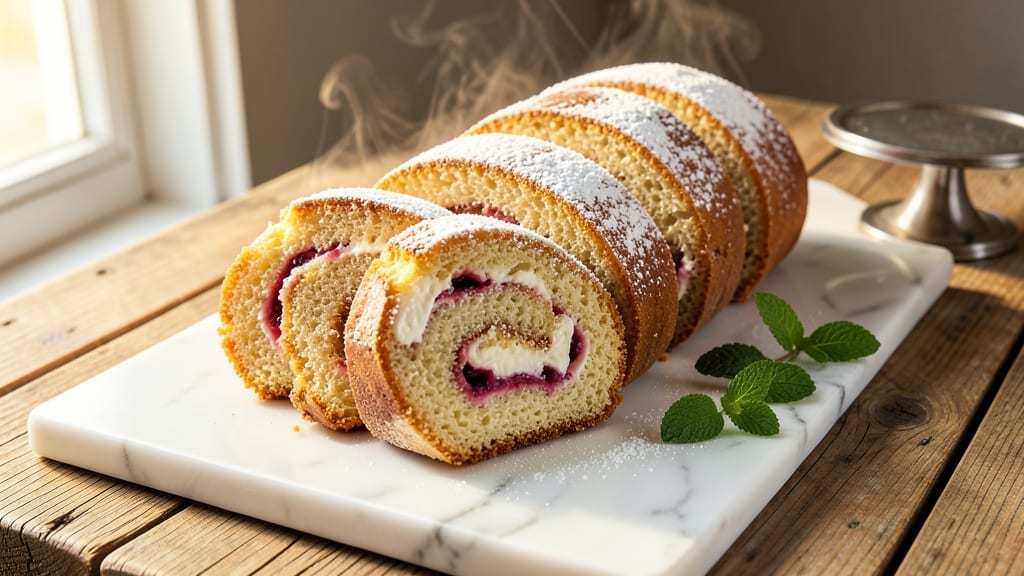
Mastering a roulade cake recipe transforms simple ingredients into an elegant dessert that looks impressive yet stays foolproof. The secret lies in baking a thin, tender cake layer that rolls cleanly without cracking—something I perfected after years of trial and error in professional kitchens.
This method ensures every slice reveals that perfect spiral of cream or jam filling, making it ideal for special occasions or when you want to wow guests without stress.
The process starts with a precise cake batter that bakes into a delicate, flexible sheet—thin enough to roll but sturdy enough to hold its shape.
After chilling the baked layer, you spread your chosen filling (whether it’s sweet raspberry jam, velvety custard, or whipped cream) and roll it tightly while still warm. The key is working quickly but carefully, ensuring the edges stay neat and the roll holds together when sliced.
With the right technique, even beginners achieve restaurant-quality results.
What you’ll end up with is a stunning dessert that’s as beautiful as it is delicious—golden layers revealing pockets of creamy or fruity filling with every bite. The texture is light yet rich, and the presentation makes it perfect for celebrations or when you want to impress.
This recipe delivers professional-level roulades without the complexity, so you can focus on enjoying the process and the delicious outcome.
Whether you’re preparing for a holiday dinner, a dinner party, or simply treating yourself, this roulade cake recipe ensures success every time. The steps are clear, the techniques are proven, and the results are consistently stunning. Let’s get started on creating your perfect rolled cake.
Ingredients for roulade cake
Thin cake, perfect roll—just these 13 ingredients transform into showstopping dessert magic.
| Ingredient | Amount | Notes |
|---|---|---|
| All-Purpose Flour 🌾 | 2 cups | Sifted for light texture |
| Granulated Sugar 🍚 | 1 ½ cups | White or light brown |
| Unsalted Butter 🧈 | 1 cup | Softened to room temp |
| Large Eggs 🥚 | 4 whole | Room temperature preferred |
| Vanilla Extract 🌿 | 1 tbsp | Pure, not imitation |
| Baking Powder 🍞 | 1 ½ tsp | Freshly opened package |
| Salt 🧂 | ½ tsp | Fine sea salt |
| Raspberry Jam 🍓 | 1 cup | Seedless preferred |
| Heavy Whipping Cream 🥛 | 1 ½ cups | Cold for whipping |
| Powdered Sugar 🍚 | ½ cup | For cream sweetness |
| Whipped Cream 🍦 | 1 cup | Optional extra filling |
| Parchment Paper 📄 | 1 sheet | For easy rolling |
| Powdered Sugar 🍚 | 1 tbsp | For dusting final cake |
The flour and butter are your secret weapons here. King Arthur or Gold Medal flour gives the best tender crumb, but any all-purpose works in a pinch. For the butter, Plugrá or Land O'Lakes are reliable, but avoid anything with salt added—you control the seasoning. Room temperature butter is non-negotiable; it mixes smoother and bakes evenly. I always check my butter by pressing a finger into it—if it leaves a slight indent, it's ready. The eggs? Room temperature makes all the difference for a light, airy texture. Crack them gently into a separate bowl first to avoid shells in your batter.
No vanilla extract? Vanilla bean paste or even a scraped vanilla bean works wonderfully—just adjust the amount to taste. Short on raspberry jam? Apricot, strawberry, or even fruit curd gives gorgeous color and flavor. The whipping cream needs to be cold—pop it in the freezer for 10 minutes if your kitchen runs warm. For the powdered sugar, Domino or C&H are fine, but avoid the ultra-fine versions—they can make your cream grainy. Pro tip: if your cake cracks slightly while rolling, don't panic—just roll it up with the cracks on the outside where they won't show. The filling will hold it together beautifully.
This cake is all about timing. Bake it just until golden but still springy to the touch—overbaking is the #1 cause of cracks. Cool it completely on a wire rack before rolling, or it'll tear. The filling can be prepped ahead: jam keeps for 1 week in the fridge, whipped cream for 3 days. For the final presentation, dust with powdered sugar right before serving—it melts off the heat of the cake and looks stunning. Store wrapped at room temp for 2 days or freeze the whole cake for 1 month. I always make an extra batch—it disappears faster than you can say 'Swiss roll'
Why You'll Love This Recipe
- No Fuss Layers: I swear by this recipe because it’s one bowl—just flour, sugar, butter, eggs, and vanilla. No sifting, no extra pans, no stress. The secret’s in the thin, even spread that rolls up like a dream, and honestly? Even a first-timer can nail it.
- Buttery-Vanilla Magic: That rich butter-to-sugar ratio? It’s ridiculously good—fluffy, tender, and the vanilla extract makes every bite taste like a bakery’s secret. The outside stays just crisp enough to hold the shape, while the inside stays soft enough to melt in your mouth.
- Party or Picnic: Between us, this cake is my go-to for anything—birthday gatherings, potlucks, or even a lazy Sunday brunch. Slice it thin for finger sandwiches, or serve it whole with whipped cream. (Yes, even on a Tuesday night.)
- Budget-Friendly Stretch: Four simple ingredients, and it feeds a crowd—no fancy fillings or decorations needed. Leftovers? They’re even better the next day, especially if you toast the slices for a crispy edge. My wallet (and my guests) thank me every time.
Step-by-step instructions for roulade cake
Here's the method that guarantees a perfectly rolled, no-fail roulade every time.
Prepare the Cake Batter
Preheat your oven to 350°F and line a 10x15-inch jelly roll pan with the parchment paper. In a large mixing bowl, combine the 2 cups all-purpose flour, 1.5 teaspoons baking powder, and 0.5 teaspoon salt. Sift this mixture directly into the bowl to eliminate any lumps and create a light, airy texture for your cake.
In a separate bowl, beat the 1 cup softened unsalted butter and 1.5 cups granulated sugar together until light and fluffy, about 3-4 minutes using an electric mixer. Add the 4 whole large eggs, one at a time, beating well after each addition. Stir in the 1 tablespoon vanilla extract until fully combined. Gradually add the dry ingredients to the wet mixture, mixing just until combined—overmixing develops gluten and makes the cake tough.
Pour the batter into the prepared pan and spread it evenly. Bake for 12-15 minutes, or until the top springs back when gently touched and a toothpick inserted in the center comes out clean. Immediately after removing from the oven, invert the cake onto a clean kitchen towel dusted with 1 tablespoon powdered sugar. This prevents sticking and helps create the perfect rolling surface.
Spread and Roll the Cake
While the cake is still warm, spread the 1 cup raspberry jam evenly over the surface, leaving about a ½-inch border around the edges. This border prevents the filling from oozing out when you roll the cake. Use a metal spatula to smooth the jam and ensure even distribution.
Here's the trick: start rolling the cake from the long side, using the towel to help guide it. As you roll, gently tuck the edges of the towel into the roll to keep everything contained. Apply light pressure to maintain the shape, but don't press too hard or you'll compress the cake. Roll tightly but evenly, working quickly so the cake doesn't cool completely and become difficult to handle.
Once fully rolled, transfer the cake to a wire rack and let it cool completely before proceeding. This cooling step is crucial—it allows the cake to set and makes the final slicing much easier. If you try to slice it warm, the filling will ooze out and make a mess.
Prepare the Cream Filling
In a medium bowl, whip the 1.5 cups heavy whipping cream until soft peaks form. Gradually add the 0.5 cup powdered sugar, continuing to whip until the cream is thick and holds its shape. For an extra touch, you can fold in the 1 cup whipped cream if you want a lighter, fluffier texture. Set this mixture aside in the refrigerator until ready to use.
Once the roulade has cooled completely, carefully slice it into 4 equal pieces using a sharp serrated knife. To make clean cuts, dip the knife in hot water and wipe it dry between each slice. This prevents the cake from tearing and gives you neat, even pieces.
Spread a generous layer of the prepared cream filling between each slice, pressing gently to ensure good adhesion. The cream should be thick enough to hold the layers together but not so stiff that it makes the cake dense. Work quickly to keep the cream from melting, and assemble the cake immediately before serving.
Pro Tips For Making Roulade Cake
- Chill the Dough: DESCRIPTION: After mixing the batter, let it rest uncovered in the fridge for at least 30 minutes—yes, even if you’re eager to roll it out. I used to skip this and ended up with cracks or uneven filling distribution. Cold dough handles better and rolls smoother, so don’t rush it.
- Use Room-Temp Butter: DESCRIPTION: Take the butter out of the fridge 1–2 hours before baking so it’s soft but not melted—this makes creaming with sugar way easier. I learned this the hard way when my mixer struggled with cold butter, and the texture turned out dense instead of light.
- Roll Thin, Fill Even: DESCRIPTION: Spread the batter thinly (about ¼-inch thick) on parchment paper before rolling—thicker layers won’t bake evenly and risk sogginess. Use a bench scraper to keep edges neat, and spread the filling uniformly so every bite has flavor, not just the center.
- Bake Low and Slow: DESCRIPTION: Roulade cakes need patience—bake at 325°F (not 350°F) until the center reads 205°F on an instant-read thermometer. I used to pull them out too soon, and the middle stayed doughy. Low heat ensures even cooking without burning the edges.
Perfect pairings for these flavors
Fruit Jam Pairings
Raspberry jam is my go-to filling for its vibrant color and tart-sweet balance, but don’t limit yourself! Apricot jam adds a floral note that pairs beautifully with vanilla cake, while strawberry jam brings a brighter, fresher flavor.
For something more exotic, try passion fruit curd—its tropical acidity cuts through the richness. Always use seedless varieties to avoid texture issues when rolling. 🍓
Creamy Fillings
Whipped cream is classic, but elevate your roulade with pastry cream or diplomacy cream for a silkier texture. I love vanilla bean pastry cream (made with 1 vanilla bean scraped) for depth.
For a lighter option, fold in 1 tablespoon whipped cream to the pastry cream before assembling. Chill all cream fillings for 1 hour before using—they’ll hold their shape better when sliced. 🥛
Chocolate Variations
Swap jam for dark chocolate ganache—melt 8 oz dark chocolate (60-70% cocoa) with ½ cup heavy cream, cool slightly, then spread on the warm cake. For contrast, add white chocolate shavings or raspberry coulis on top.
Pro tip: Use a piping bag with a small tip to create elegant chocolate swirls before rolling. 🍫
Seasonal Adaptations
Spring calls for lemon curd or peach jam, while fall works with spiced apple butter and a pinch of cinnamon in the filling. Winter roulades shine with chestnut purée or mulled wine-soaked cherries.
Adjust sweetness based on the season—tart berries in summer need less sugar than winter fruits. 🍂
Presentation Touches
Dust with powdered sugar or matcha powder for a stunning finish. Garnish with edible flowers (like violets) or toasted coconut flakes for texture. For a modern twist, drizzle with chocolate glaze or caramel sauce before serving. Always slice with a hot knife for clean edges—it’s a game-changer! ✨
Nutrition facts
Frequently asked questions
Why does my rolled cake crack when I try to slice it?
Cracking happens when the cake cools too quickly or isn't properly chilled before rolling. Always let the cake cool completely on a wire rack after baking, then refrigerate the rolled cake for at least 1 hour before slicing. If cracks appear during rolling, gently press them down with your fingers—they'll stay hidden when sliced properly.
Can I make a roulade cake without a jelly roll pan?
Use a 10x15-inch baking sheet lined with parchment paper. The key is spreading the batter evenly into a thin, ¼-inch-thick layer. If your pan is smaller, bake the cake until just set, then transfer it to a clean kitchen towel to roll. Just work quickly before it cools completely.
What's the best way to store a roulade cake?
Keep it wrapped tightly in plastic wrap at room temperature for 2 days. For longer storage, freeze the whole cake (unassembled) for up to 1 month. Thaw overnight in the fridge before slicing. Never freeze with cream fillings—prepare those fresh after thawing.
How do I keep the filling from oozing when sliced?
Chill the rolled cake for 2-3 hours before slicing to firm up the filling. Use a hot knife (dipped in hot water and wiped dry) for clean cuts. Also, leave a ½-inch border when spreading filling to prevent leaks. The cream should be thick but not stiff—whip it just until soft peaks form.
Can I make a gluten-free roulade cake?
Yes! Replace all-purpose flour with a 1:1 gluten-free baking flour blend (like Bob's Red Mill) plus ½ teaspoon xanthan gum. Add 1 extra tablespoon of liquid to the batter. Gluten-free cakes are more delicate, so handle them gently when rolling and avoid overbaking. A 325°F oven works better for even baking.